
Tag: mediation

  • FAQ: What are some the qualifications of a good mediator? Part I

    Angel Island SP qualifications
    qualifications of a good mediator

    I have often been asked what the qualifications of a good mediator are. My answer is self serving but true. I have worked hard to make sure that I am the best qualified to mediate a case. Remember it is not bragging if true. So as to not bore you with all of the qualifications of a good mediator and how I fulfill those qualifications, I will space them out over time.

    Good Mediators are attorneys. I have been a full time practicing California attorney since 2001. I am authorized to appear before the California Supreme Court, Northern District of California and the Ninth Circuit Court of Appeals. Therefore I am able to approach a problem looking at the legal issues besides working the parties and their attorneys to resolve those issues.

    Good Mediators realize that mediation is much more complex than litigation. In litigation you can just follow the law and ignore personalities and their problems. Many times, there is only one dispute initially presented in mediation, but once mediation there are many legal and non-legal issues that need to be resolved before a global solution can be reached.

    Good Mediators have acquired excellent mediation skills. I have hundreds of hours of direct mediation training. I have taught 40-hour and 25-hour mediation classes. Members of the classes have included bench officers (Judges). I have mentored other mediators. I have made many California MCLE presentations on mediation. MCLE is continuing education for attorneys. I have conducted over a thousand mediations with a very high success rate. These have included appellant mediations as well. These are cases where one party has already ‘won’ and they were sent out to mediation by the Court of Appeal.

    Ken_Strongman_003smAbout the Author: Ken Strongman (www.kpstrongman.com) has years of experience and a growing national reputation as a mediator and arbitrator.  He has successfully resolved more than a thousand disputes in the fields of construction defects, real estate, intellectual property, and employment.  He is also a Mediator and Arbitrator for FINRA.

    © 2020 Ken Strongman. All Rights Reserved. Please do not copy or repost without permission.

  • Communication skills are important in resolving conflicts

    Communication
    Communication Skills help resolve conflicts


    “Nothing in life is more important than the ability to communicate effectively.”

    — Gerald R. Ford, 38th President of the United States


    Good communication is the most important tool for resolving conflicts.  Listening is the key to good communication.  Use your ears more than your mouth.  Encourage others to talk but offer no judgments.   Make sure you hear the message.  Ask clarifying questions and reframe their statements.  Put their message in your own words.

    **For the last decade I’ve been involved with leadership development of tomorrow’s leaders.  Using my expertise, I am training the youth leaders in conflict resolution.  This blog is adapted from my training materials. 


    Ken StrongmanAbout the Author: Ken Strongman (www.kpstrongman.com) has years of experience and a growing national reputation as a mediator and arbitrator.  He has successfully resolved more than a thousand disputes in the fields of construction defects, real estate, intellectual property, and employment.  He is also a Mediator and Arbitrator for FINRA.

    © 2020 Ken Strongman. All Rights Reserved. Please do not copy or repost without permission.

  • FAQ: What is the format of a mediation?

    Angel Island SP - format of mediation
    The format of the mediation is flexible

    What is the format of a mediation?

    What is the format of a mediation? The process is entirely flexible and will depend on the mediator and the parties’ preferences. In general terms, it is preferable that position papers are exchanged in advance. Depending on what stage in the dispute the mediation takes place, it may be appropriate for the parties to agree to exchange relevant documents in advance. If possible, the parties and their legal representatives should meet the mediator themselves prior to the scheduled date of the mediation in order to assist the mediator identify the disputed key issues in advance.

    On the day of the mediation usually there is a joint session at the beginning when the mediator brings the parties together in order to emphasize the ground rules and if agreed, to have opening presentations by each party. Often this can provide an opportunity for either party to articulate their own perspective of a dispute in their own terms and equally importantly, to hear the other party articulate their perspective. This presentation can be made by the party themselves and/or by their legal representative.

    Thereafter, a mediator will usually meet privately with the parties in order to explore issues and possible areas of agreement and engage in a form of shuttle diplomacy. The mediator may propose further joint sessions or meetings between principals either with or without legal representatives. Ultimately, the objective is that the form of a resolution will come from the parties themselves to be formalized in a settlement agreement.

    If it is not possible to resolve the issue at mediation, the mediator will typically offer their services to the parties for a period thereafter to facilitate any further discussions. This can be particularly useful if the parties have reached agreement on all but a few outstanding issues.

    Ken_Strongman_003smAbout the Author: Ken Strongman (www.kpstrongman.com) has years of experience and a growing national reputation as a mediator and arbitrator.  He has successfully resolved more than a thousand disputes in the fields of construction defects, real estate, intellectual property, and employment.  He is also a Mediator and Arbitrator for FINRA.

    © 2020 Ken Strongman. All Rights Reserved. Please do not copy or repost without permission.

  • Social Media Marketing & the Legal Professional

    FAQ_Mediation Golden Gate

    Project Social Media

    Project Social Media presents my thoughts regarding the impact of social media marketing on the practice of law. When I first started my mediation practice, out of necessity I was forced to research and learn how to use social media to market my practice.
    My learning process has been pretty much trial and error, and from time to time, I blog about what I have learned. Often I present information I could have used myself when I started my own practice.

    Marketing is a necessary evil of a law practice

    Marketing is a necessary evil of a law practice. Unfortunately because marketing is not done to benefit any particular client, these efforts are not billable hours. Thus, it behooves the law firm to minimize marketing costs. Social media are the logical choice to start with because their time requirements and costs tend to be at the lower end of the spectrum while providing maximum exposure.

    Return on Investment (ROI)

    It is difficult to accurately quantify a Return on Investment (ROI) for social media marketing. This rings true for not only major non-legal corporations but for a law practice. Obviously, simple metrics such as number of “unique hits” or number of clients who say they came to you through your on-line presence are a good start.
    My first passion is for helping others resolve their conflicts. A close second is for using social media to promote my work in this area. Both are the outgrowth and intersection of an amalgam of my professional career activities, as follows:

    • The substantive areas of many of my mediations have involved intellectual property and social media. Others have either involved eDiscovery issues or the major aspects of the intellectual property of the social media itself and technology.
    • Besides speaking on mediation and conflict resolution I’ve spoken on the following topics: numerous speaking engagements on social media and the law;
      • Twitter: Impact on the Legal Community—the #Good, #Bad and #Ethical in Less than 140 Characters.
      • EDiscovery: An MCLE presentation.
      • Social Media—Friend and Foe! A four-hour MCLE workshop on how the legal industry’s landscape will never be the same.
      • If You Post It, They Will See It—The Legal and Ethical Duties of the Legal Professional in Social Networking. A three-hour MCLE seminar on legal ethics responsibilities in light of the ever-changing world of social networking
    • While teaching legal ethnics at John F. Kennedy University as an Adjunct Professor, how to ethical use social media as a legal professional was always a serious topic of interest by my students. This included the unauthorized practice of law, eDiscovery, privacy and confidentially, attorney solicitation and marketing.
    • Before starting a law practice, I had a fifteen plus year career in information systems.
    • And finally, there is my own need to develop and implement my own social media marketing plan for my Mediation practice and finding few resources useful to the legal professional.

    Ken_Strongman_003smAbout the Author: Ken Strongman (www.kpstrongman.com) has years of experience and a growing national reputation as a mediator and arbitrator.  He has successfully resolved more than a thousand disputes in the fields of construction defects, real estate, intellectual property, and employment.  He is also a Mediator and Arbitrator for FINRA.

    © 2020 Ken Strongman. All Rights Reserved. Please do not copy or repost without permission.

  • A handy tool for resolving conflicts.

    conflict tool
    Tool for resolving conflicts

    A very handy tool for approaching any conflict situation that needs to be resolved is E.A.R. 

    Ask the people involved to:

    Express – What you want and what are you doing to get it.

    Address – Why it is working or not working.

    Resolve – What ways there are to solve the situation.

    **For the last decade I’ve been involved with leadership development of tomorrow’s leaders.  Using my expertise, I am training the youth leaders in conflict resolution.  This blog is adapted from my training materials. 


    Ken StrongmanAbout the Author: Ken Strongman (www.kpstrongman.com) has years of experience and a growing national reputation as a mediator and arbitrator.  He has successfully resolved more than a thousand disputes in the fields of construction defects, real estate, intellectual property, and employment.  He is also a Mediator and Arbitrator for FINRA.

    © 2020 Ken Strongman. All Rights Reserved. Please do not copy or repost without permission.
  • FAQ: Can you settle a case after a jury has decided a case?

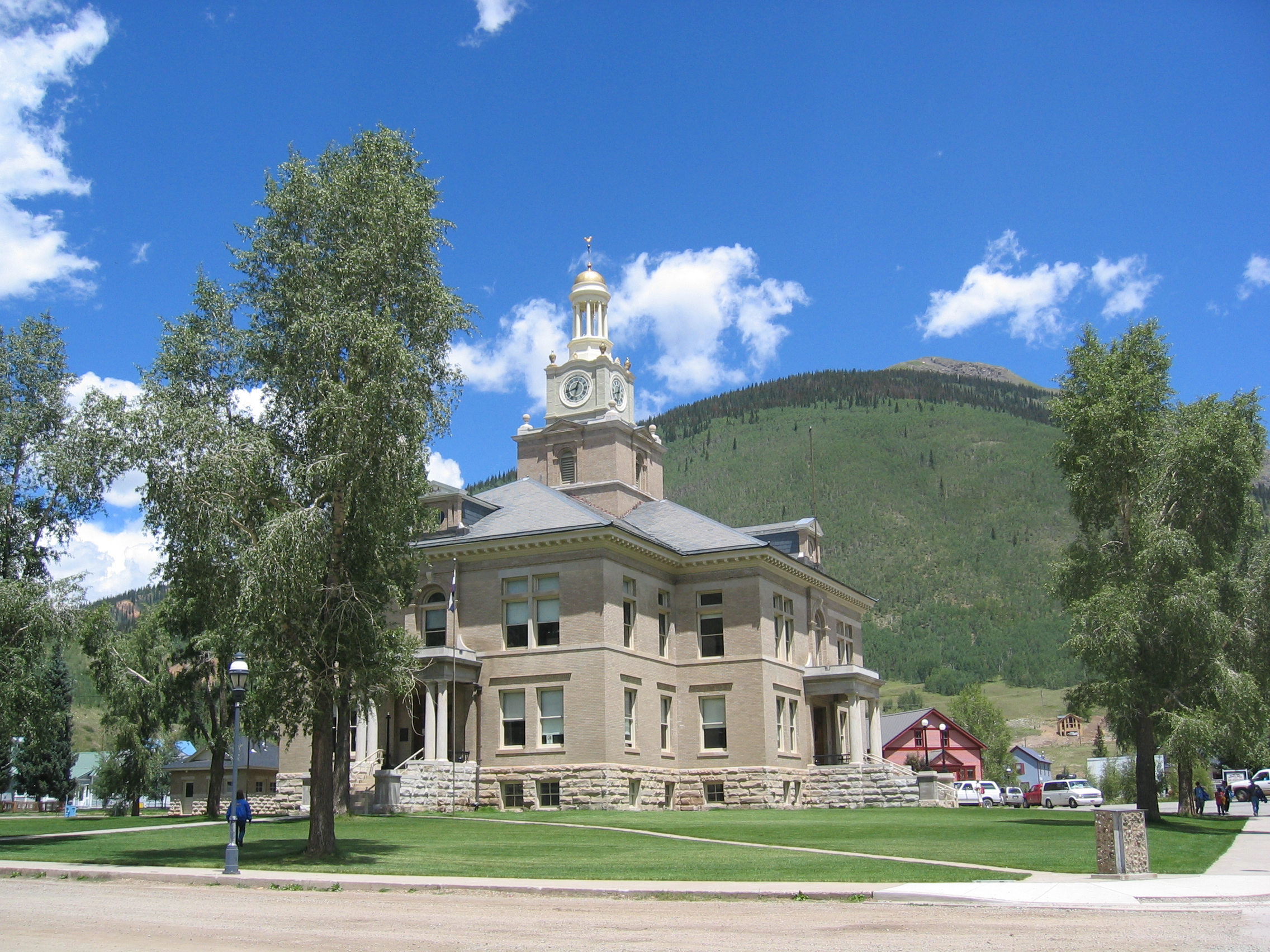
    Silverton, post jury settlements
    Post Jury settlements

    Can you settle a case after a jury has decided a case? As part of my full spectrum of dispute resolution services, I offer Appellate Mediation. My considerable experience in this area started in 2007.  I currently serve on the mediation panels for the First and Third Districts of the California Court of Appeal.  In addition to these panels, I now provide appellate mediation privately as well.

    What is Appellate Mediation and When Does it Occur?

    Appellate mediation focuses on cases that are on appeal or that are ready to go to appeal. Mediating a case that has gone all the way to appeal is not easy. The fact that a case has gone that far indicates that it was not one that was very amenable to settlement or mediation in the first place. Furthermore, an imbalance in power comes into play when the prevailing party in the trial court has the trial court’s decision on its side. By the time the case reaches appeal, there may be hard feelings coming from the trial, and the prospects of reaching a mediated resolution may seem daunting, but they are not impossible. Despite these difficulties I enjoy a success rate is high.
    Sometimes the parties have tried mediation at the lower court level.  In one of my cases, the parties had gone to mediation twice, attended four mandatory settlement conferences with the judge, and completed a trial by jury. Both parties appealed the decision under different grounds. The case resolved in appellate mediation.
    It is best that the mediation occur shortly after the appeal is lodged in order to save time, money, and effort.

    Benefits of Appellate Mediation after court or jury decision

    By using me as your Appellant Mediator you can speed case resolution and reduce litigation costs. Furthermore, you avoid the prospect of presenting your appeal to a sitting appellate judge as part of a settlement conference. I am able to provide the best possible assistance in resolving complex disputes without further litigation. I have the critical skills for handling the most intractable and contentious conflicts, regardless of subject matter.

    Why Is Appellate Mediation Effective?

    Joey Naylor: “Dad, why is the American government the best government?”
    Nick Naylor: “Because of our endless appeals process.”
    ~Thank You For Smoking, 2005. [Emphasis added]
    “It ain’t over ’til it’s over.”
    ~Yogi Berra, 1973
    These quotes sum up the need for Appellate Mediation. Even though a party may have a judgment from a court that does not mean that litigation is over. If a party appeals, then the litigation continues. It is costly in time, money, and opportunity costs to all parties.
    Appellate Courts generally can make several types of rulings. But none these rulings occur until after all parties spend considerable time and money preparing for the appeal. The court can affirm the judgment in which case the losing party can appeal to a higher court continuing the appeal process. The court can send the matter back down to a lower court with instructions. Then you are back litigating in the lower court. The court can order a new trial. In this case you get to start from the beginning and litigate the issues all over again.
    There are also lost opportunity costs. For example in a business dispute, you may eventually win, but by then the industry has evolved making the dispute meaningless. This is especially true in emerging industries such as high tech.

    Ken_Strongman_003smAbout the Author: Ken Strongman (www.kpstrongman.com) has years of experience and a growing national reputation as a mediator and arbitrator.  He has successfully resolved more than a thousand disputes in the fields of construction defects, real estate, intellectual property, and employment.  He is also a Mediator and Arbitrator for FINRA.

    © 2020 Ken Strongman. All Rights Reserved. Please do not copy or repost without permission.
  • If you can’t get people to do anything, how to you resolve conflicts.

    In my leadership training on conflict resolution, I have the participates conduct a closed fist exercise.  The participants pair off.  One forms a fist and the other has three minutes to convince them to open their fists.

    In the debriefing time we discuss how they managed to convince the other to open their fists.   The usual results:

    ·     Bribery—”I’ll give you five dollars if you open your fist.”

    ·     Concern—”It doesn’t matter to me if you open your fist, but unless you do you won’t be able to pick anything up.”

    ·     Persuasion—”I like your hands better open than closed.”

    ·     Interest—”I’m curious to see what’s inside your fist.”

    ·     Straightforwardness—”Hey, open your fist!”

    The point of this exercise is to remind all of us that we can’t make people do anything they don’t want to do. If you ask anyone to do something and they refuse, you can’t force them to do it.

    Naturally, if they are an employee, you can fire them, but you can’t force them to do it.  The bottom line is you can’t coerce someone to do something.  Ultimately, you can only empower yourself. Then, within boundaries, you can encourage others to act in certain ways.

    **For the last decade I’ve been involved with leadership development of tomorrow’s leaders.  Using my expertise, I am training the youth leaders in conflict resolution.  This blog is adapted from my training materials. 


    Ken StrongmanAbout the Author: Ken Strongman (www.kpstrongman.com) has years of experience and a growing national reputation as a mediator and arbitrator.  He has successfully resolved more than a thousand disputes in the fields of construction defects, real estate, intellectual property, and employment.  He is also a Mediator and Arbitrator for FINRA.

    © 2020 Ken Strongman. All Rights Reserved. Please do not copy or repost without permission.

  • FAQ: How to propose mediation?

    FAQ_Mediation Mendocino 01 propose
    When to propose mediation?

    A Judge may recommend that the parties consider mediation or, more commonly, one party may simply propose, through their legal representatives to the other party and their legal representative, that the dispute be mediated. A proposal to mediate should not be seen as a weakness but merely as a willingness to explore the possibility of a resolution outside the procedural confines of litigation.

    Many contracts contain mediation clauses.  The purpose of the mediation clause is to require a good faith attempt at resolving any contractual disputes before litigation is initiated.  If there is no mediation clause, the parties can still attempt to resolve their contractual dispute before commencing litigation.

    If no contract exists or it is as dispute arising out of a tort such as a personal injury, there is no reason not to suggest mediation.

    Ken_Strongman_003smAbout the Author: Ken Strongman (www.kpstrongman.com) has years of experience and a growing national reputation as a mediator and arbitrator.  He has successfully resolved more than a thousand disputes in the fields of construction defects, real estate, intellectual property, and employment.  He is also a Mediator and Arbitrator for FINRA.

    © 2020 Ken Strongman. All Rights Reserved. Please do not copy or repost without permission.

  • Listening is the best way to resolve conflicts.

    listening
    Listening to resolve conflicts

    The better the information you have, the greater your chances of finding a workable solution.  Listen carefully to what others are saying, not judging until you hear everyone’s story.  Be aware of tone of voice, body language, and other clues.  Understand what each person is expressing – what he wants and what he is willing to do to get there.  Then clarify that the solution lies with all parties. 

    Listen carefully to what others are saying without judgment until you have everyone’s side of the story.  Clarify what you have heard and then reframe it back to each party.  Remember the solution lays with both parties not you.

    **For the last decade I’ve been involved with leadership development of tomorrow’s leaders.  Using my expertise, I am training the youth leaders in conflict resolution.  This blog is adapted from my training materials. 


    Ken StrongmanAbout the Author: Ken Strongman (www.kpstrongman.com) has years of experience and a growing national reputation as a mediator and arbitrator.  He has successfully resolved more than a thousand disputes in the fields of construction defects, real estate, intellectual property, and employment.  He is also a Mediator and Arbitrator for FINRA.

    © 2020 Ken Strongman. All Rights Reserved. Please do not copy or repost without permission.

  • FAQ: How to propose mediation?

    Philmont Scout Ranch propose
    How to propose mediation.

    How to Propose Mediation – Options

    A Judge may recommend that the parties consider mediation or, more commonly, one party may simply propose, through their legal representatives to the other party and their legal representative, that the dispute be mediated. A proposal to mediate should not be seen as a weakness but merely as a willingness to explore the possibility of a resolution outside the procedural confines of litigation.

    Many contracts contain mediation clauses.  The purpose of the mediation clause is to require a good faith attempt at resolving any contractual disputes before litigation is initiated.  If there is no mediation clause, the parties can still attempt to resolve their contractual dispute before commencing litigation.

    If no contract exists or it is as dispute arising out of a tort such as a personal injury, there is no reason not to suggest mediation.

    Ken_Strongman_003smAbout the Author: Ken Strongman (www.kpstrongman.com) has years of experience and a growing national reputation as a mediator and arbitrator.  He has successfully resolved more than a thousand disputes in the fields of construction defects, real estate, intellectual property, and employment.  He is also a Mediator and Arbitrator for FINRA.

    © 2020 Ken Strongman. All Rights Reserved. Please do not copy or repost without permission.