Tag: Real Estate Mediation

  • Task #14: Looking at the previous two questions, where do you think THEIR perspective differs from your own.

    perspective
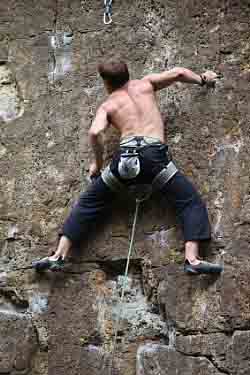
    As in Climbing keep your perspective

    Task #14: Looking at the previous two questions, where do you think THEIR perspective differs from your own.

    Looking at the previous two questions below, where do you think THEIR perspective differs from your own.

    • Task #12:  What important understanding did you think you had when you originally got involved together?
    • Task #13: In a dispute, how did the relationship change?

    The resolution of a dispute does not just occur on the day of the mediation.   Each participant to mediation needs to prepare their own strategy for negotiation in the settlement.  Based on my experience as a mediator, these are a collection of tasks each participant needs to complete and to discuss with their council and the mediator before the mediation.

    Your exercise now is to answer the same questions that you have worked through but from their point of view.   Maybe they think the honeymoon phase ended at a different time and way.  What was their vision for the future of your relationship at the beginning of the agreement?  How much money did they think they were going to make?  Was this agreement a stepping stone to something else?  Without trying to look at the problem from their point of view, will you both find a way forward?

    Ken Strongman, MediatorAbout the Author: Ken Strongman (www.kpstrongman.com) has years of experience and a growing national reputation as a mediator and arbitrator.  He has successfully resolved more than a thousand disputes in the fields of construction defects, real estate, intellectual property, and employment.  He is also a Mediator and Arbitrator for FINRA.

    © 2020 Ken Strongman. All Rights Reserved. Please do not copy or repost without permission.

  • How to stay on the cutting edge of mediation

    cuttting edge
    Cutting edge of mediation

    How to stay on the cutting edge of mediation

    The cutting edge of mediation. Recently, I wrote an article for our local Bar Association Journal on why someone would want to join the ADR section of the Bar.  As the new Chair of the ADR section, was also needed to describe how membership has benefited my practice.  It was an easy assignment.

    Some would want you to join the ADR Section so that you can give back to the legal community. I didn’t join for that reason.  I became involved so that I could be on the cutting edge of the way we resolve disputes in our society.  That includes the way we litigate in California.  I did it so that my corporate clients would always benefit by the earliest thoughts and processes available. Also, that my mediation practice would correspondingly expand and be the best it could be.

    On my own, I would have had zero influence on the profession.   As part of the ADR section, we collectively help direct the future of Alternative Dispute Resolution processes in Contra Costa and the State of California.  This has allowed my practice to be in the forefront of ADR.  Rarely will my general counsel clients be criticized for selecting me as a mediator.  They are able to confidently tell their parties that they tried everything to avoid litigating and incurring additional legal fees and their company bosses can then assure their directors and shareholders that they have retained the best.

    Besides being on the forefront of ADR, we are able to advise Courts and members of the Bar as to the best practices ADR has to offer.  Currently, we are actively helping the Courts develop rules, policies and procedures to avoid having justice grind to a halt in our current Court budget crisis. As leader of the ADR section, I see the new processes way before presentation to the general public and legal community.  We are making suggestions that would influence the result.  I am also able to modify my practice to prepare for the coming changes in rules, policies and procedures.

    The ADR Section

    Within the ADR section by virtue of being around other mediators, we mentor each other on a continuous basis.  At every one of our programs I learn something new that will benefit my mediation practice in concrete ways.  It doesn’t have to be the formal presentations to be useful.  It is often the informal conversations with other members that are the most helpful to my practice.

    Every one of our events benefit the ADR practitioner.  Last year we held a round table on mediation practice marketing.  I came away with several ideas to help market my practice through social media.  At the same presentation, I learned what not to do so that I could spend little time and money marketing and more time devoted to mediating complex disputes.

    Ken StrongmanAbout the Author: Ken Strongman (www.kpstrongman.com) has years of experience and a growing national reputation as a mediator and arbitrator.  He has successfully resolved more than a thousand disputes in the fields of construction defects, real estate, intellectual property, and employment.  He is also a Mediator and Arbitrator for FINRA.

    © 2020 Ken Strongman. All Rights Reserved. Please do not copy or repost without permission.

  • Task #13: In a dispute, how did the relationship change?

    Task #13: In a dispute, how did the relationship change?

    How did the relationship change? The resolution of a dispute does not just occur on the day of the mediation.   Each participant to mediation needs to prepare their own strategy for negotiation in the settlement.  Based on my experience as a mediator, these are a collection of tasks each participant needs to complete and to discuss with their council and the mediator before the mediation.

    At some point in the past, you thought you had a good relationship.  What happened? What were the important changes to your understands as the situation developed and changed?  Why did the honeymoon end?   Obviously, your vision of what was supposed to happened did not materialize the way you thought it would.   You need to clearly outline what exactly happened to be able to find a way forward.   This is an important exercise for two reasons.  First, you do not want to repeat the actions that got you into the current dispute.  Second, without knowing how you got here today, you will not be able to find a successful way out of the dispute.

    Ken_Strongman_003smAbout the Author: Ken Strongman (www.kpstrongman.com) has years of experience and a growing national reputation as a mediator and arbitrator.  He has successfully resolved more than a thousand disputes in the fields of construction defects, real estate, intellectual property, and employment.  He is also a Mediator and Arbitrator for FINRA.

    © 2020 Ken Strongman. All Rights Reserved. Please do not copy or repost without permission.

  • Task #12: What important understanding did you think you had when you originally got involved together?

    Task #12: What important understanding did you think you had when you originally got involved together?

    What important understanding did you think you had when you originally got involved together? The resolution of a dispute does not just occur on the day of the mediation.   Each participant to mediation needs to prepare their own strategy for negotiation in the settlement.  Based on my experience as a mediator, these are a collection of tasks each participant needs to complete and to discuss with their council and the mediator before the mediation.

    What important understanding did you think you had when you originally got involved together? This is the understanding from at least from your own point of view.  These can include working conditions, responsibilities, which one was to make the final decisions, time, money, rights, duties and working conditions.

    You developed or already had a relationship with the other party.  At some point it was a good relationship.  Why did you think it was a good relationship?

    This is obviously important if the subject matter of the dispute is commercial.  In other words it is based on a contract, lease, employment, insurance, agreement to buy, etc. It is still important even if the dispute is not based upon contract.  For example it could be based on a family relationship.   It even goes beyond that to personal injury and intellectual property disputes.  For example, when you enter a grocery store, it is usually your understanding that you will not slip on a banana peal.  Likewise, when you create something, you expect to receive credit for the creation.

    Therefore, it is always important to understand your expectations at the beginning.  Without that understanding, it will be difficult to create a solution that is satisfying.

    Ken_Strongman_003smAbout the Author: Ken Strongman (www.kpstrongman.com) has years of experience and a growing national reputation as a mediator and arbitrator.  He has successfully resolved more than a thousand disputes in the fields of construction defects, real estate, intellectual property, and employment.  He is also a Mediator and Arbitrator for FINRA.

    © 2020 Ken Strongman. All Rights Reserved. Please do not copy or repost without permission.

  • Task #11: What’s wrong with the other side’s case?

    Task #11: What’s wrong with the other side’s case?

    The resolution of a dispute does not just occur on the day of the mediation.   Each participant to mediation needs to prepare their own strategy for negotiation in the settlement.  Based on my experience as a mediator, these are a collection of tasks each participant needs to complete and to discuss with their council and the mediator before the mediation.

    These tasks and the discussion with the mediator are confidential.   They are confidential under both Attorney Client privilege and under mediation confidential provisions in court rules, statutes, and standards.

    Task #11:  What’s wrong with the other side’s case?

    Now is your attorney’s opportunity to turn the introspection of your own case on its ear.  You need to list everything that is wrong with your opponent’s case.   You need to review this confidentially with the mediator.

    Ken Strongman, MediatorAbout the Author: Ken Strongman (www.kpstrongman.com) has years of experience and a growing national reputation as a mediator and arbitrator.  He has successfully resolved more than a thousand disputes in the fields of construction defects, real estate, intellectual property, and employment.  He is also a Mediator and Arbitrator for FINRA.

    © 2013 Ken Strongman. All Rights Reserved. Please do not copy or repost without permission.


  • Task #10: What is the weakness in your case?

    Task #10: What are the weaknesses in your case?

    The resolution of a dispute does not just occur on the day of the mediation.   Each participant to mediation needs to prepare their own strategy for negotiation in the settlement.  Based on my experience as a mediator, these are a collection of tasks each participant needs to complete and to discuss with their council and the mediator before the mediation.

    These tasks and the discussion with the mediator are confidential.   They are confidential under both Attorney Client privilege and under mediation confidential provisions in court rules, statutes, and standards.

    Task #10: What are the weaknesses in your case?

    In this exercise, your attorney will need to take the lead in preparing your answer.  It is important that you understand its impact on your position.

    You need to articulate all of the weaknesses in your case.  These can be issues of law.  I have seen issues that involve the statute of limitations.  Other times, I have seen where the original complaint did not name the correct defendants.   These may be extreme examples, but no case is perfect.

    There can be issues of evidence.   It can be simple lack of evidence to support your claims.  It can be the credibility of the evidence.  Is it admissible or will its admissibility be challenged.   Seldom is there enough credible evidence to support each element of the claim.  Likewise defenses have their weaknesses as well.

    There can be issues of witnesses.  Will they persuade a jury or will their testimony be discounted by the jury?  Are they available?  Will they ‘show well’ to the jury?  Can they be easily impeached?

    Is a jury in this jurisdiction favorable to your position or that of your opponents?  And the list goes on.

    This can all be summed up by asking what your opponent will say about your case?

    Ken StrongmanAbout the Author: Ken Strongman (www.kpstrongman.com) has years of experience and a growing national reputation as a mediator and arbitrator.  He has successfully resolved more than a thousand disputes in the fields of construction defects, real estate, intellectual property, and employment.  He is also a Mediator and Arbitrator for FINRA.

    © 2020 Ken Strongman. All Rights Reserved. Please do not copy or repost without permission.

  • Task #9: At what point will you know that the potential agreement is better than going to court?

    Task #9: At what point will you know that the potential agreement is better than going to court?

    The resolution of a dispute does not just occur on the day of the mediation.   Each participant to mediation needs to prepare their own strategy for negotiation in the settlement.  Based on my experience as a mediator, these are a collection of tasks each participant needs to complete and to discuss with their council and the mediator before the mediation.

    These tasks and the discussion with the mediator are confidential.   They are confidential under both Attorney Client privilege and under mediation confidential provisions in court rules, statutes, and standards.

     Task #9:

    • How will you know when you have arrived at a voluntary agreement that satisfies your interests?  
    • What objective criteria will you use to measure how well the agreements stratify your interests? 
    • At what point will you know that the potential voluntary agreement is better that using the court system to fight it out?

    As you participate in the mediation, it will be important for you to know when a voluntary agreement is near.  You need to realize the point in the mediation when you have satisfied your interests and that it now time to put the agreement into writing.  Work with your attorney on the answers to these questions and review them confidentially with the mediator.

    Ken Strongman, MediatorAbout the Author: Ken Strongman (www.kpstrongman.com) has years of experience and a growing national reputation as a mediator and arbitrator.  He has successfully resolved more than a thousand disputes in the fields of construction defects, real estate, intellectual property, and employment.  He is also a Mediator and Arbitrator for FINRA.

    © 2020 Ken Strongman. All Rights Reserved. Please do not copy or repost without permission.

  • Task #4: How are you going to deal with them after the dispute?

    Task #4: How are you going to deal with them after the dispute?

    The resolution of a dispute does not just occur on the day of the mediation.   Each participant to mediation needs to prepare their own strategy for negotiation in the settlement.  Based on my experience as a mediator, these are a collection of tasks each participant needs to complete and to discuss with their council and the mediator before the mediation.

    These tasks and the discussion with the mediator are confidential.   They are confidential under both Attorney Client privilege and under mediation confidential provisions in court rules, statutes, and standards.

    Task #4: How are you going to deal with them after the dispute?

    In the previous task, you were asked to describe what you wanted life and/or business to look like five years after the dispute has been resolved.   This task is more focused on how you are going to deal with your opponents five to ten years after the dispute is resolved.

    The easy answer to this question is that ‘I never want anything to do with them again.’  If the dispute is an automobile accident then that might work as an answer.  But if your opponents are commercial suppliers, customers, fellow businesses in a limited market, employees or employers, neighbors, and even family, the question becomes a lot more challenging.

    I have mediated boundary line and other disputes between neighbors.  It becomes a lot more difficult to resolve when both neighbors realize that they will still be living next door to each other for possibly decades.  I have also mediated disputes with family owned business.  They had to take into account the likelihood of having to sit down for Thanksgiving dinner with each other.  There were also the unintended impacts on other family relationships that were not in dispute.  Commercial enterprises need to evaluate the publicity of the dispute and the possible need for an on going business relationship now and in the future.

    Carefully list and count the costs regarding different solutions to the dispute.  Might there be a better settlement that reduces future conflict.  Also evaluate the costs of litigating the dispute to its conclusion on the future relationship to your opponents.

    Ken Strongman, MediatorAbout the Author: Ken Strongman (www.kpstrongman.com) has years of experience and a growing national reputation as a mediator and arbitrator.  He has successfully resolved more than a thousand disputes in the fields of construction defects, real estate, intellectual property, and employment.  He is also a Mediator and Arbitrator for FINRA.

    © 2020 Ken Strongman. All Rights Reserved. Please do not copy or repost without permission.

  • My Purpose for blogging: Where to we go from here?

    Where to we go from here?

    My primary purpose for this blog is to inform practitioners and participants in mediation, negotiations, other forms of alternative dispute resolution and risk management.

    I want to provide a mostly systematic overview of the full range of dispute resolution options: risk management or the avoidance and minimization of conflicts, negotiation, mediation, arbitration.  I also want to demonstrate how to effectively use each option for each situation.  From time to time, the blog will delve into issues involving legal ethics and social media.

    I want to have a dialog with you on these issues and thereby helping all of us to improve our skills and knowledge.

    Ken Strongman, MediatorAbout the Author: Ken Strongman (www.kpstrongman.com) has years of experience and a growing national reputation as a mediator and arbitrator.  He has successfully resolved more than a thousand disputes in the fields of construction defects, real estate, intellectual property, and employment.  He is also a Mediator and Arbitrator for FINRA.

    © 2020 Ken Strongman. All Rights Reserved. Please do not copy or repost without permission.

  • FAQ: What is the Comprehensive Mediation Agreement?

    FAQ_Mediation Mendocino 02
    Comprehensive Agreement

    FAQ: What is the Comprehensive Mediation  Agreement?

    In order to ensure all parties understand the status and implications involved, a comprehensive Mediation Agreement dealing with issues such as confidentiality, admissibility and privilege in relation to documentation and information exchanged must be agreed in advance. The Mediation Agreement will also deal with the costs of the mediation including the mediator’s fees and will establish how these costs are to be shared between the parties. An appropriately qualified mediator will usually provide a draft Meditation Agreement and it can be amended to suit the parties wishes before being signed by each of the parties and the mediator.

    This is standard practice for all of my mediations.  My mediation agreement includes the time and location of the mediation; any known apparent conflicts; the rules of confidentiality; due dates for briefing the dispute and payment of fees.  Generally, the fee is split between the parties but this can be modified by the parties.

    Ken_Strongman_003smAbout the Author: Ken Strongman (www.kpstrongman.com) has years of experience and a growing national reputation as a mediator and arbitrator.  He has successfully resolved more than a thousand disputes in the fields of construction defects, real estate, intellectual property, and employment.  He is also a Mediator and Arbitrator for FINRA.

    © 2020 Ken Strongman. All Rights Reserved. Please do not copy or repost without permission.