A Judge may recommend that the parties consider mediation or, more commonly, one party may simply propose, through their legal representatives to the other party and their legal representative, that the dispute be mediated. A proposal to mediate should not be seen as a weakness but merely as a willingness to explore the possibility of a resolution outside the procedural confines of litigation.
Many contracts contain mediation clauses.The purpose of the mediation clause is to require a good faith attempt at resolving any contractual disputes before litigation is initiated.If there is no mediation clause, the parties can still attempt to resolve their contractual dispute before commencing litigation.
If no contract exists or it is as dispute arising out of a tort such as a personal injury, there is no reason not to suggest mediation.
About the Author: Ken Strongman (www.kpstrongman.com) has years of experience and a growing national reputation as a mediator and arbitrator. He has successfully resolved more than a thousand disputes in the fields of construction defects, real estate, intellectual property, and employment. He is also a Mediator and Arbitrator for FINRA.
The key issue is whether a party is ready to seriously attempt a negotiated settlement. If a party is insisting on pre-conditions to a mediation or sees the mediation as an opportunity to “send a message” rather than an opportunity to resolve, then there may be little prospect that a successful resolution can be reached. However, once the parties are engaged in the process, even an apparently unwilling or reluctant participant may see the benefit of reaching a resolution.
There are very few types of disputes that cannot be mediated. An often cited example is judicial review where the issue is whether a public body or authority exceeded its powers. However, that does not mean that all judicial reviews are incapable of being resolved through mediation.
If one party or the Court proposes mediation, the other party is entitled to refuse to mediate or at least to state that they are not ready to mediate yet. Once mediation is proposed, there is no obligation to agree. However, a party who refuses to mediate should not take this decision lightly as this may have cost implications.
About the Author: Ken Strongman (www.kpstrongman.com) has years of experience and a growing national reputation as a mediator and arbitrator. He has successfully resolved more than a thousand disputes in the fields of construction defects, real estate, intellectual property, and employment. He is also a Mediator and Arbitrator for FINRA.
Negotiation is an important skill in mediation or any conflict resolution. It is needed for the parties to come to an agreement and thereby resolve a conflict.It doesn’t matter if the conflict developed at home or at work, or in any leadership situation.
Separate People from the Problem
When negotiating, the first step is to separate people from the problem. When negotiating, remember you’re dealing with people who have their own unique needs, emotions and perceptions.Some conflicts are based on differences in thinking and perceptions. These conflicts may exist mainly in peoples’ minds. It helps for each party to put themselves into the other’s shoes so they can understand each others point of view.
Differences in Perceptions
Identify and openly discuss differences in perceptions, being careful not to place blame. In addition, recognize and understand the other side’s emotions as well as your own.
Positions
People often confuse interests with positions. An interest may be reducing litter in roadside ditches. There are many possible ways of addressing this interest. One might be the position of mandatory recycling. Another position might be a deposit on bottles and cans. Still another could be organizing a clean-up day.
Focus on interests, not positions. Focusing on interests, rather than positions, makes it possible to come up with better agreements. Even when people stand on opposite positions, they usually have a few shared interests.
It takes time and effort to identify interests. Groups may not even be clear about their own interests. It helps to write down each group’s interests as they are discovered. It helps to ask why others take the positions or make the decisions they do. Partners will have multiple interests. Interests involving important human needs (such as security, economic well-being, a sense of belonging, recognition and control over one’s life) are difficult to negotiate.
Develop optional solutions.When you are developing optional solutions that meet the interests of all sides, try to meet as many of each side’s interests as possible. Start by inviting all sides to brainstorm ideas before reaching a decision.
**For the last decade I’ve been involved with leadership development of tomorrow’s leaders. Using my expertise, I am training the youth leaders in conflict resolution. This blog is adapted from my training materials.
About the Author: Ken Strongman (www.kpstrongman.com) has years of experience and a growing national reputation as a mediator and arbitrator. He has successfully resolved more than a thousand disputes in the fields of construction defects, real estate, intellectual property, and employment. He is also a Mediator and Arbitrator for FINRA.
Mediation can take place at any stage from before legal proceedings are issued up until trial and even after trial. Obviously, the earlier mediation takes place, the better chance of saving costs, avoiding publicity and possibly preserving future relations between the parties. However, at a later stage in proceedings mediation may have a better chance of success as the issues in dispute are more clearly defined, the parties are clearer on their strengths and weaknesses and the parties are more focused on the possible benefits and risks in terms of outcomes and costs.
I have successfully mediated disputes before legal proceeding were initiated.Often times these are business disputes or intellectual property/high technology disputes.The parties were quite aware that if they took their disputes to court, it would be years before there was a resolution.By that time, new technology innovations would make their dispute seem old and tired though legally valid.
I have also successfully mediated disputes after trial.In these cases, one party does have a judgment from a court, but both parties want to completely end the litigation and stop any appeals that might negate the judgment.
Naturally, mediation is appropriate and anytime.Often a party has to file the lawsuit to preserve their legal rights and to put on notice to the other parties that there really is a dispute.
About the Author: Ken Strongman (www.kpstrongman.com) has years of experience and a growing national reputation as a mediator and arbitrator. He has successfully resolved more than a thousand disputes in the fields of construction defects, real estate, intellectual property, and employment. He is also a Mediator and Arbitrator for FINRA.
Being Aware of Others is an Important Step to Resolve Conflicts
Being aware of others is an important step to conflict resolution. Being aware of others helps you adjust the situation for a good outcome.It is important to be aware of their physical comfort and any other factors that might be affecting their emotions.
Consider taking a break if necessary
Consider taking a break if necessary. Now may not be the time to resolve the conflict. It does not have to be resolved instantaneously.A break of a couple of hours, days or in some cases weeks will create a better outcome.
Consider the location
Consider the location.It is often better to change to a more neutral location, or a least a location where both parties are equally uncomfortable.Meet away from the rest of the group if possible.I have found that the bigger the entourage the less likely a resolution can be found.Each party must save some face, and if the entourage is egging them on, they will not be able to save any face.We all remember our grade school yards when some one yelled ‘fight’ and the crowd quickly gathers around the combatants.Without the crowd, they might have agreed to disagree or at least one could have run away. But with the crowd, neither can stop the conflict from proceeding.
Be aware of their physical comfort
Be aware of their physical comfort.They may be tired.They may be hungry.They may be in physical pain.If any of these or similar condition occur, it will be difficult to resolved the conflict.
**For the last decade I’ve been involved with leadership development of tomorrow’s leaders. Using my expertise, I am training the youth leaders in conflict resolution. This blog is adapted from my training materials.
About the Author: Ken Strongman (www.kpstrongman.com) has years of experience and a growing national reputation as a mediator and arbitrator. He has successfully resolved more than a thousand disputes in the fields of construction defects, real estate, intellectual property, and employment. He is also a Mediator and Arbitrator for FINRA.
The role of the mediator is not set in stone. Typically the mediator acts as a neutral third party and facilitates rather than directs the process. At all times, the parties and not the mediator control the outcome of the process.
Establish a Process
A good mediator is somebody who is able to establish a process, keep that process moving and build on any momentum that may develop during the course of the mediation. A good mediator will quickly identify and understand the key issues and may challenge the parties to consider their respective strengths and their weaknesses as well as the future implications if the parties fail to reach a negotiated settlement.
In the mediations I conduct, I work hard to keep the parties working towards solutions. I firmly believe that we are not done until we have a solution or solutions to all disputes between the parties. The key skill I use is to keep listening to the parties concerns, hopes and desires for a good outcome.
About the Author: Ken Strongman (www.kpstrongman.com) has years of experience and a growing national reputation as a mediator and arbitrator. He has successfully resolved more than a thousand disputes in the fields of construction defects, real estate, intellectual property, and employment. He is also a Mediator and Arbitrator for FINRA.
When are people most likely to do what you ask? (Especially if it is something they are not excited about!)
·When they trust you
·Experience shows you are a reliable leader and ally
·They understand you make decisions for the good of the group
·They know you care about them
How many of you have heard the first law of Real Estate: “Location, Location, Location”
Well the first law of team building is: Relationships, Relationships, Relationships.Relationships come from involvement with people.Listening is the most important skill in building those relationships and resolving any conflict, whether the conflict involves you as a participant or as a moderator. Unless you make a conscious effort to listen, you will miss vital facts and beliefs that could lead to a satisfactory resolution.
**For the last decade I’ve been involved with leadership development of tomorrow’s leaders. Using my expertise, I am training the youth leaders in conflict resolution. This blog is adapted from my training materials.
About the Author: Ken Strongman (www.kpstrongman.com) has years of experience and a growing national reputation as a mediator and arbitrator. He has successfully resolved more than a thousand disputes in the fields of construction defects, real estate, intellectual property, and employment. He is also a Mediator and Arbitrator for FINRA.
FAQ: What are the potential benefits of mediation?
It is:
A voluntary and confidential process where participants determine the outcome for themselves rather than it being determined by a Judge, jury or an Arbitrator.
Offers a wider range of possible outcomes than can ever be determined by a Court.
Provides an opportunity for the parties to fully participate in the process and therefore, to feel very much part of a successful outcome.
Avoids the potential risk of the significant costs in litigation.
The mediator can act as an impartial facilitator to a resolution.
Ideally suited to multi-party litigation or otherwise complex disputes.
Mediation is also appropriate as a method of resolving interpersonal disputes such as those that arise in the workplace, in clubs, in an educational context, etc.
Even an unsuccessful mediation can educate the parties on the strengths and weaknesses of their case and the risks involved which may facilitate resolution in due course.
Can allow disputes to be resolved in circumstances where a necessary on-going relationship between the parties can be maintained.
It provides a timely resolution where as going to trial can take several years.
About the Author: Ken Strongman (www.kpstrongman.com) has years of experience and a growing national reputation as a mediator and arbitrator. He has successfully resolved more than a thousand disputes in the fields of construction defects, real estate, intellectual property, and employment. He is also a Mediator and Arbitrator for FINRA.
If you are upset or angry, it affects how you relate to others. You must be aware of your own emotions.We all have them, so don’t deny them.If necessary you may need to call a time-out to let your own emotions cool down.
It is not just having an understanding of your own emotions.I know that my mediations do not go well if I have a personal distraction.The distraction doesn’t have to have anything to do with the situation at hand.It could be something simple like I have less that a quarter of a tank of gasoline in my car, or more complex like there are difficulties at home.
Make sure that you have minimized all of your personal distractions.Be neutral and level headed.Be aware of your own emotions.If you are a team leader confronting conflict, you need to keep track of the team’s vision along with your own emotions, wants and desires.
Finally, if you own the cause of the problem, you may not be the best to resolve the conflict.
**For the last decade I’ve been involved with leadership development of tomorrow’s leaders. Using my expertise, I am training the youth leaders in conflict resolution. This blog is adapted from my training materials.
About the Author: Ken Strongman (www.kpstrongman.com) has years of experience and a growing national reputation as a mediator and arbitrator. He has successfully resolved more than a thousand disputes in the fields of construction defects, real estate, intellectual property, and employment. He is also a Mediator and Arbitrator for FINRA.
What Murderers Can Teach Us about Mediation was the title of Doug Noll’s key note address to the ADR Section’s annual luncheon.A more descriptive title might have been What Can Convict Women Serving 25-Life Sentences’ With Little Possibility of Parole in a Maximum Security Prison Teach Us About Getting Along Peacefully with Our Neighbors.
Doug Noll and Laurel Kaufer have worked with such women teaching them conflict resolution skills and teaching them how to teach the same skills to other prisoners.It is hard to evaluate success in such a venture because most attempts at rehabilitation of prisons use recidivism rates to measure success.Here there are no recidivism rates to measure because these women most likely will never be released.But that is not to say that Doug and Laurel and the prisoners they work with don’t have success.The women are duplicating the work among other prisoners.Thanks to California Prison Realignment the program is growing and replicating itself in other prisons.
This is part four of my interview with Doug Noll.
How is Prison of Peace financed? or How do you pay for peacemaking?
Prison of Peace remains a pro bono effort of two lawyers unassociated with any organization, law firm, faith community, or group. We pay for everything out of our own pockets, including photocopying expenses, pens, paper pads, flip charts, and travel expenses.
We have received some grants, including $20,000 from the JAMS Foundation, to cover some of our costs. However, we have found that most foundations are not interested in supporting self-help work for inmates serving life sentences. In particular, women serving life sentences seem to be invisible in our society in general and philanthropic foundations in particular. We have a drawer full of rejections.
The Department of Corrections and Rehabilitation is well aware of our project, but because of budget cuts has no money to support us.
Tax-deductible charitable gifts may be made to our 501(c)(3) fiscal agent, the Fresno Regional Foundation, in Fresno, California.
Do you need volunteers? Why not?
At the moment, we do not have the infrastructure or finances to support a volunteer organization. Recruiting, training, scheduling, coordinating, and evaluating volunteers is
a full-time job by itself. We simply do not have the ability to do that. In addition, this work is extremely intense and requires complete and total dedication. When we say we will show up, we show up. There is no room for error here because the trust is so difficult to gain and so simple to lose. Thus, anyone interested in this work must recognize that it is a demanding calling.
What about the online classes in negotiations?
Because this work takes up so much time, it has cut into our ability to make livings as professional mediators. As a result, we have looked for other revenue sources. Out of this came the idea of developing advanced online legal negotiation training. I created a foundational course that is nine hours long called Negotiation Mastery for the Legal Pro www.legalpronegotiator.com. I have followed that with a master class webinar series in negotiation. All of the proceeds from the nine hour course and the webinars support the project. The course and the webinars are all MCLE approved in California. Information about the course and the webinars can be found at www.legalpronegotiator.com.
In 2014, I will be launching a new series of online classes for the general public. These webinars and classes will duplicate what we teach in the prisons. We hope to spread the word about these powerful techniques we have developed and provide another revenue stream to support the work. The website for that project is www.negotiateacenteredlife.com.
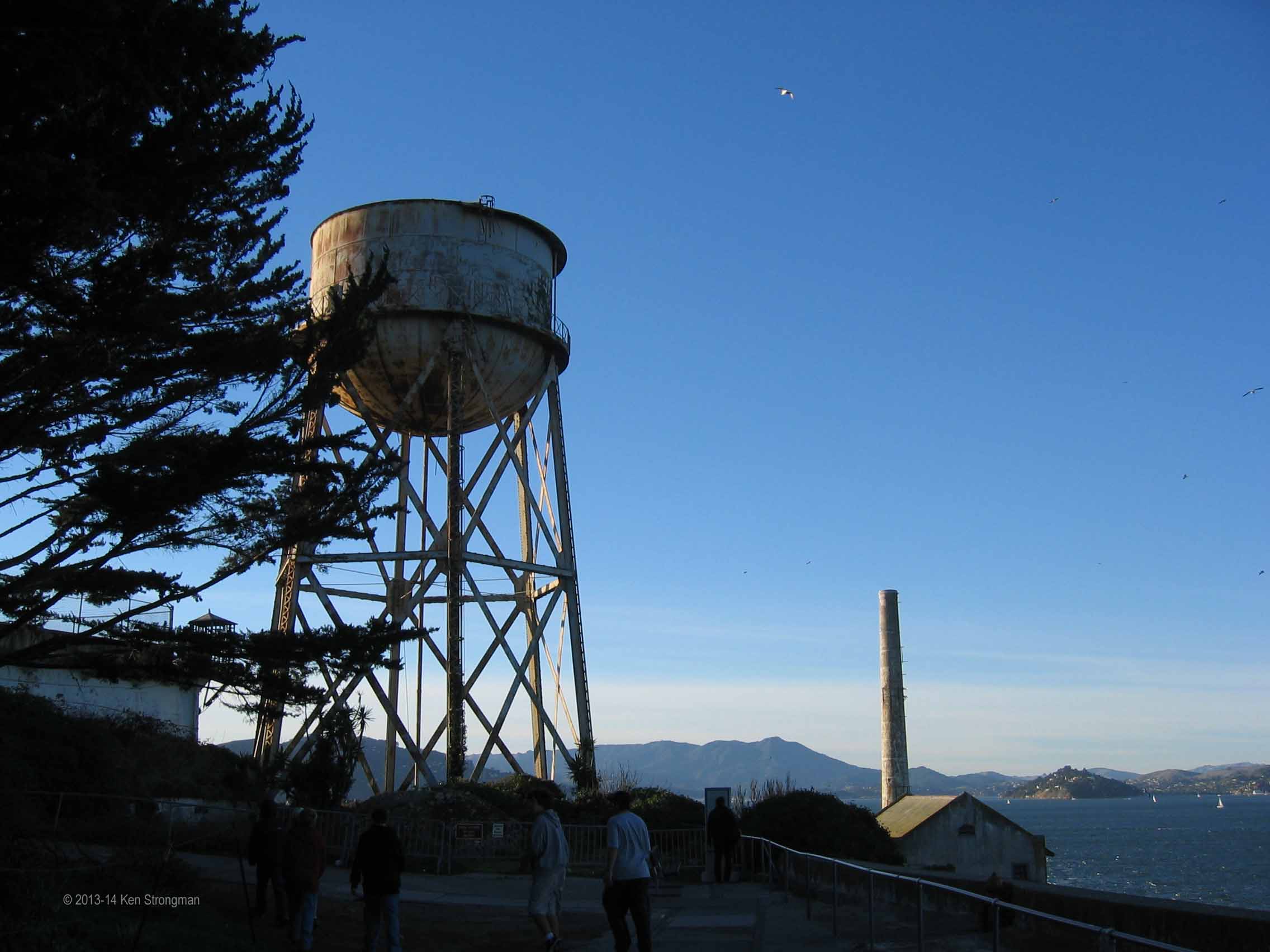
Alcatraz’s Broadway by ourselves at night.
About the Author: Ken Strongman (www.kpstrongman.com) has years of experience and a growing national reputation as a mediator and arbitrator. He has successfully resolved more than a thousand disputes in the fields of construction defects, real estate, intellectual property, and employment. He is also a Mediator and Arbitrator for FINRA.
Websites store cookies to enhance functionality and personalise your experience. You can manage your preferences, but blocking some cookies may impact site performance and services.
Essential cookies enable basic functions and are necessary for the proper function of the website.
Name
Description
Duration
Cookie Preferences
This cookie is used to store the user's cookie consent preferences.
 About the Author: Ken Strongman (www.kpstrongman.com) has years of experience and a growing national reputation as a mediator and arbitrator. He has successfully resolved more than a thousand disputes in the fields of construction defects, real estate, intellectual property, and employment. He is also a Mediator and Arbitrator for FINRA.