Tag: Commercial Mediation

  • Evaluate the trust and goodwill that supported your original agreements.

    goodwill
    Goodwill

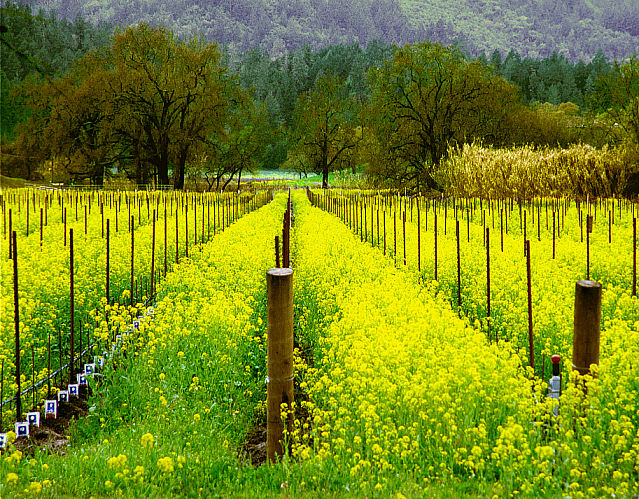
    Task #15: How did you evaluate the trust and goodwill that supported your original agreements?

    The resolution of a dispute does not just occur on the day of the mediation.   Each participant to mediation needs to prepare their own strategy for negotiation in the settlement.  Based on my experience as a mediator, these are a collection of tasks each participant needs to complete and to discuss with their council and the mediator before the mediation.

    Particularly in business disputes whether they are real estate, construction defect, general business or even intellectual property issues, there would have been a meeting of the minds before the deal was done.   That is the essence of a contract.  To get to meeting of the minds you would have had to evaluate the other party and their proposal.  More specifically you have to decide if you can trust them to carry out their side of the bargain.  With this task you need to go back and look at the trust and good will that was developed when you made the contract.  What made you trust them in the first place?  What did they say and or do to generate your trust in them?

    This is important because you may want an ongoing relationship with them after this dispute is resolved.  On the other hand you may not want to have a business relationship with them but out of necessity be forced to have a business relationship.

    By evaluating the good will you will be able to see what was good in the original deal.   It will also help you evaluate the eventual settlement agreement that you and they will be developing within the mediation.

    Ken_Strongman_003smAbout the Author: Ken Strongman (www.kpstrongman.com) has years of experience and a growing national reputation as a mediator and arbitrator.  He has successfully resolved more than a thousand disputes in the fields of construction defects, real estate, intellectual property, and employment.  He is also a Mediator and Arbitrator for FINRA.

    © 2020 Ken Strongman. All Rights Reserved. Please do not copy or repost without permission.

  • I’ve been in mediation and there was so much conflict that nothing got done. Wouldn’t I be better off just going to court?

    court
    Going to court.

    I’ve been in mediation and there was so much conflict that nothing got done. Wouldn’t I be better off just going to court?

    This is an option, but you may not resolve your dispute. Mediation is not about coming to the table as friends to avoid conflict and confrontation, as many professionals would have you believe. It’s about resolving disputes. Inherent in the concept of “dispute” is conflict and without confrontation of that conflict head-on, there may be settlement, but there may be no true resolution.

    In some disputes, settlement itself may be enough, but in most, in addition to the economic or performance related issues, there is an undercurrent of emotion, and both sides often perceive themselves as a “victim” in the dispute. Those complaining of a wrong see themselves as the aggrieved party. Those responding, because they often believe they are involved in the dispute needlessly, feel abused by the claimant and the dispute process, particularly when facing the burdens of litigation.

    You may wish to avoid confrontation at the outset but may find, as the process continues, that you want to express yourself to other parties. Make sure you talk to me as your mediator to allow this flexibility. In a truly meaningful mediation, in addition to providing valuable information to you about the dispute, I will guide you safely through confrontation of the conflict to resolution.

    Remember that Mediation is Conflict at its best.

    Ken Strongman, MediatorAbout the Author: Ken Strongman (www.kpstrongman.com) has years of experience and a growing national reputation as a mediator and arbitrator.  He has successfully resolved more than a thousand disputes in the fields of construction defects, real estate, intellectual property, and employment.  He is also a Mediator and Arbitrator for FINRA.

    © 2020 Ken Strongman. All Rights Reserved. Please do not copy or repost without permission.

  • With the right tools we can handle more conflict.

    handle
    Tools to handle conflict

    Mediation is conflict at its best.   All of the tools, I, as a mediator brings to the mediation help manage the conflict to a great resolution.

    Management expert Margaret Heffernan postulated five counterintuitive guidelines learned in her years running businesses and organizations in her TEDGlobal 2012 presentation.

    Her insight has great implications for successful mediations.  I have always contended that mediation is conflict at it best and her insight bares this out.   Heffernan has developed five guidelines for productive disagreement.

    1. Appoint a devil’s advocate
    2. Find allies
    3. Listen for what is NOT being said
    4. Imagine you cannot do what you all want to do
    5. After a decision is made, declare a cooling off period

    These are counter intuitive guidelines because it is assumed in mediation as well as life that we need to avoid conflict; smooth it over if we have to and compromise if all else fails.   Our job is not to avoid, smooth over or compromise, it is to find a better way.

    Explains Heffernan: “All of these guidelines are neutral and designed to aid exploration rather than judgment. There’s never any reason not to try these — who doesn’t want to make better decisions?”

    Ken Strongman, MediatorAbout the Author: Ken Strongman (www.kpstrongman.com) has years of experience and a growing national reputation as a mediator and arbitrator.  He has successfully resolved more than a thousand disputes in the fields of construction defects, real estate, intellectual property, and employment.  He is also a Mediator and Arbitrator for FINRA.

    © 2020 Ken Strongman. All Rights Reserved. Please do not copy or repost without permission.

  • Starlings v Blueberries – Last Friday’s ABA Representation in Mediation Competition

    Berkeley Law Competition
    Mediation Competition

    Starlings v Blueberries – Last Friday’s ABA Representation in Mediation Competition

    Last Friday I participated in the ABA Representation in Mediation Competition.  I was one of the judges of the competition.  It was a two day event held at Berkeley Law in Boalt Hall at the University of California, Berkeley Campus.

    As Alternative Dispute Resolution (ADR) becomes more integrated in courts and pre-trial procedure, it has been my experience that attorneys will have all of their cases referred to these processes. Therefore, it is important that attorneys adequately represent their clients in this ADR environment. The competition was designed to acquaint the law student with advocacy in mediation. The focus of this competition is on attorney representation of clients in mediation. Judging criteria are geared toward examining the effective combination and use of advocacy and collaborative problem-solving skills.

    The judging criterion was designed to reward those participants who use an effective combination of advocacy skills and a problem-solving approach in the mediation. The problem solving approach is defined as one in which negotiators learn about each other’s interests and BATNA (Best Alternative To A Negotiated Agreement), brainstorm options, and select and shape a solution that meets their interests and, where appropriate, objective standards. Participants were not expected to sacrifice their client’s interests in order to be collaborative.

    The round that I judged consisted of a 75-minute mediation session involving a community dispute involving starlings and blueberries. At the close of the mediation session, there was a 10-minute period during which each team analyzed its performance in private, followed by a 20-minute self-analysis period (10 minutes per team) for each team to evaluate its own performance in the presence of the judges, but outside the other team’s presence.

    I was impressed by the attorney advocates willingness to let their client talk.  They were confident in their own abilities to allow the opposition to ask direct questions of their clients.  This was refreshing.  One of my chief obstacles in mediation is the attorneys putting on shows for their clients benefit.  They forget that their clients will usually have to deal with each other long after the dispute is resolved.

    The 1st place team in this competition automatically advanced to the National Competition.  There were teams from all over the west.   Some came as far away as North Dakota.  I will never know where any team came from.  It would have been a disqualifying breach of the rules to know the law school identity of a team.  Only if a team from the west wins the national competition will I have a hint that I was able to judge their abilities.

    *         *       *

    Ken Strongman, MediatorAbout the Author: Ken Strongman (www.kpstrongman.com) has years of experience and a growing national reputation as a mediator and arbitrator.  He has successfully resolved more than a thousand disputes in the fields of construction defects, real estate, intellectual property, and employment.  He is also a Mediator and Arbitrator for FINRA.

    © 2020 Ken Strongman. All Rights Reserved. Please do not copy or repost without permission.

  • What do I do in a mediation?

    FAQ Mediation San Francisco
    FAQ Mediation San Francisco

    As your mediator, I am neither your friend nor foe.   All too many come into the mediation anticipating that they will “win over” me or that I will advocate on their behalf. Often when this fails to happen, and it should fail to happen, they treat the mediator as an adversary. This does not help them reach resolution and often creates a situation where the entire process is undermined, preventing resolution even where one is possible.

    As mediator I am on neither side of the dispute.  I am an impartial third party that wants the parties to resolve their dispute.  This means that while I may see both sides of the dispute, and may for many reasons, develop a professional opinion or gut instinct as to the reasonableness of the positions and the likely outcome of potential litigation, your mediator should have no stake in the outcome and should not be on your side or any other.

    The only way for me, as your mediator, to be an effective problem solver is to maintain my credibility and objectivity through neutrality. Help me by understanding this and supporting my position of neutrality.  Not only will this help me to resolve your dispute, but doing so will help you to understand and trust my motive in giving an opinion, regardless of whether it is favorable or not, and to gain confidence in the information I am bringing to you, both of which will ultimately lead to higher satisfaction with the resolution chosen.

    Ken StrongmanAbout the Author: Ken Strongman (www.kpstrongman.com) has years of experience and a growing national reputation as a mediator and arbitrator.  He has successfully resolved more than a thousand disputes in the fields of construction defects, real estate, intellectual property, and employment.  He is also a Mediator and Arbitrator for FINRA.

    © 2020 Ken Strongman. All Rights Reserved. Please do not copy or repost without permission.

  • In Conflict, it is never a bad idea to have a cooling off period

    Margaret Heffernan final counterintuitive idea to encourage healthy conflict would be after a decision is made, declare a cooling off period.    Her suggestion is to ask everyone to go home and think about the decision on their own as well as discuss it with their associates.  Then come back after a prescribed amount of time and ask the group: does the decision still look great?

    In the real world that is a great idea but not always practical.   That is why I prefer to allocate the entire day to my mediations.   It allows everyone time to cool off through out the day and to make the emotional journey towards a great settlement.  It is still an emotional journey even if the dispute is a multi-million dollar construction defect case or paten infringement case.

    Ken Strongman, MediatorAbout the Author: Ken Strongman (www.kpstrongman.com) has years of experience and a growing national reputation as a mediator and arbitrator.  He has successfully resolved more than a thousand disputes in the fields of construction defects, real estate, intellectual property, and employment.  He is also a Mediator and Arbitrator for FINRA.

    © 2020 Ken Strongman. All Rights Reserved. Please do not copy or repost without permission.

  • Why I joined the ADR section – article

    Here is the article that was just published in the Contra Costa Lawyer, Volume 26, Number 1- January 2013.  I am starting an exciting years as Chair of the ADR Section of the Contra Costa Bar Association.

    Meet Your Section Leaders – Alternative Dispute Resolution

    Ken Strongman

    How has section membership benefited your practice?

    I joined the ADR Section so that I could be on the cutting edge of the way we resolve disputes in our so­ciety, including the way we litigate in California. I did it so that my cor­porate clients would always benefit from the earliest thoughts and pro­cesses available and that my media­tion practice would correspondingly expand and be the best it could be.

    On my own, I would have had zero influence on the profession. As part of the ADR section, we collectively help direct the future of Alternative Dispute Resolu­tion processes in Contra Costa and the State of Califor­nia. This has allowed my practice to be in the forefront of ADR. Rarely will my general counsel clients be criti­cized for selecting me as a mediator. They are able to confidently tell their parties that they tried everything to avoid litigating and incurring additional legal fees and their company bosses can then assure their direc­tors and shareholders that they have retained the best.

    Besides being on the forefront of ADR, we are able to ad­vise Courts and members of the Bar as to the best prac­tices ADR has to offer. Currently, we are actively help­ing the Courts develop rules, policies and procedures to avoid having justice grind to a halt in our current Court budget crisis. I am also able to modify my practice to pre­pare for the coming changes in rules, policies and proce­dures.

    At every one of our programs, be it a formal presentation or informal roundtable, I learn something new that will benefit my mediation practice in concrete ways. Every one of our events is designed to benefit the ADR practi­tioner – whether it be a roundtable on mediation prac­tice marketing, or our yearly specialized class on How to Mediate with Self Represented Litigants.

    Why should someone join the ADR Section?

    By joining the section, ADR practitioners and those who participate in ADR as an advocate for their clients will benefit themselves and their clients in knowing the direction of dispute resolution in Contra Costa and the way litigation will occur in California in the continuing Court budget crisis

    Ken StrongmanAbout the Author: Ken Strongman (www.kpstrongman.com) has years of experience and a growing national reputation as a mediator and arbitrator.  He has successfully resolved more than a thousand disputes in the fields of construction defects, real estate, intellectual property, and employment.  He is also a Mediator and Arbitrator for FINRA.

    © 2020 Ken Strongman. All Rights Reserved. Please do not copy or repost without permission.

  • Imagine you cannot do what you all want to do.

    Imagin
    imagine

    Imagine

    Imagine you cannot do what you all want to do.  Management expert Margaret Heffernan postulated this counterintuitive idea learned in her years running businesses and organizations in her TEDGlobal 2012 presentation.

    In other words, think about what you would do if you could fire someone, if you could change the timetable, or if you were allowed to cancel the deal. If you could do any of those things — would you still proceed with your plan? What are the hidden orthodoxies nobody is challenging?

    To resolve conflicts we all have to think outside the box.  Often times in mediation, what one party wants can’t happen.   This occurs even if they would have won in court.   The mediator’s job is to help them to see what the various true outcomes might be.

    Margaret Heffernan (born 1955) is an international businesswoman and writer. She was born in Texas, raised in the Netherlands, educated at Cambridge University and settled in the UK near the city of Bath.

    She is the author of five books: The Naked Truth: A Working Woman’s Manifesto about Business and What Really Matters, How She Does It (published in paperback as Women on Top), Willful Blindness: Why We Ignore the Obvious at our Peril, A Bigger Prize: Why Competition isn’t Everything and How We Do Better, and Beyond Measure – a short book commissioned by TED. While Heffernan’s first two books focused on these issues as they impact women in the workplace, her overarching theme has been the need to recognize and release the talent that often lies buried inside organizations, under-valued and under-rewarded because it is unconventional. Heffernan’s voice is primarily one of critical challenge, taking little at face value and regularly questioning received wisdom.

    Ken Strongman, MediatorAbout the Author: Ken Strongman (www.kpstrongman.com) has years of experience and a growing national reputation as a mediator and arbitrator.  He has successfully resolved more than a thousand disputes in the fields of construction defects, real estate, intellectual property, and employment.  He is also a Mediator and Arbitrator for FINRA.

    © 2020 Ken Strongman. All Rights Reserved. Please do not copy or repost without permission.

  • Task #14: Looking at the previous two questions, where do you think THEIR perspective differs from your own.

    perspective
    As in Climbing keep your perspective

    Task #14: Looking at the previous two questions, where do you think THEIR perspective differs from your own.

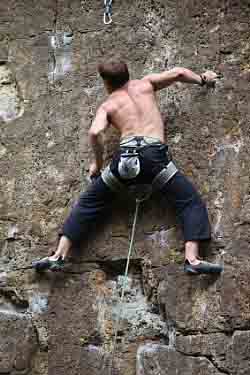
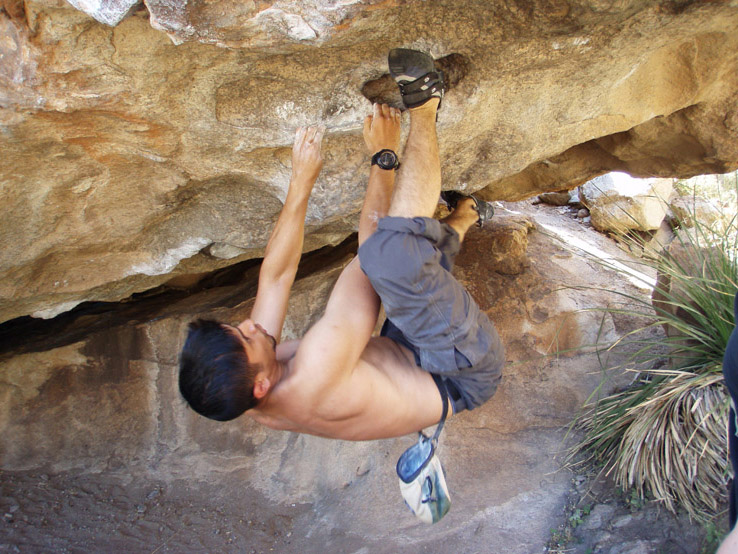
    Looking at the previous two questions below, where do you think THEIR perspective differs from your own.

    • Task #12:  What important understanding did you think you had when you originally got involved together?
    • Task #13: In a dispute, how did the relationship change?

    The resolution of a dispute does not just occur on the day of the mediation.   Each participant to mediation needs to prepare their own strategy for negotiation in the settlement.  Based on my experience as a mediator, these are a collection of tasks each participant needs to complete and to discuss with their council and the mediator before the mediation.

    Your exercise now is to answer the same questions that you have worked through but from their point of view.   Maybe they think the honeymoon phase ended at a different time and way.  What was their vision for the future of your relationship at the beginning of the agreement?  How much money did they think they were going to make?  Was this agreement a stepping stone to something else?  Without trying to look at the problem from their point of view, will you both find a way forward?

    Ken Strongman, MediatorAbout the Author: Ken Strongman (www.kpstrongman.com) has years of experience and a growing national reputation as a mediator and arbitrator.  He has successfully resolved more than a thousand disputes in the fields of construction defects, real estate, intellectual property, and employment.  He is also a Mediator and Arbitrator for FINRA.

    © 2020 Ken Strongman. All Rights Reserved. Please do not copy or repost without permission.

  • Listen for what is NOT being said.

    said
    Listening to what is not being said

    Listen for what is NOT being said

    Listen for what is NOT being said is counter-intuitive, but very important.  You need to find the elephant in the room.   Listening for what is not being said is the primary job of the mediator.  What we do is listen, clarify and re-frame.  We may notice trends that people embroiled in the conversation simply can’t see.   We give our impressions – not recommendations.

    Margaret Heffernan postulated this counter-intuitive idea by using the following re-framing questions:

    • If the conversation is being framed about money, consider what is not being talked about.
    • If everyone’s talking technology, what have they left out of their equation?

    the key component of a successful mediation

    Listening is most likely the key component of a successful mediation.  Everyone has to listen to all aspects of the conflict in safe surroundings.  That’s why I say that mediation is conflict at its best.

    Margaret Heffernan (born 1955) is an international businesswoman and writer. She was born in Texas, raised in the Netherlands, educated at Cambridge University and settled in the UK near the city of Bath.

    She is the author of five books: The Naked Truth: A Working Woman’s Manifesto about Business and What Really Matters, How She Does It (published in paperback as Women on Top), Willful Blindness: Why We Ignore the Obvious at our Peril, A Bigger Prize: Why Competition isn’t Everything and How We Do Better, and Beyond Measure – a short book commissioned by TED.

    While Heffernan’s first two books focused on these issues as they impact women in the workplace, her overarching theme has been the need to recognize and release the talent that often lies buried inside organizations, under-valued and under-rewarded because it is unconventional. Heffernan’s voice is primarily one of critical challenge, taking little at face value and regularly questioning received wisdom.

    Ken_Strongman_003smAbout the Author: Ken Strongman (www.kpstrongman.com) has years of experience and a growing national reputation as a mediator and arbitrator.  He has successfully resolved more than a thousand disputes in the fields of construction defects, real estate, intellectual property, and employment.  He is also a Mediator and Arbitrator for FINRA.

    © 2020 Ken Strongman. All Rights Reserved. Please do not copy or repost without permission.