
Tag: Commercial Mediation

  • FAQ: Do I have to have a lawyer at my mediation?

    FAQ_Mediation Mendocino 03 lawyer
    Lawyer at mediation?

    Do I have to have a lawyer at my mediation?

    No, it is not necessary to have a lawyer representing you at mediation. If you have a lawyer already representing your interests in the dispute you would need to discuss this with him or her.  If you feel you need legal advice or that you are unqualified or uncomfortable dealing with the issues on your own, then you should consult a lawyer and perhaps hire someone on an hourly basis solely for the purpose of representing you at the mediation.

    If, on the other hand, you are involved in a dispute that you feel comfortable resolving without a lawyer, keeping in mind that your mediator will not give you legal advice or advocate on your behalf, by all means, make an attempt to resolve it on your own first.

    Do remember that the other party has a right to hire an attorney and to bring them to the mediation to help represent them.  If that scenario occurs, there will be no one to advocate your interests. You will not have a right to delay the mediation to hire your own attorney.

    Mediation is a voluntary process that centers on discussions and decision-making, rather than judgment. It is focused on resolving disputes based on the factual circumstances, the needs of the parties and practicality, and not solely on the legal rights of the parties (sometimes, despite those rights). Often, the mere presence of an attorney creates an antagonistic and adversarial atmosphere that impedes resolution rather than assisting it.

    It has been my experience that when the parties have attorneys and those attorneys are actively helping to resolve the issues, the mediation is more successful.  This does not mean that representing yourself in mediation is a no-win situation.  I have conducted many mediations where one or more parties were self represented.

    Ken_Strongman_003smAbout the Author: Ken Strongman (www.kpstrongman.com) has years of experience and a growing national reputation as a mediator and arbitrator.  He has successfully resolved more than a thousand disputes in the fields of construction defects, real estate, intellectual property, and employment.  He is also a Mediator and Arbitrator for FINRA.

    © 2020 Ken Strongman. All Rights Reserved. Please do not copy or repost without permission.

  • Is a Retired Judge a Better Mediator?

    retired judge
    Does a retired judge make a better mediator?

    It is assumed that a retired judge makes a better mediator than someone that has not been a judge.  This couldn’t be further from the truth. 

    Rendering judgment requires an entirely different skill set than helping the parties resolve their case through mediation.  The day to day activities of a judge do not lend themselves to facilitating the resolution of conflicts.  The basic skill that is useful to a judge but not a mediator is the ability to make quick and final decisions on any particular issue. Therefore when they approach mediation they want to make the decision and not let the parties control their own solution to the problem.

    It is assumed that 20-years on the bench translates to 20-years experience working with civil attorneys and parties and the issues of civil litigation.  In most courts today, very few judges are presiding over civil trials.  Most of their days as spent presiding over criminal trials.  Even the remaining time of their tenure on the bench is divided between family law, juvenile, probate, and traffic.

    The law practice of most judges before being appointed to the bench is not as a civil attorney.  Many were deputy district attorneys or public defenders before becoming judges.  Therefore they have no experience with any civil issues before becoming judges.

    Mediation is a voluntary process that centers on discussions and decision-making, rather than judgment by a judge or retired judge. It is focused on resolving disputes based on the factual circumstances, the needs of the parties and practicality, and not solely on the legal rights of the parties. Often, the mere presence of a retired judge creates an antagonistic and adversarial atmosphere that impedes resolution rather than assisting it.

     In reality you want a mediator such as me that is trained in helping the parties resolve their problems.

    Ken Strongman, MediatorAbout the Author: Ken Strongman (www.kpstrongman.com) has years of experience and a growing national reputation as a mediator and arbitrator.  He has successfully resolved more than a thousand disputes in the fields of construction defects, real estate, intellectual property, and employment.  He is also a Mediator and Arbitrator for FINRA.

    © 2020 Ken Strongman. All Rights Reserved. Please do not copy or repost without permission.

  • Task #21: If something happens in the mediation that irritates you, what will you do to get back on task?

    Ken Strongman Mediation Tasks 06If something happens in the mediation that irritates you, what will you do to get back on task?

    The resolution of a dispute does not just occur on the day of the mediation.   Each participant to mediation needs to prepare their own strategy for negotiation in the settlement.  Based on my experience as a mediator, these are a collection of tasks each participant needs to complete and to discuss with their council and the mediator before the mediation.

    How will you help get things back on task if that happens?  Things happen in mediation.  Sometimes it is the realization that the person that caused the dispute is sitting across the table from you.  You have just been confronted with the fact that you still have to deal with them whether now or in court.  You need to develop a game plan for getting back on task and settling the dispute.  It might be a private caucus or just a break.  It might be a continuance of the mediation itself to another day.  Communicating your needs to the mediator will help get things back on task and help settle the dispute.

    Will you risk your future financial interests to avoid uncomfortable discussions now?   This is the question you must keep in mind.   Mediation can be quite uncomfortable.  Mediation is conflict at its best.  But settlements do happen and are worth the discomfort.

    Will you accept a satisfactory offer to settle, even if you are very resentful about how you’ve been treated?  At some point you must make the decision that you want to settle the dispute and move on to better days.  It is important to make this decision before you come to the mediation.  If you do not want to settle, and want to continue expending the emotional energy, not counting the expense of litigation, then mediation will not be effective.

    Ken StrongmanAbout the Author: Ken Strongman (www.kpstrongman.com) has years of experience and a growing national reputation as a mediator and arbitrator.  He has successfully resolved more than a thousand disputes in the fields of construction defects, real estate, intellectual property, and employment.  He is also a Mediator and Arbitrator for FINRA.

    © 2020 Ken Strongman. All Rights Reserved. Please do not copy or repost without permission.

  • How long should mediation take?

    FAQ_Mediation Golden Gate long
    How Long?

    How long should mediation take?

    We have grown used to life happening instantaneously. What we forget is that despite all the fast and furious technology, we remain human beings. We may be more sophisticated overall, but are otherwise no different than we were thousands of years ago. Our thought processes and decision-making ability have not evolved along with technology and to expect otherwise is to set ourselves up for disappointment, if not failure.

    Too many people approach mediation as a finite process, allowing only two or three hours, with the expectation that the dispute will either be resolved or it won’t, but the process will be complete. Sometimes they are correct, but in most cases, this is a mistake that dooms the process to failure. Regardless of the dispute involved, mediation is a personal process that needs to occur in human time. Without exception, at least one of the participants in the mediation will have some very personal issues to confront and assess in making the decisions asked of them. Because the point of mediation is “resolution” rather than merely “settlement”, it is unfair and often impossible to rush this.

    It is always best to have an open-ended amount of time available when scheduling mediation, in order to allow for the possibility of prolonged discussions. If you are unable, for whatever reason, to give the process this time in a single session, let me, as your mediator, know at the outset, and allow for the possibility of further discussions in the future.

    Allowing people the ability to process information in their own time, whether at the mediation session or subsequent sessions, will lead to greater contentment in resolution and a greater likelihood of finality to the dispute involved.

    Ken Strongman, MediatorAbout the Author: Ken Strongman (www.kpstrongman.com) has years of experience and a growing national reputation as a mediator and arbitrator.  He has successfully resolved more than a thousand disputes in the fields of construction defects, real estate, intellectual property, and employment.  He is also a Mediator and Arbitrator for FINRA.

    © 2020 Ken Strongman. All Rights Reserved. Please do not copy or repost without permission.

  • Task #20: We all have buttons. When pushed they have irritated you. If not, we would not be here at mediation. Therefore, what could they say or do in the mediation that would really tick you off all over again?

    Ken Strongman Mediation Tasks buttons
    What are your buttons?

    Task #20: We all have buttons.

    We all have buttons. When pushed they have irritated you. If not, we would not be here at mediation. Therefore, what could they say or do in the mediation that would really tick you off all over again?

    The resolution of a dispute does not just occur on the day of the mediation.   Each participant to mediation needs to prepare their own strategy for negotiation in the settlement.  Based on my experience as a mediator, these are a collection of tasks each participant needs to complete and to discuss with their council and the mediator before the mediation.

    We all have buttons that might be pushed by the opposition.  They can be anything.  Once it was the attorneys that were the problem.  They did not like each other nor respect each other.  They got into a shouting match yelling four letter words at each other. Their clients didn’t know what to do.  Naturally, we went quickly in to private caucus and tempers went down.

    You need to understand what your personal buttons are and you need to communicate them to the mediator.  With that knowledge the mediator can skillfully avoid the potential of those buttons being pushed by the other party.

    Ken Strongman, MediatorAbout the Author: Ken Strongman (www.kpstrongman.com) has years of experience and a growing national reputation as a mediator and arbitrator.  He has successfully resolved more than a thousand disputes in the fields of construction defects, real estate, intellectual property, and employment.  He is also a Mediator and Arbitrator for FINRA.

    © 2020 Ken Strongman. All Rights Reserved. Please do not copy or repost without permission.
  • What am I actually getting for my money when I hire a mediator?

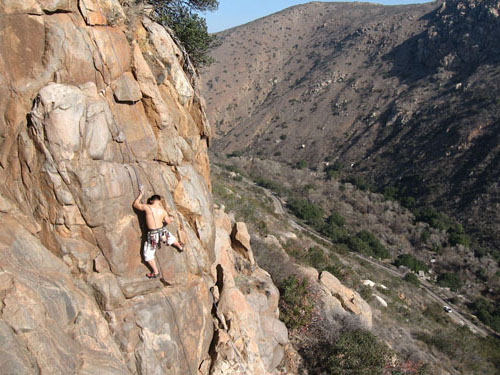
    Bonita Cove from Point Bonita Lighthouse Trail

    When you hire me as your mediator, you are buying the opportunity, through a neutral third party, to evaluate with someone who is an objective “sounding board,” your real needs (personal, economic, spiritual, etc.) and to evaluate which dispute resolution process will best help you meet those needs.

    *    You are buying my opinions and impressions of “your first juror,” as to existing information/evidence and that which is non-existent.

    *    You are buying an opportunity to become more informed of the risks and benefits involved in resolving or litigating a dispute.

    *    You are buying an opportunity to address and resolve differences of opinion or expectation between you and your client, you and other professionals or between several clients (business partners, etc.).

    *    In addition, you are buying many things that can’t be quantified, unique to your particular dispute, which come with the intervention of an experienced neutral.

    I am usually hired as a mediator because of my perceived ability to resolve a dispute.

    Mediators don’t settle cases, parties do! What you are really buying are choices.  My value as a mediator is my expertise in guiding all of the parties involved in a dispute to a point where there are new, real and often difficult choices created. It is up to you to evaluate those choices, in light of the insights you gain through the mediation process, and choose that one which will end the dispute in the manner that brings you the most complete resolution. In getting to that point, whether that choice is to accept a proposed settlement or continue on the path to litigation, you have gotten “your money’s worth”.

    Ken StrongmanAbout the Author: Ken Strongman (www.kpstrongman.com) has years of experience and a growing national reputation as a mediator and arbitrator.  He has successfully resolved more than a thousand disputes in the fields of construction defects, real estate, intellectual property, and employment.  He is also a Mediator and Arbitrator for FINRA.

    © 2020 Ken Strongman. All Rights Reserved. Please do not copy or repost without permission.

  • Task #19: What evidence can you bring to the mediation that will be credible to them and will help them see your point of view?

    Ken Strongman Mediation Tasks 09
    credible evidence

    Task #19: Credible evidence?

    What evidence can you bring to the mediation that will be credible to them and will help them see your point of view? The resolution of a dispute does not just occur on the day of the mediation.   Each participant to mediation needs to prepare their own strategy for negotiation in the settlement.  Based on my experience as a mediator, these are a collection of tasks each participant needs to complete and to discuss with their council and the mediator before the mediation.

    It is useful to bring evidence to the mediation that will be credible to your opposition and will help them see your point of view.   This is at the very least your smoking gun.  But though it might be a smoking gun to you, it is important that they see it as such.  If this evidence would be admissible in court, then it would be best to send it to them way before the mediation.  By so doing, you might eliminate the need for the mediation itself.

    It is not necessary, despite the objections of the lawyers, that the evidence be admissible in court.  The beauty of mediation is that the parties can look at all of the evidence and then reach a decision.  The mediator and attorneys would help evaluate the evidence and its admissibility to determine possible settlement.

    They will also be bringing their own evidence to help you see their point of view, too.

    Ken Strongman, MediatorAbout the Author: Ken Strongman (www.kpstrongman.com) has years of experience and a growing national reputation as a mediator and arbitrator.  He has successfully resolved more than a thousand disputes in the fields of construction defects, real estate, intellectual property, and employment.  He is also a Mediator and Arbitrator for FINRA.

    © 2020 Ken Strongman. All Rights Reserved. Please do not copy or repost without permission

  • Who should attend the mediation?

    Golden Gate Bridge, Marin Headlands.
    Who should attend the mediation?

     Who Should Attend the Mediation?

     All parties involved in the interactions that gave rise to the dispute should be involved in the mediation. This helps me, as mediator; crystallize with the parties exactly what happened. A party may also be more candid with me when they know they may be faced with others who know exactly what happened.

    It is essential that all insurance carriers are represented at the mediation and that they have full authority to settle the dispute.

    In addition, for parties to a dispute, letting go of emotion is often critical to the ability to resolve a dispute. An acknowledgement of damage or expression of remorse from an opposing party or a participant in the interactions that gave rise to the dispute (without any admission of liability, of course) can make the difference. This can’t usually be done by anyone but those personally involved in the dispute.

    Bringing your witnesses (party, corporate or independent) to a mediation (even if they spend all their time in a separate room), can accomplish some important things, particularly when the facts are in dispute or emotions run high. Meeting and speaking with witnesses allows a mediator to provide you with an opinion as to their credibility and the likelihood of their being persuasive with an arbitrator, judge or jury.

    Every situation is different and you should talk to me, your mediator to see what would be appropriate for your mediation.

    Ken StrongmanAbout the Author: Ken Strongman (www.kpstrongman.com) has years of experience and a growing national reputation as a mediator and arbitrator.  He has successfully resolved more than a thousand disputes in the fields of construction defects, real estate, intellectual property, and employment.  He is also a Mediator and Arbitrator for FINRA.

    © 2020 Ken Strongman. All Rights Reserved. Please do not copy or repost without permission.
  • Task #18: Do you believe that they might owe you something specifically to restore or compensate for the betrayal, bad faith, or loss of confidence?

    Ken Strongman Mediation tasks 02
    specifically owed?

    Task #18: Do you believe that they might owe you something specifically?

    Do you believe that they might owe you something specifically to restore or compensate for the betrayal, bad faith, or loss of confidence? The resolution of a dispute does not just occur on the day of the mediation.   Each participant to mediation needs to prepare their own strategy for negotiation in the settlement.  Based on my experience as a mediator, these are a collection of tasks each participant needs to complete and to discuss with their council and the mediator before the mediation.

    While many mediations come down to a money dance between the disputants, there are other things could be said or happen that would go a long way to resolving the dispute.   This is one of the great advantages to using mediation to resolve a dispute.  In the Courts, it is only money that can be used to make the parties whole.

    Often the one thing that could be done to restore or compensate for the betrayal and bad faith is an apology by one of the parties.  I have spent many hours in mediations working on apologies by one of the parties.  We will work on the wording to make sure it is sincere enough and can be said with enough feeling that the receivers of the apology believe and can accept the apology.  Some times both sides have apologized to each other.

    Though hours are spent on the apology, few are repeated outside of the mediation.  Occasionally, they might be embedding into the final settlement agreement.  Even then there might be a confidentiality clause included in that agreement.

    It is not only apologies that are done within mediation.  Recently, one party just wanted to speak their mind and just wanted the other party to listen.   In this mediation, we again spent time working on what would be said, how it would be said, the expected responses of the other party.  We even set a time limit on the speaking and any potential response.  Both sides did not want anything said that would inflame the situation.  It was quite successful.  No one used their entire time allotment and we proceeded to a complete settlement of the dispute.

    As always, sometimes it is just a fixed amount of money that will restore some good faith and remove the feeling of betrayal.  Though I have found that if this is coupled with an apology, the amount of money required is greatly reduced.

    Ken_Strongman_003smAbout the Author: Ken Strongman (www.kpstrongman.com) has years of experience and a growing national reputation as a mediator and arbitrator.  He has successfully resolved more than a thousand disputes in the fields of construction defects, real estate, intellectual property, and employment.  He is also a Mediator and Arbitrator for FINRA.

    © 2020 Ken Strongman. All Rights Reserved. Please do not copy or repost without permission.
  • Why did the mediator stop the mediation without resolving the dispute?

    Stinson Beach, Dip Sea Trail, CP XC Team
    Stop the mediation?

     Why did the mediator stop the mediation without resolving the dispute?

    As valuable as it is for me, as mediator, to know how to move a dispute to resolution, it is equally important, if not more so, for me to recognize when a dispute isn’t prepared for resolution and how to move it in the right direction. With the exception of reaching resolution, this is one of the greatest benefits of mediation.

    Some of the most successful mediations are those in which the parties never even get to a discussion of money or resolution in the initial mediation session, but evaluate where the case is, where it needs to be and who needs to be involved, in order to achieve the greatest productivity in mediation. At this initial session, the parties through my guidance develop a plan with specific “homework” to be completed before reconvening at a different date.

    This “homework” may mean spending some time and money on investigation or making a more cooperative effort between the parties in sharing existing information. Regardless, once this is done, the dispute is usually postured for a realistic and informed evaluation. Often, once the “homework” is complete, further mediation becomes unnecessary and these matters are able to resolve through the efforts the parties alone.

    Ken Strongman, MediatorAbout the Author: Ken Strongman (www.kpstrongman.com) has years of experience and a growing national reputation as a mediator and arbitrator.  He has successfully resolved more than a thousand disputes in the fields of construction defects, real estate, intellectual property, and employment.  He is also a Mediator and Arbitrator for FINRA.

    © 2020 Ken Strongman. All Rights Reserved. Please do not copy or repost without permission.