Tag: kenneth strongman

  • Who should attend the mediation?

    Golden Gate Bridge, Marin Headlands.
    Who should attend the mediation?

     Who Should Attend the Mediation?

     All parties involved in the interactions that gave rise to the dispute should be involved in the mediation. This helps me, as mediator; crystallize with the parties exactly what happened. A party may also be more candid with me when they know they may be faced with others who know exactly what happened.

    It is essential that all insurance carriers are represented at the mediation and that they have full authority to settle the dispute.

    In addition, for parties to a dispute, letting go of emotion is often critical to the ability to resolve a dispute. An acknowledgement of damage or expression of remorse from an opposing party or a participant in the interactions that gave rise to the dispute (without any admission of liability, of course) can make the difference. This can’t usually be done by anyone but those personally involved in the dispute.

    Bringing your witnesses (party, corporate or independent) to a mediation (even if they spend all their time in a separate room), can accomplish some important things, particularly when the facts are in dispute or emotions run high. Meeting and speaking with witnesses allows a mediator to provide you with an opinion as to their credibility and the likelihood of their being persuasive with an arbitrator, judge or jury.

    Every situation is different and you should talk to me, your mediator to see what would be appropriate for your mediation.

    Ken StrongmanAbout the Author: Ken Strongman (www.kpstrongman.com) has years of experience and a growing national reputation as a mediator and arbitrator.  He has successfully resolved more than a thousand disputes in the fields of construction defects, real estate, intellectual property, and employment.  He is also a Mediator and Arbitrator for FINRA.

    © 2020 Ken Strongman. All Rights Reserved. Please do not copy or repost without permission.
  • What is Conflict?

    NYLT_Ken_Strongman 03
    Conflict

    What is Conflict?

    Conflict occurs when people disagree and seem unable to find a solution or a reasonable compromise.  The roots of these disagreements can arise from many sources including differences in personality, values, and perceptions.  As a team leader, you will occasionally need to handle the differences that arise between members of your team. Conflicts may be minor or they may fester into something that can damage team spirit and the ability of the group to work together effectively.

    Often it is the lack of team vision of what should happen in a given situation that creates the conflict.  To minimize conflict, the team vision needs to be agreed to before the team can achieve its goals.  If there is a difference, then the team members will never be on the same page.

    In team development the Storming stage is ripe for conflict.  That is where this stage gets its name.  Therefore as a leader, you should expect conflict and to be prepared for it while the team moves through this stage of team development.  If the team doesn’t start to resolve their conflicts in this stage, the team will not get to the performing stage and achieve the team vision.

    Minor conflicts, if not resolved, can grow to bigger ones.  At the same time, they will damage team spirit.  Therefore it is important to watch out for minor conflicts and create mechanisms to resolve them.

    **For the last decade I’ve been involved with leadership development of tomorrow’s leaders.  Using my expertise, I am training the youth leaders in conflict resolution.  This blog is adapted from my training materials. 

     NYLT_Ken_Strongman 03

    Ken StrongmanAbout the Author: Ken Strongman (www.kpstrongman.com) has years of experience and a growing national reputation as a mediator and arbitrator.  He has successfully resolved more than a thousand disputes in the fields of construction defects, real estate, intellectual property, and employment.  He is also a Mediator and Arbitrator for FINRA.

    © 2020 Ken Strongman. All Rights Reserved. Please do not copy or repost without permission.

  • Task #18: Do you believe that they might owe you something specifically to restore or compensate for the betrayal, bad faith, or loss of confidence?

    Ken Strongman Mediation tasks 02
    specifically owed?

    Task #18: Do you believe that they might owe you something specifically?

    Do you believe that they might owe you something specifically to restore or compensate for the betrayal, bad faith, or loss of confidence? The resolution of a dispute does not just occur on the day of the mediation.   Each participant to mediation needs to prepare their own strategy for negotiation in the settlement.  Based on my experience as a mediator, these are a collection of tasks each participant needs to complete and to discuss with their council and the mediator before the mediation.

    While many mediations come down to a money dance between the disputants, there are other things could be said or happen that would go a long way to resolving the dispute.   This is one of the great advantages to using mediation to resolve a dispute.  In the Courts, it is only money that can be used to make the parties whole.

    Often the one thing that could be done to restore or compensate for the betrayal and bad faith is an apology by one of the parties.  I have spent many hours in mediations working on apologies by one of the parties.  We will work on the wording to make sure it is sincere enough and can be said with enough feeling that the receivers of the apology believe and can accept the apology.  Some times both sides have apologized to each other.

    Though hours are spent on the apology, few are repeated outside of the mediation.  Occasionally, they might be embedding into the final settlement agreement.  Even then there might be a confidentiality clause included in that agreement.

    It is not only apologies that are done within mediation.  Recently, one party just wanted to speak their mind and just wanted the other party to listen.   In this mediation, we again spent time working on what would be said, how it would be said, the expected responses of the other party.  We even set a time limit on the speaking and any potential response.  Both sides did not want anything said that would inflame the situation.  It was quite successful.  No one used their entire time allotment and we proceeded to a complete settlement of the dispute.

    As always, sometimes it is just a fixed amount of money that will restore some good faith and remove the feeling of betrayal.  Though I have found that if this is coupled with an apology, the amount of money required is greatly reduced.

    Ken_Strongman_003smAbout the Author: Ken Strongman (www.kpstrongman.com) has years of experience and a growing national reputation as a mediator and arbitrator.  He has successfully resolved more than a thousand disputes in the fields of construction defects, real estate, intellectual property, and employment.  He is also a Mediator and Arbitrator for FINRA.

    © 2020 Ken Strongman. All Rights Reserved. Please do not copy or repost without permission.

  • Why did the mediator stop the mediation without resolving the dispute?

    Stinson Beach, Dip Sea Trail, CP XC Team
    Stop the mediation?

     Why did the mediator stop the mediation without resolving the dispute?

    As valuable as it is for me, as mediator, to know how to move a dispute to resolution, it is equally important, if not more so, for me to recognize when a dispute isn’t prepared for resolution and how to move it in the right direction. With the exception of reaching resolution, this is one of the greatest benefits of mediation.

    Some of the most successful mediations are those in which the parties never even get to a discussion of money or resolution in the initial mediation session, but evaluate where the case is, where it needs to be and who needs to be involved, in order to achieve the greatest productivity in mediation. At this initial session, the parties through my guidance develop a plan with specific “homework” to be completed before reconvening at a different date.

    This “homework” may mean spending some time and money on investigation or making a more cooperative effort between the parties in sharing existing information. Regardless, once this is done, the dispute is usually postured for a realistic and informed evaluation. Often, once the “homework” is complete, further mediation becomes unnecessary and these matters are able to resolve through the efforts the parties alone.

    Ken Strongman, MediatorAbout the Author: Ken Strongman (www.kpstrongman.com) has years of experience and a growing national reputation as a mediator and arbitrator.  He has successfully resolved more than a thousand disputes in the fields of construction defects, real estate, intellectual property, and employment.  He is also a Mediator and Arbitrator for FINRA.

    © 2020 Ken Strongman. All Rights Reserved. Please do not copy or repost without permission.

  • A working definition of a Conflict.

    NYLT_Ken_Strongman 02 A working definition of a Conflict.

    What is a working definition of a Conflict. Conflicts can occur when people disagree with each other and are unable to find a reasonable compromise.  The roots of these disagreements can arise from many sources including differences in personality, values and perceptions.  They also can and often do arise when there is a difference in the goals and visions of the group.

    Most conflicts that require mediation occur when there is a difference in the perceived outcome.   Historical arguments have occurred over whether bananas are fruits or vegetables; or, whether the order was for frying chickens or broiling chickens.  Parts are not parts for most people.  Both of these issues had to be resolved by the United States Supreme Court.

    In NYLT we teach that as leaders they will need to handle the differences that arise between members of the team they are leading.  Conflicts may be minor or they may fester into something that can damage team spirit and ability to work together effectively.

    **For the last decade I’ve been involved with leadership development of tomorrow’s leaders.  Using my expertise, I am training the youth leaders in conflict resolution.  This blog is adapted from my training materials. 


    Ken StrongmanAbout the Author: Ken Strongman (www.kpstrongman.com) has years of experience and a growing national reputation as a mediator and arbitrator.  He has successfully resolved more than a thousand disputes in the fields of construction defects, real estate, intellectual property, and employment.  He is also a Mediator and Arbitrator for FINRA.

    © 2020 Ken Strongman. All Rights Reserved. Please do not copy or repost without permission.

  • Task #17: How do you evaluate the betrayal, bad faith or loss of confidence?

    Ken Strongman Mediation Tasks 07
    betrayal, bad faith or loss of confidence

    Task #17: How do you evaluate the betrayal, bad faith or loss of confidence?

    The resolution of a dispute does not just occur on the day of the mediation.   Each participant to mediation needs to prepare their own strategy for negotiation in the settlement.  Based on my experience as a mediator, these are a collection of tasks each participant needs to complete and to discuss with their council and the mediator before the mediation.

    Previously, you were asked to pin point the exact time and place for your sense of betrayal, bad faith or loss of confidence in the agreement and other party.  That is important because there is usually a time and place when you realize the agreement that you had developed with the other party is not work according to your hopes and dreams.

    Now you need to determine how you evaluated the betrayal, bad faith or loss of confidence.  It is often the same evaluation process you used to develop the trust and good will of the original agreement.  Knowing how you evaluated both the original good will and now the betrayal will lead to possible solutions to the dispute.  Was it because they stopped looking you in the eye?  Was it a failure to return a phone call in a timely matter?  Was it a failure to respect you and your time, expertise or property?  With this knowledge you can then determine possible solutions to the dispute.

    Ken StrongmanAbout the Author: Ken Strongman (www.kpstrongman.com) has years of experience and a growing national reputation as a mediator and arbitrator.  He has successfully resolved more than a thousand disputes in the fields of construction defects, real estate, intellectual property, and employment.  He is also a Mediator and Arbitrator for FINRA.

    © 2020 Ken Strongman. All Rights Reserved. Please do not copy or repost without permission.

  • If I, as mediator, give my opinion in a dispute, doesn’t that mean I am biased?

    FAQ_Mediation Mendocino 03
    My Opinion – Bias?


    If I, as mediator, give my opinion in a dispute, doesn’t that mean I am biased?

    Absolutely not!  I as mediator form opinions on many issues for many reasons.

    One of the primary things I do as mediator is to help you to evaluate the pros and cons of your position in a dispute and provide you with the information you need in order to make an educated decision about resolution. My opinion is critical to this process and will likely be based on the totality of the information from both sides, not merely that of one party. Although because of confidentiality, I may not be able to disclose the information to you, having an opinion from an unbiased source, based on such information may be very helpful to you in making choices.

    Ken Strongman, MediatorAbout the Author: Ken Strongman (www.kpstrongman.com) has years of experience and a growing national reputation as a mediator and arbitrator.  He has successfully resolved more than a thousand disputes in the fields of construction defects, real estate, intellectual property, and employment.  He is also a Mediator and Arbitrator for FINRA.

    © 2020 Ken Strongman. All Rights Reserved. Please do not copy or repost without permission.
  • Teaching youth how to resolve conflicts.

    Communication skills to resolve conflicts

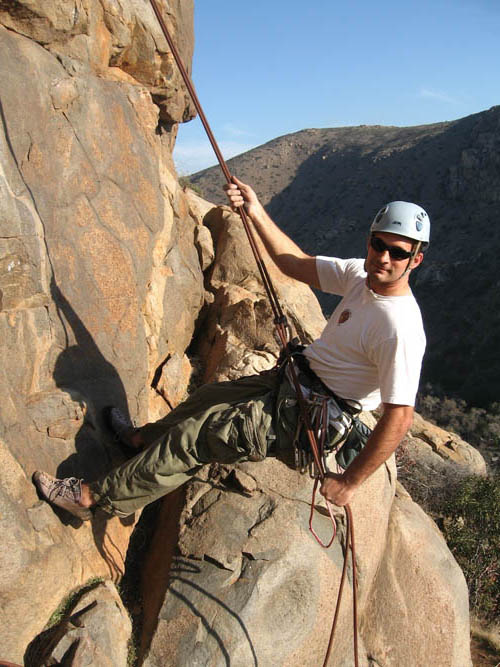
    Teaching youth how to resolve conflicts.

    I’m privileged to be an adult staff member for a National Youth Leadership Training (NYLT) course.  It is a very satisfying experience and a lot of fun.  One key topic on the course is how to resolve conflicts as a leader.  This blog is adapted from this course.

    Leading the youth through this necessary topic allows me to bring my professional expertise in settling disputes to the more practical issues of conflict resolution.   The course can be applied to any situation as a young person or adult.

    The learning objectives of the conflict resolution course are:

    1. Know and articulate several ways that good leadership can minimize conflict.
    2. Understand how the acronym E.A.R.  can be used as a tool for resolving conflicts (Express, Address, Resolve).
    3. Use several communications skills important for resolving conflicts
    4. Know when, as a leader, the resolution of a conflict is beyond your expertise and how to seek help in resolving the conflict.

    Ken StrongmanAbout the Author: Ken Strongman (www.kpstrongman.com) has years of experience and a growing national reputation as a mediator and arbitrator.  He has successfully resolved more than a thousand disputes in the fields of construction defects, real estate, intellectual property, and employment.  He is also a Mediator and Arbitrator for FINRA.

    © 2020 Ken Strongman. All Rights Reserved. Please do not copy or repost without permission.

  • Arbitration, then Mediation, a way to blend them both.

    Arbitration-Mediation
    Blend mediation and arbitration

     Arbitration, then Mediation, a way to blend them both.

    Many view mediation as a one-way street.  You conduct a mediation to settle a law suite.   Nothing could be further from the truth.  There are many ways to blend mediation with the legal system or blending it with other alternative dispute resolution processes to reduce or resolve conflict. 

    One way is to blend arbitration and mediation so that the participants have the benefits of both arbitration and mediation.

    The process begins with binding arbitration before a single arbitrator.  At the conclusion of the arbitration session, the arbitrator immediately issues a binding decision and proceeds to seal it so neither the parties nor council know the result. 

    Immediately following the arbitration, mediation is conducted by a different neutral. This mediator, like the parties, also does not know the content of the sealed arbitration decision.   If the mediation ends in a settlement, the arbitration decision is destroyed and the parties never learn how it turned out. However, if the mediation does not result in a settlement, the arbitration award is unsealed and disclosed, at which time it becomes final and binding. 

    This process of sealing the decision and potentially destroying the arbitration decision, if a settlement is reached, is negotiated between the parties and the arbitrator.  It is accomplished in the arbitration service agreement.  The length of time allowed for mediation must also be explicitly outlined in the agreement to arbitrate.

    There are significant advantages to this arbitration-mediation model.  First, it brings prompt finality to the litigation process, either though a binding arbitration award, or else through a mediated settlement. 

    The procedure also diminishes the overall cost of litigation.  The actual cost of presenting a case in arbitration is significantly lower that a one to two week trial, stipulations between the parties can further streamline and simplify the issues.  Medical expert opinion can be presented through medical reports, declarations and records. 

    There are other benefits beyond cost savings.  The arbitration-mediation process encourages a more cooperative, less adversarial framework for resolving cases.  The protocol allows parties and key claims personnel, such as the adjuster in charge of the file, to see how key witnesses present themselves at the binding arbitration prior to engaging in mediated settlement discussions.  It also solves the case at a much earlier date that the potential four-year wait until trial. 

    Ken Strongman, MediatorAbout the Author: Ken Strongman (www.kpstrongman.com) has years of experience and a growing national reputation as a mediator and arbitrator.  He has successfully resolved more than a thousand disputes in the fields of construction defects, real estate, intellectual property, and employment.  He is also a Mediator and Arbitrator for FINRA.

    © 2020 Ken Strongman. All Rights Reserved. Please do not copy or repost without permission.

  • Task #16: At what point did you first have any realization of betrayal, bad faith, or loss of confidence?

    Ken Strongman Mediation tasks 05Task #16: At what point did you first have any realization of betrayal, bad faith, or loss of confidence?

    The resolution of a dispute does not just occur on the day of the mediation.   Each participant to mediation needs to prepare their own strategy for negotiation in the settlement.  Based on my experience as a mediator, these are a collection of tasks each participant needs to complete and to discuss with their council and the mediator before the mediation.

    In the previous task, you spent time determining the trust and goodwill that supported your original agreements.   Now we need to look at the point when you had your first realization of betrayal, bad faith, or loss of confidence.  This is generally one specific point of time and place.   It might have been building in the back of your mind for some time, but there is usually a point that you change your mind about the relationship with the other party.  It can be as simple as one phone call not returned, or a dirty look.  It is often after miss communication between the parties.

    Knowing when this missed communication occurred will be helpful to you in the mediation.  In one of my mediations, it was obviously a missed communication between the parties.  Both parties knew what the problem was and when it occurred.  With that knowledge they were able to correct the problem, restore trust and goodwill between themselves and quickly settle the dispute.

    Ken Strongman, MediatorAbout the Author: Ken Strongman (www.kpstrongman.com) has years of experience and a growing national reputation as a mediator and arbitrator.  He has successfully resolved more than a thousand disputes in the fields of construction defects, real estate, intellectual property, and employment.  He is also a Mediator and Arbitrator for FINRA.

    © 2020 Ken Strongman. All Rights Reserved. Please do not copy or repost without permission.