Tag: conflict resolution

  • How are you going to deal with them after the dispute?

    Philmont Scout Ranch Deal
    Deal with the future

    The resolution of a dispute does not just occur on the day of the mediation.   Each participant to mediation needs to prepare their own strategy for negotiation in the settlement.  Based on my experience as a mediator, these are a collection of tasks each participant needs to complete and to discuss with their council and the mediator before the mediation.

    These tasks and the discussion with the mediator are confidential.   They are confidential under both Attorney Client privilege and under mediation confidential provisions in court rules, statutes, and standards.

    Task #4: How are you going to deal with them after the dispute?

    In the previous task, you were asked to describe what you wanted life and/or business to look like five years after the dispute has been resolved.   This task is more focused on how you are going to deal with your opponents five to ten years after the dispute is resolved.

    The easy answer to this question is that ‘I never want anything to do with them again.’  If the dispute is an automobile accident then that might work as an answer.  But if your opponents are commercial suppliers, customers, fellow businesses in a limited market, employees or employers, neighbors, and even family, the question becomes a lot more challenging.

    I have mediated boundary line and other disputes between neighbors.  It becomes a lot more difficult to resolve when both neighbors realize that they will still be living next door to each other for possibly decades.  I have also mediated disputes with family owned business.  They had to take into account the likelihood of having to sit down for Thanksgiving dinner with each other.  There were also the unintended impacts on other family relationships that were not in dispute.  Commercial enterprises need to evaluate the publicity of the dispute and the possible need for an on going business relationship now and in the future.

    Carefully list and count the costs regarding different solutions to the dispute.  Might there be a better settlement that reduces future conflict.  Also evaluate the costs of litigating the dispute to its conclusion on the future relationship to your opponents.

    Ken Strongman, MediatorAbout the Author: Ken Strongman (www.kpstrongman.com) has years of experience and a growing national reputation as a mediator and arbitrator.  He has successfully resolved more than a thousand disputes in the fields of construction defects, real estate, intellectual property, and employment.  He is also a Mediator and Arbitrator for FINRA.

    © 2020 Ken Strongman. All Rights Reserved. Please do not copy or repost without permission.

  • What if you truly disagree upon with your opponents?

    What Points Do You Disagree
    What Points Do You Disagree?

    Tasks for reaching a mediated settlement to a dispute

    The resolution of a dispute does not just occur on the day of the mediation.   Each participant to mediation needs to prepare their own strategy for negotiation in the settlement.  Based on my experience as a mediator, these are a collection of tasks each participant needs to complete and to discuss with their council and the mediator before the mediation.

    These tasks and the discussion with the mediator are confidential.   They are confidential under both Attorney Client privilege and under mediation confidential provisions in court rules, statutes, and standards.

    Task #7: What If you truly disagree upon with your mediation opponents?

    In Task #6, you were asked to search for some potential common ground you might have with your mediation opponents to help facilitate a voluntary agreement to settle this matter.   Now you need to flip the question around and come up with the significant issues that you disagree upon.

    Strangely enough this will help the mediator to focus the mediation session upon the real and lasting issues of the dispute.   Then everyone can focus on the task at hand to develop together a voluntary agreement to resolve the dispute.  For example, breach of contract might be agreed upon, but whether it is a major or minor breach is the true disagreement.  Likewise, there might not be a disagreement on liability but it is the measure of damages that is the true dispute.   Even then, there might be considerable agreement.

    Review these disagreements with your attorney and confidentially with the mediator.

    Ken StrongmanAbout the Author: Ken Strongman (www.kpstrongman.com) has years of experience and a growing national reputation as a mediator and arbitrator.  He has successfully resolved more than a thousand disputes in the fields of construction defects, real estate, intellectual property, and employment.  He is also a Mediator and Arbitrator for FINRA.

    © 2020 Ken Strongman. All Rights Reserved. Please do not copy or repost without permission.

  • Thanksgiving Conflicts

    Rockwell Thanksgiving Conflicts
    Thanksgiving Conflicts – not! Just an unattainable Ideal

    Thanksgiving Conflicts and How To Avoid them

    Thanksgiving conflicts reduces anyone’s ability to be thankful. Thanksgiving is sometimes referred to as forced family time. It is ripe for all kinds of potential conflicts.  Here are some things to minimize or avoid conflicts on the big day without lowering your expectations of being truly thankful.    

    ·     Realize that Norman Rockwell was a fraud.  His famous Thanksgiving painting is a total fantasy.   I’ve been told that when he painted it, each of the models posed separately.  So naturally they appear happy.  They were not in the same room with the others and they obviously didn’t have to eat the food.  They couldn’t because it had to remain for the next model.

    ·     Speaking of food… for all of those that have recently converted to a vegan diet, gluten free, or just discovered the South Beach, North Beach or West Beach diet, or have any dietary restrictions based on health: the only statement on the subject you can make is (with a smile) – “No, Thank you!” while you are passing the plates.   

    ·     Thanksgiving is not the time to proselytize anyone to a life free of all of the cholesterol choking cancer causing food on the table.   Yes, stress causes heart attacks.  But stress doesn’t come from always eating the wrong foods, it also comes from people reminding (nagging) you not to eat certain foods. 

    ·     For those of you on a diet at Thanksgiving and can’t see anything on the table the diet will allow you to eat, and you still want to be true to your diet.  Just remember you do want to loose weight so not eating anything would still be a good thing. 

    ·     Speaking of proselytizing…Thanksgiving should be a time to be thankful that we are blessed in this country with the privilege to not have to talk politics 365-days a year.  Thanksgiving is the time to eat the turkey and to stop talking about the turkeys running the country or who what to run the country.

    turkeys-2015
    Be thankful that when you sit down for Thanksgiving next year the election will be over.


    ·     Realize that everyone does not have to do the same thing all the time.  For some (or a whole lot of people) cheering on their favorite football team with family and friends is just as much a bonding experience as other activities.  Let them watch the game.  At least half the population will be truly thankful their team won.   Being thankful is what it is all about. 

    ·     Some may want to watch football, others might want to play a game of football, other still may want to go out and change the water pump on a car.  That is OK!  Chill out!  Be thankful they are all here and having fun. 

    ·     Thanksgiving is not a time to be thankful for your holiday cruise to the Caribbean, new car, house, job, or any other material thing.   Be thankful for the little things: breathing, the sunrise, food on the table, and laughter.  We are all social people and never truly get along with each other.  If there was no conflict we wouldn’t be human and we need to be thankful that we are human.   

    Ken StrongmanAbout the Author: Ken Strongman (www.kpstrongman.com) has years of experience and a growing national reputation as a mediator and arbitrator.  He has successfully resolved more than a thousand disputes in the fields of construction defects, real estate, intellectual property, and employment.  He is also a Mediator and Arbitrator for FINRA.

    © 2020 Ken Strongman. All Rights Reserved. Please do not copy or repost without permission.

  • The ingredients of any conflict – Feelings & Emotions

    Emotional Journey

    All conflicts have similar ingredients. They may vary in degree but most are present in some way. The main ingredients are Needs, Perceptions, Power, Values, and Feelings and Emotions. Today, I am focusing on feelings and emotions.

    Feelings and emotions – Many people let their feelings and emotions become a major influence over how they deal with conflict. Conflicts can also occur because people ignore their own or others’ feelings and emotions. Other conflicts occur when feelings and emotions differ over a particular issue.

    I began with “many people let their feelings and emotions become a major influence…” In reality, all people have emotional responses to conflict. Some are just not being honest with themselves. Pride is a major driver of the emotions. Feelings and emotions impact the ability to resolve a conflict regardless of the value in dispute.

    For an experienced Mediator to help negotiate a resolution to your dispute contact Ken Strongman. Here.

    **For the last decade I’ve been involved with leadership development of tomorrow’s leaders. Using my expertise, I am training the youth leaders in conflict resolution. This blog is adapted from my training materials.

    Ken_Strongman_003smAbout the Author: Ken Strongman (www.kpstrongman.com) has years of experience and a growing national reputation as a mediator and arbitrator.  He has successfully resolved more than a thousand disputes in the fields of construction defects, real estate, intellectual property, and employment.  He is also a Mediator and Arbitrator for FINRA.

    © 2021 Ken Strongman. All Rights Reserved. Please do not copy or repost without permission.

  • Values – One of The ingredients of any conflict

    Values
    Values are important in conflicts

    The ingredients of any conflict – Values

    Values are important within any conflict.

    All conflicts have similar ingredients. They may vary in degree but most are present in some way. The main ingredients are Needs, Perceptions, Power, Values, and Feelings and Emotions. Today, I am focusing on values.

    Values are beliefs or principles we consider to be very important. Serious conflicts arise when people hold incompatible values or when values are not clear. Conflicts also arise when one party refuses to accept the fact that the other party holds something as a value rather than a preference. To resolve the conflict, clarify each party’s values.

    Values influence perceptions and at times it is hard to distinguish the two concepts. In resolving conflicts, it is easier to equate the two in order to bring resolution. Just be aware that values influence perceptions.

    Just looking at a common definition of the word will help: the regard that something is held to deserve; the importance, worth, or usefulness of something. Likewise – a person’s principles or standards of behavior; one’s judgment of what is important in life. Useful synonyms: principles, ethics, moral code, morals, standards, code of behavior.

    **For the last decade I’ve been involved with leadership development of tomorrow’s leaders. Using my expertise, I am training the youth leaders in conflict resolution. This blog is adapted from my training materials.

    Ken StrongmanAbout the Author: Ken Strongman (www.kpstrongman.com) has years of experience and a growing national reputation as a mediator and arbitrator.  He has successfully resolved more than a thousand disputes in the fields of construction defects, real estate, intellectual property, and employment.  He is also a Mediator and Arbitrator for FINRA.

    © 2020 Ken Strongman. All Rights Reserved. Please do not copy or repost without permission.

  • The ingredients of any conflict – Power

    Power
    Power is an ingredient of conflict

    The ingredients of any conflict is power

    The ingredients of any conflict is power. All conflicts have similar ingredients. They may vary in degree but most are present in some way. The main ingredients are Needs, Perceptions, Power, Values, and Feelings and Emotions. Today, I am focusing on power.

    Power – How people define and use power is an important influence on the number and types of conflicts that occur. This also influences how conflict is managed. Conflicts can arise when people try to make others change their actions or to gain an unfair advantage.

    Power is a powerful human motivation. In difficult conflicts, there are only two real reasons we as humans act.

    One is for stimulation.

    The other and more important one is to establish the perception of control of the situation.

    We are all looking for control of our situation. Everyone wants to establish or reestablish the perception of control.
    **For the last decade I’ve been involved with leadership development of tomorrow’s leaders. Using my expertise, I am training the youth leaders in conflict resolution. This blog is adapted from my training materials.

    Ken StrongmanAbout the Author: Ken Strongman (www.kpstrongman.com) has years of experience and a growing national reputation as a mediator and arbitrator.  He has successfully resolved more than a thousand disputes in the fields of construction defects, real estate, intellectual property, and employment.  He is also a Mediator and Arbitrator for FINRA.

    © 2020 Ken Strongman. All Rights Reserved. Please do not copy or repost without permission.

  • Ingredients of conflict – Perceptions

    Perceptions out the window of alcatraz.
    Perceptions are important

    The ingredients of any conflict – Perceptions

    Perceptions are part of any conflict. All conflicts have similar ingredients. They may vary in degree but most are present in some way. The main ingredients are Needs, Perceptions, Power, Values, and Feelings and Emotions. Today, I am focusing on perceptions.

    Perceptions – All humans interpret reality differently. They perceive differences in the severity, causes and consequences of problems. Misperceptions or differing perceptions may come from: self-perceptions, others’ perceptions, differing perceptions of situations and perceptions of threat. How something is framed will affect its perception. So in conflict resolution, reframing is an important task to get to a solution.

    Just by observing the news of the world, we can easily see that different people perceive a situation totally differently. The perceptions are influenced by different histories, geographic locations, religious values, etc. They are what we all bring to the table.

    **For the last decade I’ve been involved with leadership development of tomorrow’s leaders. Using my expertise, I am training the youth leaders in conflict resolution. This blog is adapted from my training materials.

    Ken StrongmanAbout the Author: Ken Strongman (www.kpstrongman.com) has years of experience and a growing national reputation as a mediator and arbitrator.  He has successfully resolved more than a thousand disputes in the fields of construction defects, real estate, intellectual property, and employment.  He is also a Mediator and Arbitrator for FINRA.

    © 2020 Ken Strongman. All Rights Reserved. Please do not copy or repost without permission.

  • Four characteristics a good mediator brings to the table.

    Santa Barbara Presido
    Characteristics of Good Mediators

    Four characteristics a good mediator brings to the table.

    This and many other topics will be revealed in: The “End Game” of Mediation and How to Succeed at It [A Comprehensive Road Map to the Mediation Process] on Tuesday, March 10, 4:30 pm – 8:30 pm @ the Contra Costa Bar Association.

    Speakers Ken Strongman, Esq. and Malcolm Sher, Esq. will lead a program for Advocates designed to create a highly positive mediation experience and outcome for themselves and their clients. These two successful mediators will discuss some of the best practices for negotiation and to prepare the client, advocate, mediator and opposition for the mediation journey.

    The Contra Costa County Bar Association certifies that this activity has been approved for 3 hours of General MCLE credit by the State Bar of California, Provider #393.

    To register for the event: Register Here

    NOW FOR THE ANSWER: Four characteristics a good mediator brings to the table.

    1. Able to quickly build trust and confidence
    2. Excellent inter-personal skills: Patience and a sense of humor
    3. Creativity in assisting parties and counsel in shaping a solution
    4. Reputation in the legal and mediation community to do every thing they can to encourage and assist in settlement

    For an experienced Mediator to help negotiate a resolution to your dispute contact Ken Strongman. Here.

    Ken Strongman, MediatorAbout the Author: Ken Strongman (www.kpstrongman.com) has years of experience and a growing national reputation as a mediator and arbitrator.  He has successfully resolved more than a thousand disputes in the fields of construction defects, real estate, intellectual property, and employment.  He is also a Mediator and Arbitrator for FINRA.

    © 2020 Ken Strongman. All Rights Reserved. Please do not copy or repost without permission.

  • Seven advantages of a joint mediation session

    joint mediation sessions are a flowing process

    Seven advantages of a joint mediation session

    The 7 advantages of a joint mediation session and many other topics will be revealed in: The “End Game” of Mediation and How to Succeed at It [A Comprehensive Road Map to the Mediation Process] on Tuesday, March 10, 4:30 pm – 8:30 pm @ the Contra Costa Bar Association.

    Speakers Ken Strongman, Esq. and Malcolm Sher, Esq. will lead a program for Advocates designed to create a highly positive mediation experience and outcome for themselves and their clients. These two successful mediators will discuss some of the best practices for negotiation and to prepare the client, advocate, mediator and opposition for the mediation journey.

    The Contra Costa County Bar Association certifies that this activity has been approved for 3 hours of General MCLE credit by the State Bar of California, Provider #393.

    To register for the event: Register Here

    NOW FOR THE ANSWER: Seven advantages of a joint mediation session:

    1. To see and hear the other side
    2. To look at pictures and other evidence, both sides at once
    3. It gives each side an opportunity to size up the other
    4. Talk with each other as oppose to using agents
    5. To evaluate the style of each attorney
    6. To evaluate the preparedness of each side
    7. To see the body language of each attorney and party (everyone)

    Ken Strongman, MediatorAbout the Author: Ken Strongman (www.kpstrongman.com) has years of experience and a growing national reputation as a mediator and arbitrator.  He has successfully resolved more than a thousand disputes in the fields of construction defects, real estate, intellectual property, and employment.  He is also a Mediator and Arbitrator for FINRA.

    © 2020 Ken Strongman. All Rights Reserved. Please do not copy or repost without permission.
  • Seven reasons to avoid a joint mediation session

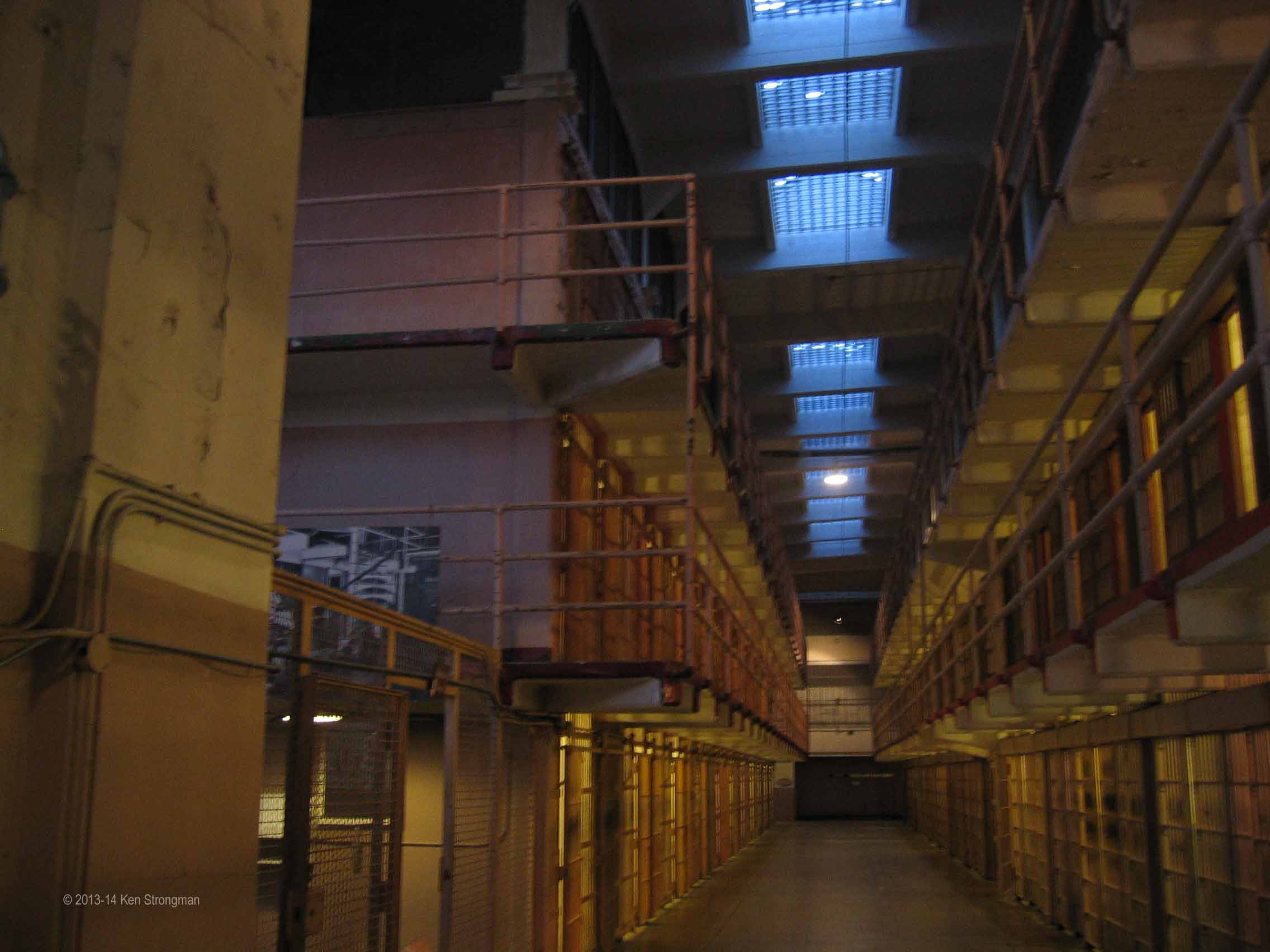
    Devil's Postpile National Monument - Rainbow Falls
    Joint sessions

    Seven reasons to avoid a joint mediation session

    This and many other topics will be revealed in: The “End Game” of Mediation and How to Succeed at It [A Comprehensive Road Map to the Mediation Process] on Tuesday, March 10, 4:30 pm – 8:30 pm @ the Contra Costa Bar Association.

    Speakers Ken Strongman, Esq. and Malcolm Sher, Esq. will lead a program for Advocates designed to create a highly positive mediation experience and outcome for themselves and their clients. These two successful mediators will discuss some of the best practices for negotiation and to prepare the client, advocate, mediator and opposition for the mediation journey.

    The Contra Costa County Bar Association certifies that this activity has been approved for 3 hours of General MCLE credit by the State Bar of California, Provider #393.

    To register for the event: Register Here

    NOW FOR THE ANSWER: Seven reasons to avoid a joint mediation session

    Stated another way: the advantages of a private session with the mediator

    1. It is an opportunity to explain the case to a neutral person
    2. The attorney and party get to evaluate their own case
    3. The ability to use the mediator as a sounding board and coach
    4. To be able to talk openly
    5. Discuss solutions
    6. Identify components of solutions from your stand point
    7. Emote and vent in private about the case and the other side (person)

    Ken StrongmanAbout the Author: Ken Strongman (www.kpstrongman.com) has years of experience and a growing national reputation as a mediator and arbitrator.  He has successfully resolved more than a thousand disputes in the fields of construction defects, real estate, intellectual property, and employment.  He is also a Mediator and Arbitrator for FINRA.

    © 2020 Ken Strongman. All Rights Reserved. Please do not copy or repost without permission.