Tag: Real Estate Mediation

  • What is the Comprehensive Mediation Agreement?

    In order to ensure all parties understand the status and implications involved, a comprehensive Mediation Agreement dealing with issues such as confidentiality, admissibility and privilege in relation to documentation and information exchanged must be agreed in advance. The Mediation Agreement will also deal with the costs of the mediation including the mediator’s fees and will establish how these costs are to be shared between the parties. An appropriately qualified mediator will usually provide a draft Meditation Agreement and it can be amended to suit the parties wishes before being signed by each of the parties and the mediator.

    This is standard practice for all of my mediations.  My mediation agreement includes the time and location of the mediation; any known apparent conflicts; the rules of confidentiality; due dates for briefing the dispute and payment of fees.  Generally, the fee is split between the parties but this can be modified by the parties.

    Ken_Strongman_003smAbout the Author: Ken Strongman (www.kpstrongman.com) has years of experience and a growing national reputation as a mediator and arbitrator.  He has successfully resolved more than a thousand disputes in the fields of construction defects, real estate, intellectual property, and employment.  He is also a Mediator and Arbitrator for FINRA.

    © 2022 Ken Strongman. All Rights Reserved. Please do not copy or re-post without permission.

  • How are you going to deal with them after the dispute?

    Philmont Scout Ranch Deal
    Deal with the future

    The resolution of a dispute does not just occur on the day of the mediation.   Each participant to mediation needs to prepare their own strategy for negotiation in the settlement.  Based on my experience as a mediator, these are a collection of tasks each participant needs to complete and to discuss with their council and the mediator before the mediation.

    These tasks and the discussion with the mediator are confidential.   They are confidential under both Attorney Client privilege and under mediation confidential provisions in court rules, statutes, and standards.

    Task #4: How are you going to deal with them after the dispute?

    In the previous task, you were asked to describe what you wanted life and/or business to look like five years after the dispute has been resolved.   This task is more focused on how you are going to deal with your opponents five to ten years after the dispute is resolved.

    The easy answer to this question is that ‘I never want anything to do with them again.’  If the dispute is an automobile accident then that might work as an answer.  But if your opponents are commercial suppliers, customers, fellow businesses in a limited market, employees or employers, neighbors, and even family, the question becomes a lot more challenging.

    I have mediated boundary line and other disputes between neighbors.  It becomes a lot more difficult to resolve when both neighbors realize that they will still be living next door to each other for possibly decades.  I have also mediated disputes with family owned business.  They had to take into account the likelihood of having to sit down for Thanksgiving dinner with each other.  There were also the unintended impacts on other family relationships that were not in dispute.  Commercial enterprises need to evaluate the publicity of the dispute and the possible need for an on going business relationship now and in the future.

    Carefully list and count the costs regarding different solutions to the dispute.  Might there be a better settlement that reduces future conflict.  Also evaluate the costs of litigating the dispute to its conclusion on the future relationship to your opponents.

    For an experienced Mediator to help negotiate a resolution to your dispute contact Ken Strongman. Here.

    Ken Strongman, MediatorAbout the Author: Ken Strongman, is a private commercial mediator/arbitrator of complex, high risk litigated cases since 2004. Disputes addressed include business, securities, construction defects, real estate, intellectual property, employment, environment, energy, and trusts & estates. He is also a Mediator and Arbitrator for FINRA.

    © 2022 Ken Strongman. All Rights Reserved. Please do not copy or repost without permission.

  • If I, as mediator, give my opinion in a dispute, doesn’t that mean I am biased?

    FAQ_Mediation Mendocino 03 opinion
    Is an opinion bias?


    If I, as mediator, give my opinion in a dispute, doesn’t that mean I am biased?

    Absolutely not!  I as mediator form opinions on many issues for many reasons.

    One of the primary things I do as mediator is to help you to evaluate the pros and cons of your position in a dispute and provide you with the information you need in order to make an educated decision about resolution. My opinion is critical to this process and will likely be based on the totality of the information from both sides, not merely that of one party. Although because of confidentiality, I may not be able to disclose the information to you, having an opinion from an unbiased source, based on such information may be very helpful to you in making choices.

    For an experienced Mediator to help negotiate a resolution to your dispute contact Ken Strongman. Here.

    Ken Strongman, MediatorAbout the Author: Ken Strongman, is a private commercial mediator/arbitrator of complex, high risk litigated cases since 2004. Disputes addressed include business, securities, construction defects, real estate, intellectual property, employment, environment, energy, and trusts & estates. He is also a Mediator and Arbitrator for FINRA.

    © 2022 Ken Strongman. All Rights Reserved. Please do not copy or repost without permission.

  • The ingredients of any conflict – Power

    Power
    Power is an ingredient of conflict

    The ingredients of any conflict is power

    The ingredients of any conflict is power. All conflicts have similar ingredients. They may vary in degree but most are present in some way. The main ingredients are Needs, Perceptions, Power, Values, and Feelings and Emotions. Today, I am focusing on power.

    Power – How people define and use power is an important influence on the number and types of conflicts that occur. This also influences how conflict is managed. Conflicts can arise when people try to make others change their actions or to gain an unfair advantage.

    Power is a powerful human motivation. In difficult conflicts, there are only two real reasons we as humans act.

    One is for stimulation.

    The other and more important one is to establish the perception of control of the situation.

    We are all looking for control of our situation. Everyone wants to establish or reestablish the perception of control.
    For an experienced Mediator to help negotiate a resolution to your dispute contact Ken Strongman. Here.

    Ken StrongmanAbout the Author: Ken Strongman, is a private commercial mediator/arbitrator of complex, high risk litigated cases since 2004. Disputes addressed include business, securities, construction defects, real estate, intellectual property, employment, environment, energy, and trusts & estates. He is also a Mediator and Arbitrator for FINRA.

    **For the last decade I’ve been involved with leadership development of tomorrow’s leaders. Using my expertise, I am training the youth leaders in conflict resolution. This blog is adapted from my training materials.

    © 2022 Ken Strongman. All Rights Reserved. Please do not copy or repost without permission.

  • Don’t be afraid of anger – angry people can’t lie.

    don't be afraid
    Don’t be afraid.

    Don’t be afraid of anger – angry people can’t lie.

    The first step to resolve any conflict is to defuse anger.  But do not be afraid of anger.  An angry person can’t lie because anger is a primitive emotional response.  To lie, you must control your emotions and turn on your intellect.  So when someone is angry, whatever they are telling you contains some truth.  Beware that this does not stop good actors.  A good actor merely appears to be angry as they try to control the situation

    There are several reasons for anger:

    To vent. An angry person needs to let off steam and release the anger that may have been brewing for a long time.  To resolve the conflict you need to allow this to happen, but try to control it by reframing their issues. 

    To get the listener’s attention. An angry person wants to know that you are paying attention.  Use good listening skills to demonstrate that you are paying attention.

    To be heard. An angry person wants someone to listen to their point of view.  To resolve the conflict, you need to acknowledge the feelings you hear so that the speaker knows you appreciate how angry they are.

    To be understood. An angry person wants someone to appreciate how they feel.  Therefore try to empathize with their experience so that they feel you understand the situation, and acknowledge their ‘right’ to feel the way they do.  This does not mean that you should agree with their justification.  You do want to remain neutral in the conflict and not pick sides.

    For an experienced Mediator to help negotiate a resolution to your dispute contact Ken Strongman. Here.


    Ken StrongmanAbout the Author: Ken Strongman, is a private commercial mediator/arbitrator of complex, high risk litigated cases since 2004. Disputes addressed include business, securities, construction defects, real estate, intellectual property, employment, environment, energy, and trusts & estates. He is also a Mediator and Arbitrator for FINRA.

    **For the last decade I’ve been involved with leadership development of tomorrow’s leaders.  Using my expertise, I am training the youth leaders in conflict resolution.  This blog is adapted from my training materials. 

    © 2022 Ken Strongman. All Rights Reserved. Please do not copy or re-post without permission.

  • What am I getting for my money when I hire a mediator?

    Hire a mediator
    Hire a mediator.

    What am I actually getting for my money when I hire a mediator?

    When you hire me as your mediator, you are buying the opportunity, through a neutral third party, to evaluate with someone who is an objective “sounding board,” your real needs (personal, economic, spiritual, etc.) and to evaluate which dispute resolution process will best help you meet those needs.

    *    You are buying my opinions and impressions of “your first juror,” as to existing information/evidence and that which is non-existent.

    *    You are buying an opportunity to become more informed of the risks and benefits involved in resolving or litigating a dispute.

    *    You are buying an opportunity to address and resolve differences of opinion or expectation between you and your client, you and other professionals or between several clients (business partners, etc.).

    *    In addition, you are buying many things that can’t be quantified, unique to your particular dispute, which come with the intervention of an experienced neutral.

    I am usually hired as a mediator because of my perceived ability to resolve a dispute.

    Mediators don’t settle cases, parties do! What you are really buying are choices.  My value as a mediator is my expertise in guiding all of the parties involved in a dispute to a point where there are new, real and often difficult choices created. It is up to you to evaluate those choices, in light of the insights you gain through the mediation process, and choose that one which will end the dispute in the manner that brings you the most complete resolution. In getting to that point, whether that choice is to accept a proposed settlement or continue on the path to litigation, you have gotten “your money’s worth”.

    For an experienced Mediator to help negotiate a resolution to your dispute contact Ken Strongman. Here.

    Ken StrongmanAbout the Author: Ken Strongman, is a private commercial mediator/arbitrator of complex, high risk litigated cases since 2004. Disputes addressed include business, securities, construction defects, real estate, intellectual property, employment, environment, energy, and trusts & estates. He is also a Mediator and Arbitrator for FINRA.

    © 2021 Ken Strongman. All Rights Reserved. Please do not copy or re-post without permission.

  • Values – One of The ingredients of any conflict

    Values
    Values are important in conflicts

    The ingredients of any conflict – Values

    Values are important within any conflict.

    All conflicts have similar ingredients. They may vary in degree but most are present in some way. The main ingredients are Needs, Perceptions, Power, Values, and Feelings and Emotions. Today, I am focusing on values.

    Values are beliefs or principles we consider to be very important. Serious conflicts arise when people hold incompatible values or when values are not clear. Conflicts also arise when one party refuses to accept the fact that the other party holds something as a value rather than a preference. To resolve the conflict, clarify each party’s values.

    Values influence perceptions and at times it is hard to distinguish the two concepts. In resolving conflicts, it is easier to equate the two in order to bring resolution. Just be aware that values influence perceptions.

    Just looking at a common definition of the word will help: the regard that something is held to deserve; the importance, worth, or usefulness of something. Likewise – a person’s principles or standards of behavior; one’s judgment of what is important in life. Useful synonyms: principles, ethics, moral code, morals, standards, code of behavior.

    For an experienced Mediator to help negotiate a resolution to your dispute contact Ken Strongman. Here.

    Ken StrongmanAbout the Author: Ken Strongman, is a private commercial mediator/arbitrator of complex, high risk litigated cases since 2004. Disputes addressed include business, securities, construction defects, real estate, intellectual property, employment, environment, energy, and trusts & estates. He is also a Mediator and Arbitrator for FINRA.

    **For the last decade I’ve been involved with leadership development of tomorrow’s leaders. Using my expertise, I am training the youth leaders in conflict resolution. This blog is adapted from my training materials.

    © 2021 Ken Strongman. All Rights Reserved. Please do not copy or re-post without permission.

  • Listening is the best way to resolve conflicts.

    The better the information you have, the greater your chances of finding a workable solution.  Listen carefully to what others are saying, not judging until you hear everyone’s story.  Be aware of tone of voice, body language, and other clues.  Understand what each person is expressing – what he wants and what he is willing to do to get there.  Then clarify that the solution lies with all parties. 

    Listen carefully to what others are saying without judgment until you have everyone’s side of the story.  Clarify what you have heard and then re-frame it back to each party.  Remember the solution lays with both parties not you.

    For an experienced Mediator to help negotiate a resolution to your dispute contact Ken Strongman. Here.  

    Ken StrongmanAbout the Author: Ken Strongman, is a private commercial mediator/arbitrator of complex, high risk litigated cases since 2004. Disputes addressed include business, securities, construction defects, real estate, intellectual property, employment, environment, energy, and trusts & estates. He is also a Mediator and Arbitrator for FINRA.

    **For the last decade I’ve been involved with leadership development of tomorrow’s leaders.  Using my expertise, I am training the youth leaders in conflict resolution.  This blog is adapted from my training materials. 

    © 2021 Ken Strongman. All Rights Reserved. Please do not copy or re-post without permission.

  • Ingredients of conflict – Perceptions

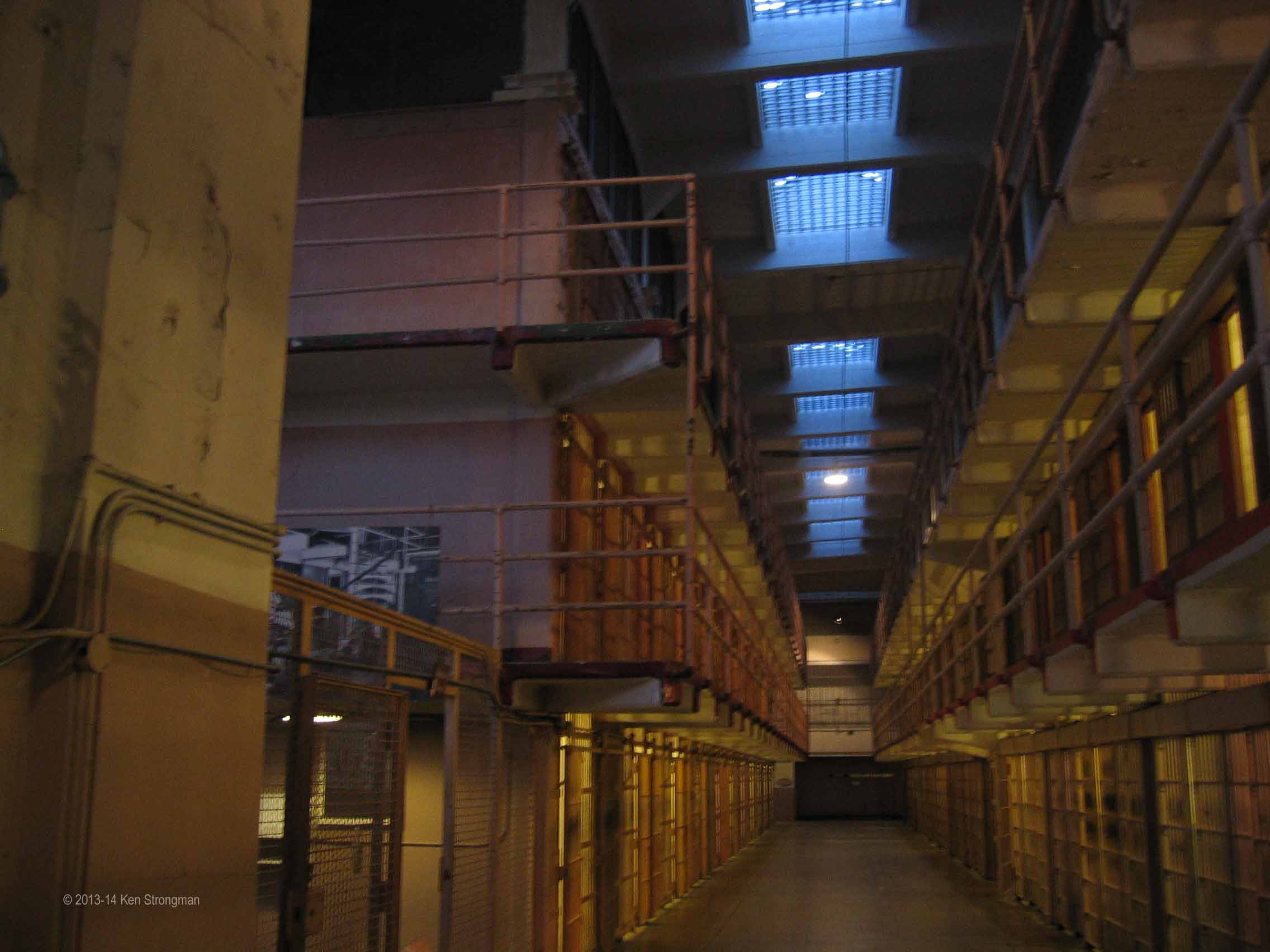
    Perceptions out the window of alcatraz.
    Perceptions are important

    The ingredients of any conflict – Perceptions

    Perceptions are part of any conflict. All conflicts have similar ingredients. They may vary in degree but most are present in some way. The main ingredients are Needs, Perceptions, Power, Values, and Feelings and Emotions. Today, I am focusing on perceptions.

    Perceptions – All humans interpret reality differently. They perceive differences in the severity, causes and consequences of problems. Misperceptions or differing perceptions may come from: self-perceptions, others’ perceptions, differing perceptions of situations and perceptions of threat. How something is framed will affect its perception. So in conflict resolution, reframing is an important task to get to a solution.

    Just by observing the news of the world, we can easily see that different people perceive a situation totally differently. The perceptions are influenced by different histories, geographic locations, religious values, etc. They are what we all bring to the table.

    For an experienced Mediator to help negotiate a resolution to your dispute contact Ken Strongman. Here.

    Ken StrongmanAbout the Author: Ken Strongman, is a private commercial mediator/arbitrator of complex, high risk litigated cases since 2004. Disputes addressed include business, securities, construction defects, real estate, intellectual property, employment, environment, energy, and trusts & estates. He is also a Mediator and Arbitrator for FINRA.

    © 2021 Ken Strongman. All Rights Reserved. Please do not copy or re-post without permission.

    **For the last decade I’ve been involved with leadership development of tomorrow’s leaders. Using my expertise, I am training the youth leaders in conflict resolution. This blog is adapted from my training materials.

  • Mediators Playing the Devil’s Advocate

    Devil's Advocate
    Devil’s Advocate

    Mediators Playing the Devil ’s Advocate

    Devil’s Advocate is one of the roles of a mediator. A good mediator such as myself, does not forfeit his personal opinions simply because he serves as a neutral facilitator. These opinions and preconceptions can help inform certain beliefs. However, a strong mediator knows how to view a case from multiple angles. This is an important quality to possess as it helps provide a counter point to a party or attorney’s one-sided approach.

    A Strong Mediator

    A strong mediator gives consideration to the strengths and weaknesses of both sides. When in a private caucus with one side, the mediator may mention a potential weakness in this side’s argument. He may even ask the party what his or her argument would be if he or she was on the other side. He or she may get the attorney to contemplate the same scenario and ask for facts and legal theories that would support the other side.
    By recognizing the strengths of the other side and the weaknesses of their own side, parties can start to contemplate the potential of what would happen if they lose. This can often inspire them to fully participate in negotiations so that they can avoid the possibility of losing the case or facing other adverse effects.

    Sounding Board

    Mediator is a “sounding board” for your arguments, and for offers/counter offers. I can deal with the hypotheticals and be a “coach”, to deliver bad news and explain opponents’ responses to offers. I, as a strong mediator give you an opportunity to explain the case to a neutral person help you and your attorney evaluate your case. Finally, a good mediator helps identify components of solutions from your stand point and delivers bad news to both sides.

    For an experienced Mediator to help negotiate a resolution to your dispute contact Ken Strongman. Here.

    Ken StrongmanAbout the Author: Ken Strongman, is a private commercial mediator/arbitrator of complex, high risk litigated cases since 2004. Disputes addressed include business, securities, construction defects, real estate, intellectual property, employment, environment, energy, and trusts & estates. He is also a Mediator and Arbitrator for FINRA.

    © 2021 Ken Strongman. All Rights Reserved. Please do not copy or repost without permission.