
Tag: conflict resolution

  • Don’t be afraid of anger – angry people can’t lie.
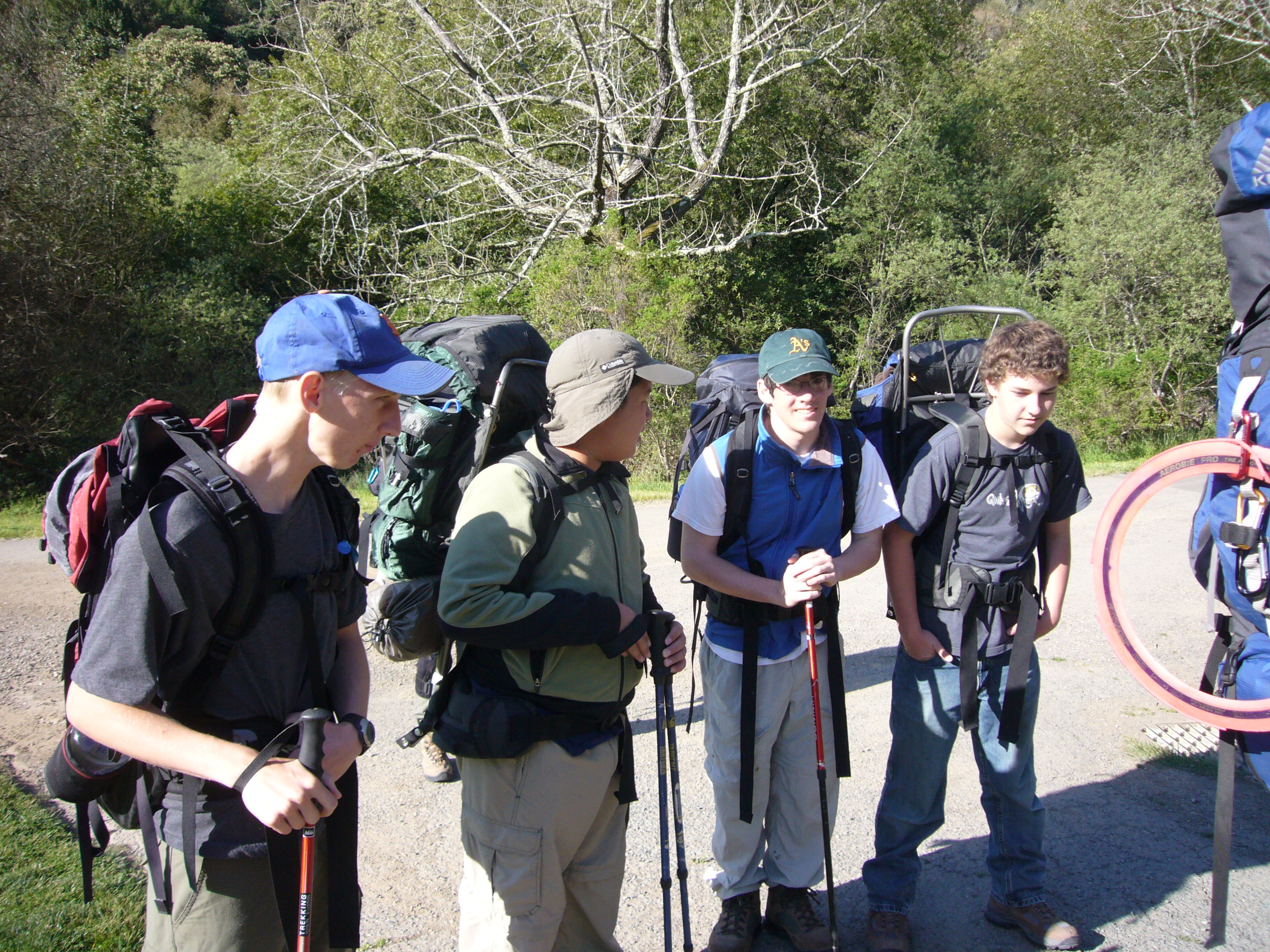
    NYLT_Ken Strongman 06Don’t be afraid of anger – angry people can’t lie.

    The first step to resolve any conflict is to defuse anger.  But do not be afraid of anger.  An angry person can’t lie because anger is a primitive emotional response.  To lie, you must control your emotions and turn on your intellect.  So when someone is angry, whatever they are telling you contains some truth.  Beware that this does not stop good actors.  A good actor merely appears to be angry as they try to control the situation

    There are several reasons for anger:

    To vent. An angry person needs to let off steam and release the anger that may have been brewing for a long time.  To resolve the conflict you need to allow this to happen, but try to control it by reframing their issues. 

    To get the listener’s attention. An angry person wants to know that you are paying attention.  Use good listening skills to demonstrate that you are paying attention.

    To be heard. An angry person wants someone to listen to their point of view.  To resolve the conflict, you need to acknowledge the feelings you hear so that the speaker knows you appreciate how angry they are.

    To be understood. An angry person wants someone to appreciate how they feel.  Therefore try to empathize with their experience so that they feel you understand the situation, and acknowledge their ‘right’ to feel the way they do.  This does not mean that you should agree with their justification.  You do want to remain neutral in the conflict and not pick sides.

    **For the last decade I’ve been involved with leadership development of tomorrow’s leaders.  Using my expertise, I am training the youth leaders in conflict resolution.  This blog is adapted from my training materials. 

     

    Ken StrongmanAbout the Author: Ken Strongman (www.kpstrongman.com) has years of experience and a growing national reputation as a mediator and arbitrator.  He has successfully resolved more than a thousand disputes in the fields of construction defects, real estate, intellectual property, and employment.  He is also a Mediator and Arbitrator for FINRA.

    © 2020 Ken Strongman. All Rights Reserved. Please do not copy or repost without permission.

  • Task #21: If something happens in the mediation that irritates you, what will you do to get back on task?

    Ken Strongman Mediation Tasks 06If something happens in the mediation that irritates you, what will you do to get back on task?

    The resolution of a dispute does not just occur on the day of the mediation.   Each participant to mediation needs to prepare their own strategy for negotiation in the settlement.  Based on my experience as a mediator, these are a collection of tasks each participant needs to complete and to discuss with their council and the mediator before the mediation.

    How will you help get things back on task if that happens?  Things happen in mediation.  Sometimes it is the realization that the person that caused the dispute is sitting across the table from you.  You have just been confronted with the fact that you still have to deal with them whether now or in court.  You need to develop a game plan for getting back on task and settling the dispute.  It might be a private caucus or just a break.  It might be a continuance of the mediation itself to another day.  Communicating your needs to the mediator will help get things back on task and help settle the dispute.

    Will you risk your future financial interests to avoid uncomfortable discussions now?   This is the question you must keep in mind.   Mediation can be quite uncomfortable.  Mediation is conflict at its best.  But settlements do happen and are worth the discomfort.

    Will you accept a satisfactory offer to settle, even if you are very resentful about how you’ve been treated?  At some point you must make the decision that you want to settle the dispute and move on to better days.  It is important to make this decision before you come to the mediation.  If you do not want to settle, and want to continue expending the emotional energy, not counting the expense of litigation, then mediation will not be effective.

    Ken StrongmanAbout the Author: Ken Strongman (www.kpstrongman.com) has years of experience and a growing national reputation as a mediator and arbitrator.  He has successfully resolved more than a thousand disputes in the fields of construction defects, real estate, intellectual property, and employment.  He is also a Mediator and Arbitrator for FINRA.

    © 2020 Ken Strongman. All Rights Reserved. Please do not copy or repost without permission.

  • The ingredients of any conflict.

    Conflict is EverywhereThe ingredients of any conflict

    All conflicts have similar ingredients.  They may vary in amount but most are present in some way.  

    Needs – Needs are physical requirements essential to our well-being. Conflicts arise when we ignore others’ needs, our own needs or the group’s needs. It is important to not to confuse needs with desires.  These are the things we would like to have but are not essential.

    Perceptions – All humans interpret reality differently. They perceive differences in the severity, causes and consequences of problems. Misperceptions or differing perceptions may come from: self-perceptions, others’ perceptions, differing perceptions of situations and perceptions of threat.  How something is framed will affect its perception.  So in conflict resolution, re-framing is an important task to get to a solution.

    Power – How people define and use power is an important influence on the number and types of conflicts that occur. This also influences how conflict is managed. Conflicts can arise when people try to make others change their actions or to gain an unfair advantage.  This is a powerful human motivation.  Everyone wants to establish or reestablish the perception of control.

    Values – Values are beliefs or principles we consider to be very important. Serious conflicts arise when people hold incompatible values or when values are not clear. Conflicts also arise when one party refuses to accept the fact that the other party holds something as a value rather than a preference.  To resolve the conflict, clarify each party’s values. 

    Feelings and emotions – Many people let their feelings and emotions become a major influence over how they deal with conflict. Conflicts can also occur because people ignore their own or others’ feelings and emotions. Other conflicts occur when feelings and emotions differ over a particular issue.

    For an experienced Mediator to help negotiate a resolution to your dispute contact Ken Strongman. Here.

    **For the last decade I’ve been involved with leadership development of tomorrow’s leaders.  Using my expertise, I am training the youth leaders in conflict resolution.  This blog is adapted from my training materials. 


    Ken StrongmanAbout the Author: Ken Strongman (www.kpstrongman.com) has years of experience and a growing national reputation as a mediator and arbitrator.  He has successfully resolved more than a thousand disputes in the fields of construction defects, real estate, intellectual property, and employment.  He is also a Mediator and Arbitrator for FINRA.

    © 2021 Ken Strongman. All Rights Reserved. Please do not copy or repost without permission.

  • Task #20: We all have buttons. When pushed they have irritated you. If not, we would not be here at mediation. Therefore, what could they say or do in the mediation that would really tick you off all over again?

    Ken Strongman Mediation Tasks buttons
    What are your buttons?

    Task #20: We all have buttons.

    We all have buttons. When pushed they have irritated you. If not, we would not be here at mediation. Therefore, what could they say or do in the mediation that would really tick you off all over again?

    The resolution of a dispute does not just occur on the day of the mediation.   Each participant to mediation needs to prepare their own strategy for negotiation in the settlement.  Based on my experience as a mediator, these are a collection of tasks each participant needs to complete and to discuss with their council and the mediator before the mediation.

    We all have buttons that might be pushed by the opposition.  They can be anything.  Once it was the attorneys that were the problem.  They did not like each other nor respect each other.  They got into a shouting match yelling four letter words at each other. Their clients didn’t know what to do.  Naturally, we went quickly in to private caucus and tempers went down.

    You need to understand what your personal buttons are and you need to communicate them to the mediator.  With that knowledge the mediator can skillfully avoid the potential of those buttons being pushed by the other party.

    Ken Strongman, MediatorAbout the Author: Ken Strongman (www.kpstrongman.com) has years of experience and a growing national reputation as a mediator and arbitrator.  He has successfully resolved more than a thousand disputes in the fields of construction defects, real estate, intellectual property, and employment.  He is also a Mediator and Arbitrator for FINRA.

    © 2020 Ken Strongman. All Rights Reserved. Please do not copy or repost without permission.

  • What really motivates humans?

    Motivates?

    What really motivates humans?

    Before we get can resolve conflicts, we need to understand what is really going on.   My colleague, James Cawood teaches and consults in major hostage situations.  He teaches that there are only two basic human motivations:  

            Seek Stimulation

            Establish (or Re-establish) Perception of Control

    It is somewhat hard to comprehend that there are only two reasons we humans act.  But viewing many of the conflicts that I have helped resolved through mediation, it does become clearer. 

    We humans are always seeking stimulation.  We are not a passive group at all.  Conflicts can be generated through or by this motivation to seek stimulation, it is slightly less important that the second motivation.

    We all want control over our own lives or at the very least a perception of control.  Historically, this is always the cause of wars.  One group wants to control another group.  We have not completely matured from the past.  Today we at least want the perception of control. 

    Team leaders have been given by society real control of the team.  To head off potential conflicts with team members, the team leader must be confident in their position and to help everyone else develop their perception that they, too, are in control of the situation. 

    **For the last decade I’ve been involved with leadership development of tomorrow’s leaders.  Using my expertise, I am training the youth leaders in conflict resolution.  This blog is adapted from my training materials. 


    Ken StrongmanAbout the Author: Ken Strongman (www.kpstrongman.com) has years of experience and a growing national reputation as a mediator and arbitrator.  He has successfully resolved more than a thousand disputes in the fields of construction defects, real estate, intellectual property, and employment.  He is also a Mediator and Arbitrator for FINRA.

    © 2020 Ken Strongman. All Rights Reserved. Please do not copy or repost without permission.

  • Task #19: What evidence can you bring to the mediation that will be credible to them and will help them see your point of view?

    Ken Strongman Mediation Tasks 09
    credible evidence

    Task #19: Credible evidence?

    What evidence can you bring to the mediation that will be credible to them and will help them see your point of view? The resolution of a dispute does not just occur on the day of the mediation.   Each participant to mediation needs to prepare their own strategy for negotiation in the settlement.  Based on my experience as a mediator, these are a collection of tasks each participant needs to complete and to discuss with their council and the mediator before the mediation.

    It is useful to bring evidence to the mediation that will be credible to your opposition and will help them see your point of view.   This is at the very least your smoking gun.  But though it might be a smoking gun to you, it is important that they see it as such.  If this evidence would be admissible in court, then it would be best to send it to them way before the mediation.  By so doing, you might eliminate the need for the mediation itself.

    It is not necessary, despite the objections of the lawyers, that the evidence be admissible in court.  The beauty of mediation is that the parties can look at all of the evidence and then reach a decision.  The mediator and attorneys would help evaluate the evidence and its admissibility to determine possible settlement.

    They will also be bringing their own evidence to help you see their point of view, too.

    Ken Strongman, MediatorAbout the Author: Ken Strongman (www.kpstrongman.com) has years of experience and a growing national reputation as a mediator and arbitrator.  He has successfully resolved more than a thousand disputes in the fields of construction defects, real estate, intellectual property, and employment.  He is also a Mediator and Arbitrator for FINRA.

    © 2020 Ken Strongman. All Rights Reserved. Please do not copy or repost without permission

  • What is Conflict?

    NYLT_Ken_Strongman 03
    Conflict

    What is Conflict?

    Conflict occurs when people disagree and seem unable to find a solution or a reasonable compromise.  The roots of these disagreements can arise from many sources including differences in personality, values, and perceptions.  As a team leader, you will occasionally need to handle the differences that arise between members of your team. Conflicts may be minor or they may fester into something that can damage team spirit and the ability of the group to work together effectively.

    Often it is the lack of team vision of what should happen in a given situation that creates the conflict.  To minimize conflict, the team vision needs to be agreed to before the team can achieve its goals.  If there is a difference, then the team members will never be on the same page.

    In team development the Storming stage is ripe for conflict.  That is where this stage gets its name.  Therefore as a leader, you should expect conflict and to be prepared for it while the team moves through this stage of team development.  If the team doesn’t start to resolve their conflicts in this stage, the team will not get to the performing stage and achieve the team vision.

    Minor conflicts, if not resolved, can grow to bigger ones.  At the same time, they will damage team spirit.  Therefore it is important to watch out for minor conflicts and create mechanisms to resolve them.

    **For the last decade I’ve been involved with leadership development of tomorrow’s leaders.  Using my expertise, I am training the youth leaders in conflict resolution.  This blog is adapted from my training materials. 

     NYLT_Ken_Strongman 03

    Ken StrongmanAbout the Author: Ken Strongman (www.kpstrongman.com) has years of experience and a growing national reputation as a mediator and arbitrator.  He has successfully resolved more than a thousand disputes in the fields of construction defects, real estate, intellectual property, and employment.  He is also a Mediator and Arbitrator for FINRA.

    © 2020 Ken Strongman. All Rights Reserved. Please do not copy or repost without permission.

  • Task #18: Do you believe that they might owe you something specifically to restore or compensate for the betrayal, bad faith, or loss of confidence?

    Ken Strongman Mediation tasks 02
    specifically owed?

    Task #18: Do you believe that they might owe you something specifically?

    Do you believe that they might owe you something specifically to restore or compensate for the betrayal, bad faith, or loss of confidence? The resolution of a dispute does not just occur on the day of the mediation.   Each participant to mediation needs to prepare their own strategy for negotiation in the settlement.  Based on my experience as a mediator, these are a collection of tasks each participant needs to complete and to discuss with their council and the mediator before the mediation.

    While many mediations come down to a money dance between the disputants, there are other things could be said or happen that would go a long way to resolving the dispute.   This is one of the great advantages to using mediation to resolve a dispute.  In the Courts, it is only money that can be used to make the parties whole.

    Often the one thing that could be done to restore or compensate for the betrayal and bad faith is an apology by one of the parties.  I have spent many hours in mediations working on apologies by one of the parties.  We will work on the wording to make sure it is sincere enough and can be said with enough feeling that the receivers of the apology believe and can accept the apology.  Some times both sides have apologized to each other.

    Though hours are spent on the apology, few are repeated outside of the mediation.  Occasionally, they might be embedding into the final settlement agreement.  Even then there might be a confidentiality clause included in that agreement.

    It is not only apologies that are done within mediation.  Recently, one party just wanted to speak their mind and just wanted the other party to listen.   In this mediation, we again spent time working on what would be said, how it would be said, the expected responses of the other party.  We even set a time limit on the speaking and any potential response.  Both sides did not want anything said that would inflame the situation.  It was quite successful.  No one used their entire time allotment and we proceeded to a complete settlement of the dispute.

    As always, sometimes it is just a fixed amount of money that will restore some good faith and remove the feeling of betrayal.  Though I have found that if this is coupled with an apology, the amount of money required is greatly reduced.

    Ken_Strongman_003smAbout the Author: Ken Strongman (www.kpstrongman.com) has years of experience and a growing national reputation as a mediator and arbitrator.  He has successfully resolved more than a thousand disputes in the fields of construction defects, real estate, intellectual property, and employment.  He is also a Mediator and Arbitrator for FINRA.

    © 2020 Ken Strongman. All Rights Reserved. Please do not copy or repost without permission.

  • A working definition of a Conflict.

    NYLT_Ken_Strongman 02 A working definition of a Conflict.

    What is a working definition of a Conflict. Conflicts can occur when people disagree with each other and are unable to find a reasonable compromise.  The roots of these disagreements can arise from many sources including differences in personality, values and perceptions.  They also can and often do arise when there is a difference in the goals and visions of the group.

    Most conflicts that require mediation occur when there is a difference in the perceived outcome.   Historical arguments have occurred over whether bananas are fruits or vegetables; or, whether the order was for frying chickens or broiling chickens.  Parts are not parts for most people.  Both of these issues had to be resolved by the United States Supreme Court.

    In NYLT we teach that as leaders they will need to handle the differences that arise between members of the team they are leading.  Conflicts may be minor or they may fester into something that can damage team spirit and ability to work together effectively.

    **For the last decade I’ve been involved with leadership development of tomorrow’s leaders.  Using my expertise, I am training the youth leaders in conflict resolution.  This blog is adapted from my training materials. 


    Ken StrongmanAbout the Author: Ken Strongman (www.kpstrongman.com) has years of experience and a growing national reputation as a mediator and arbitrator.  He has successfully resolved more than a thousand disputes in the fields of construction defects, real estate, intellectual property, and employment.  He is also a Mediator and Arbitrator for FINRA.

    © 2020 Ken Strongman. All Rights Reserved. Please do not copy or repost without permission.
  • Task #17: How do you evaluate the betrayal, bad faith or loss of confidence?

    Ken Strongman Mediation Tasks 07
    betrayal, bad faith or loss of confidence

    Task #17: How do you evaluate the betrayal, bad faith or loss of confidence?

    The resolution of a dispute does not just occur on the day of the mediation.   Each participant to mediation needs to prepare their own strategy for negotiation in the settlement.  Based on my experience as a mediator, these are a collection of tasks each participant needs to complete and to discuss with their council and the mediator before the mediation.

    Previously, you were asked to pin point the exact time and place for your sense of betrayal, bad faith or loss of confidence in the agreement and other party.  That is important because there is usually a time and place when you realize the agreement that you had developed with the other party is not work according to your hopes and dreams.

    Now you need to determine how you evaluated the betrayal, bad faith or loss of confidence.  It is often the same evaluation process you used to develop the trust and good will of the original agreement.  Knowing how you evaluated both the original good will and now the betrayal will lead to possible solutions to the dispute.  Was it because they stopped looking you in the eye?  Was it a failure to return a phone call in a timely matter?  Was it a failure to respect you and your time, expertise or property?  With this knowledge you can then determine possible solutions to the dispute.

    Ken StrongmanAbout the Author: Ken Strongman (www.kpstrongman.com) has years of experience and a growing national reputation as a mediator and arbitrator.  He has successfully resolved more than a thousand disputes in the fields of construction defects, real estate, intellectual property, and employment.  He is also a Mediator and Arbitrator for FINRA.

    © 2020 Ken Strongman. All Rights Reserved. Please do not copy or repost without permission.