Category: General

  • Resolving the Turkey Conflict

    Turkey Conflict
    The Turkey Conflict

    This is the time of the year for the turkey conflict. Thanksgiving is the day we Americans set aside to give thanks. It is most likely the only day when everyone makes an effort to enjoy a meal with their family. The day can be painful for anyone that does not have immediate family around or because of past family conflicts, being around is not practical.

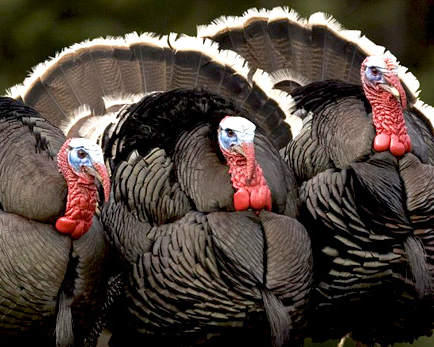
    For some reason, it is assumed that the meal will be turkey in some form or another. This is not the turkeys that wandered the woods near Pilgrims’ settlement. It is not even the turkeys that are infesting my neighborhood. One has taken up residence at the gas station that I frequent. While everyone is pumping gas, it is admiring itself in the reflections of the cars and trucks. No the turkeys we insist on eating are bred to be the high point of this one meal a year. That they are bred reduces them to the lowest common denominator of blandness.

    Long ago, I developed a total dislike of this type of turkey. If I was to be psychoanalyzed, a connection to the corresponding family discord might be discovered. But being thankful that I am an American, I exercise my God given choice not to eat turkey without being psychoanalyzed.

    My dislike started out in my youth. Only turkey was served for both Thanksgiving and Christmas dinners. Those dinners were rotated between my aunts in San Francisco and our house. There was intense competition between my mother and my aunts to find the most economical bird. In other words, they would look for the cheapest per pound bird and would go to great lengths to secure it. At one point the record was 29 cents per pound. Even in olden times that was extremely cheap. The taste matched the price – cheap.

    One year, my mother, after considerable nagging by the family, invested in a Butterball turkey. That is the kind with the little read button that pops out when it is perfectly done. As was her habit, she put it in the oven before dawn. After the requisite number of hours, the little red button popped out right on queue. Unfortunately, the family was not due to arrive until 1 p.m. and it had reached perfection far faster that previous cheaper birds. Therefore she left it in the oven until noon. There is the dinner scene in National Lampoon’s Christmas Vacation where everyone watches the dead bird shrivel and is still force to eat it – I’ve lived that.

    After marriage, the “discussion” as to having or not having turkey resolved itself. My wonderful wife one year decided to have a big turkey feast with all of the fixings. She purchased a quality frozen 25 plus pound turkey. While readying it for defrosting, it fell out of its perch in the freeze and aimed for her big toe. The ‘pope’s nose’, followed by the other 24 pounds, hit its target with dead accuracy. We spend the entire evening in the emergency room. The toe was broken. Unable to barely stand let alone cook, the job of cooking the dead bird fell to me. Convinced, that was the last time we served Meleagris gallopavo aka dead bird.

    I am thankful for a multitude of blessings. One is the privilege not to eat turkey if you don’t want to eat it. May you be thankful for all of your blessings this season and may you avoid the turkey conflict.


    · 

    Ken StrongmanAbout the Author: Ken Strongman (www.kpstrongman.com) has years of experience and a growing national reputation as a mediator and arbitrator.  He has successfully resolved more than a thousand disputes in the fields of construction defects, real estate, intellectual property, and employment.  He is also a Mediator and Arbitrator for FINRA.

    © 2020 Ken Strongman. All Rights Reserved. Please do not copy or repost without permission.

  • Contra Costa Superior Court Volunteer Reception

    Ken Strongman Volunteer appreciation 2013
    superior court volunteer


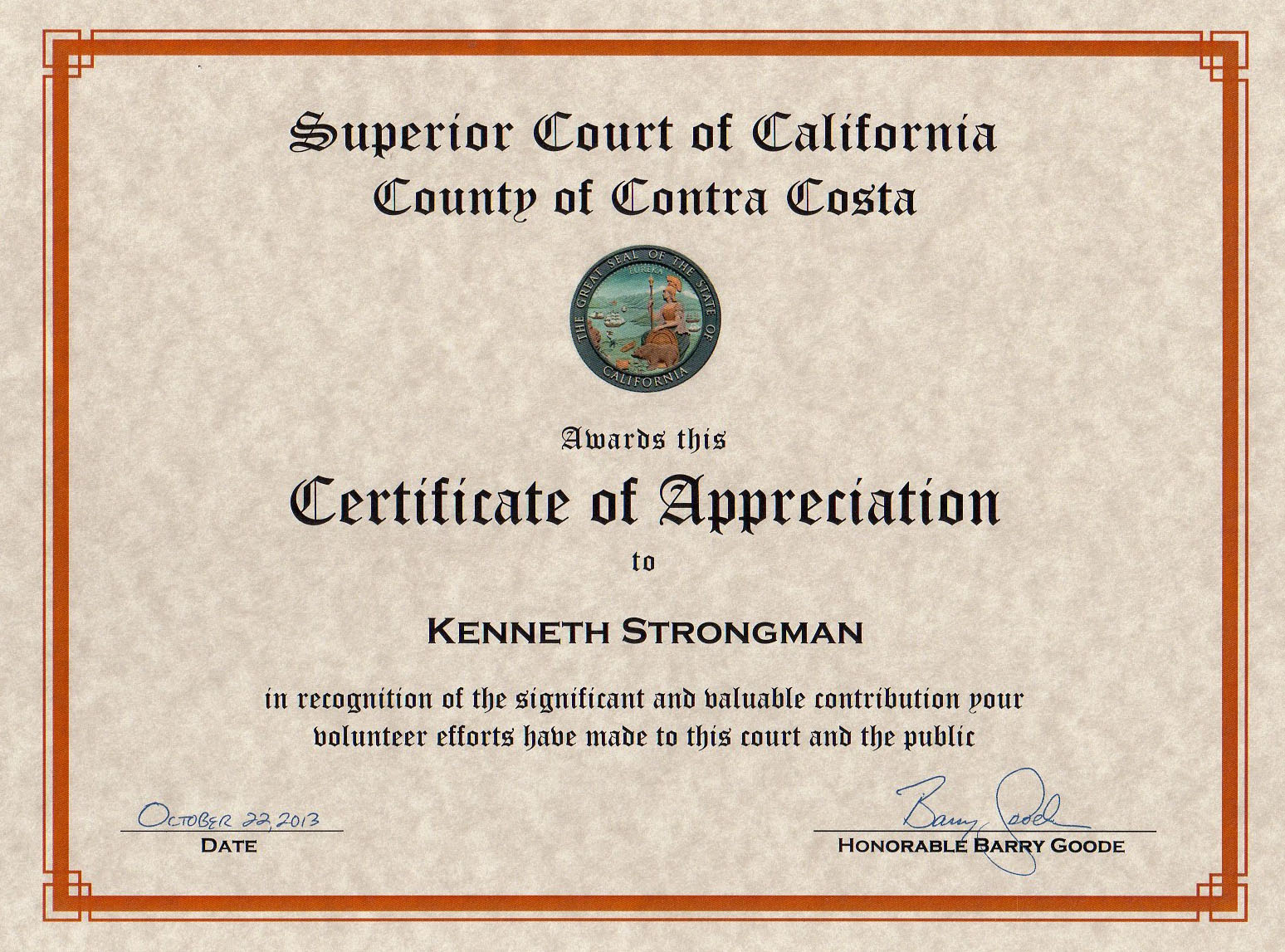
    The Contra Costa Superior Court held a reception to thank the hundreds of volunteers from the legal and professional community who contributed their time and talent to support the court.  I was one of the volunteers so honored.

    The Presiding Judge, the Honorable Barry Goode said, “There have been so many setbacks as our budget has been cut over the past five years, we simply could not function as well as we do without you.  Your efforts as mediators, arbitrators, settlement mentors, temporary judges, discovery facilitators, docents, clerks and interns, CASA and clinic Volunteers have made all the difference.  We thank you on behalf of the parties with cases before the court, and the public whose access to their justice system you have supported.”

    I’m proud to be associated with this large group who has given of their time and talents to improve access to justice.

    Ken StrongmanAbout the Author: Ken Strongman (www.kpstrongman.com) has years of experience and a growing national reputation as a mediator and arbitrator.  He has successfully resolved more than a thousand disputes in the fields of construction defects, real estate, intellectual property, and employment.  He is also a Mediator and Arbitrator for FINRA.

    © 2020 Ken Strongman. All Rights Reserved. Please do not copy or repost without permission.

  • Starlings v Blueberries – Last Friday’s ABA Representation in Mediation Competition

    Berkeley Law Competition
    Mediation Competition

    Starlings v Blueberries – Last Friday’s ABA Representation in Mediation Competition

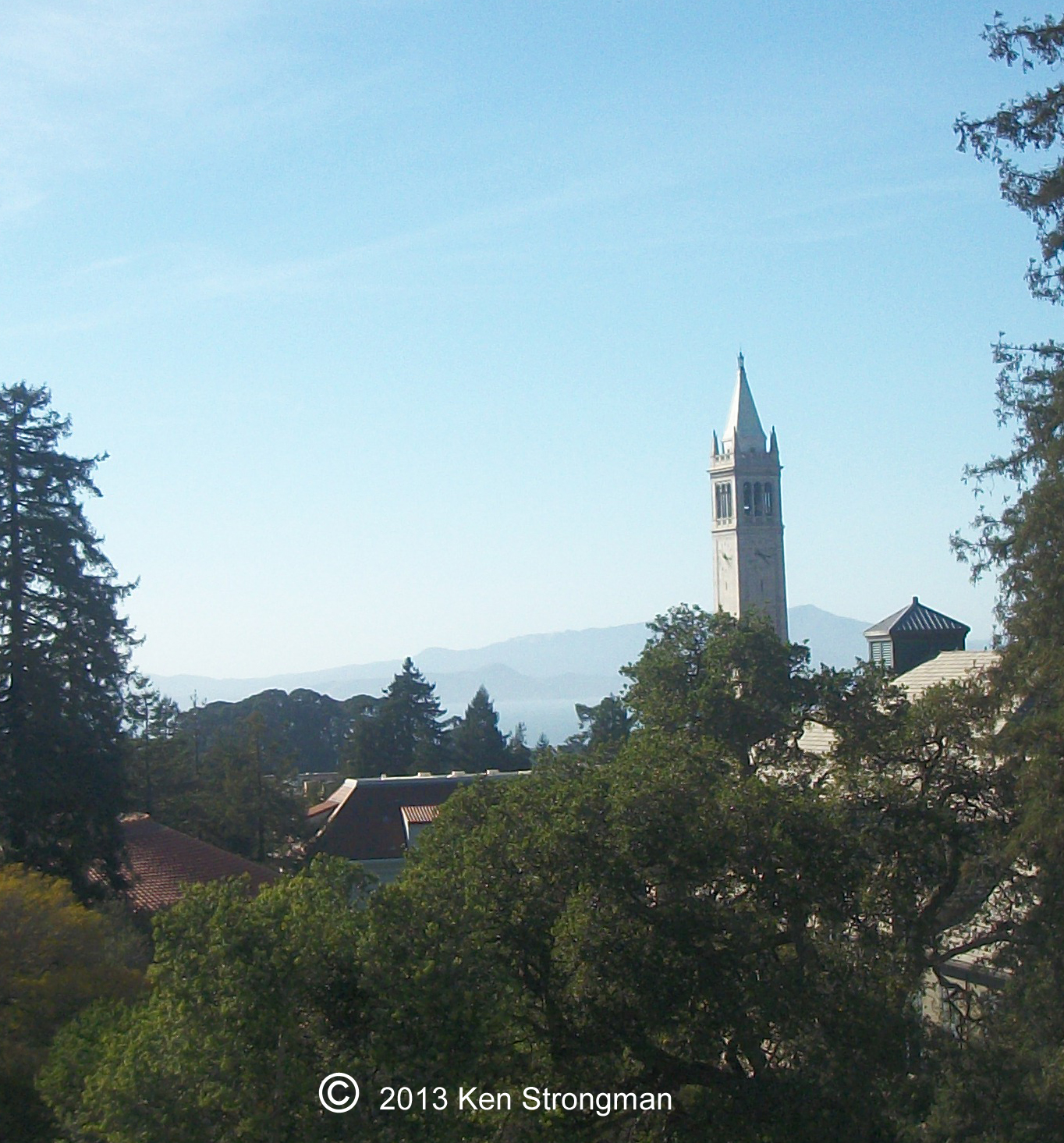
    Last Friday I participated in the ABA Representation in Mediation Competition.  I was one of the judges of the competition.  It was a two day event held at Berkeley Law in Boalt Hall at the University of California, Berkeley Campus.

    As Alternative Dispute Resolution (ADR) becomes more integrated in courts and pre-trial procedure, it has been my experience that attorneys will have all of their cases referred to these processes. Therefore, it is important that attorneys adequately represent their clients in this ADR environment. The competition was designed to acquaint the law student with advocacy in mediation. The focus of this competition is on attorney representation of clients in mediation. Judging criteria are geared toward examining the effective combination and use of advocacy and collaborative problem-solving skills.

    The judging criterion was designed to reward those participants who use an effective combination of advocacy skills and a problem-solving approach in the mediation. The problem solving approach is defined as one in which negotiators learn about each other’s interests and BATNA (Best Alternative To A Negotiated Agreement), brainstorm options, and select and shape a solution that meets their interests and, where appropriate, objective standards. Participants were not expected to sacrifice their client’s interests in order to be collaborative.

    The round that I judged consisted of a 75-minute mediation session involving a community dispute involving starlings and blueberries. At the close of the mediation session, there was a 10-minute period during which each team analyzed its performance in private, followed by a 20-minute self-analysis period (10 minutes per team) for each team to evaluate its own performance in the presence of the judges, but outside the other team’s presence.

    I was impressed by the attorney advocates willingness to let their client talk.  They were confident in their own abilities to allow the opposition to ask direct questions of their clients.  This was refreshing.  One of my chief obstacles in mediation is the attorneys putting on shows for their clients benefit.  They forget that their clients will usually have to deal with each other long after the dispute is resolved.

    The 1st place team in this competition automatically advanced to the National Competition.  There were teams from all over the west.   Some came as far away as North Dakota.  I will never know where any team came from.  It would have been a disqualifying breach of the rules to know the law school identity of a team.  Only if a team from the west wins the national competition will I have a hint that I was able to judge their abilities.

    *         *       *

    Ken Strongman, MediatorAbout the Author: Ken Strongman (www.kpstrongman.com) has years of experience and a growing national reputation as a mediator and arbitrator.  He has successfully resolved more than a thousand disputes in the fields of construction defects, real estate, intellectual property, and employment.  He is also a Mediator and Arbitrator for FINRA.

    © 2020 Ken Strongman. All Rights Reserved. Please do not copy or repost without permission.

  • Task #11: What’s wrong with the other side’s case?

    Task #11: What’s wrong with the other side’s case?

    The resolution of a dispute does not just occur on the day of the mediation.   Each participant to mediation needs to prepare their own strategy for negotiation in the settlement.  Based on my experience as a mediator, these are a collection of tasks each participant needs to complete and to discuss with their council and the mediator before the mediation.

    These tasks and the discussion with the mediator are confidential.   They are confidential under both Attorney Client privilege and under mediation confidential provisions in court rules, statutes, and standards.

    Task #11:  What’s wrong with the other side’s case?

    Now is your attorney’s opportunity to turn the introspection of your own case on its ear.  You need to list everything that is wrong with your opponent’s case.   You need to review this confidentially with the mediator.

    Ken Strongman, MediatorAbout the Author: Ken Strongman (www.kpstrongman.com) has years of experience and a growing national reputation as a mediator and arbitrator.  He has successfully resolved more than a thousand disputes in the fields of construction defects, real estate, intellectual property, and employment.  He is also a Mediator and Arbitrator for FINRA.

    © 2013 Ken Strongman. All Rights Reserved. Please do not copy or repost without permission.


  • My Purpose for blogging: Where to we go from here?

    Where to we go from here?

    My primary purpose for this blog is to inform practitioners and participants in mediation, negotiations, other forms of alternative dispute resolution and risk management.

    I want to provide a mostly systematic overview of the full range of dispute resolution options: risk management or the avoidance and minimization of conflicts, negotiation, mediation, arbitration.  I also want to demonstrate how to effectively use each option for each situation.  From time to time, the blog will delve into issues involving legal ethics and social media.

    I want to have a dialog with you on these issues and thereby helping all of us to improve our skills and knowledge.

    Ken Strongman, MediatorAbout the Author: Ken Strongman (www.kpstrongman.com) has years of experience and a growing national reputation as a mediator and arbitrator.  He has successfully resolved more than a thousand disputes in the fields of construction defects, real estate, intellectual property, and employment.  He is also a Mediator and Arbitrator for FINRA.

    © 2020 Ken Strongman. All Rights Reserved. Please do not copy or repost without permission.