The ingredients of any conflict is power. All conflicts have similar ingredients. They may vary in degree but most are present in some way. The main ingredients are Needs, Perceptions, Power, Values, and Feelings and Emotions. Today, I am focusing on power.
Power – How people define and use power is an important influence on the number and types of conflicts that occur. This also influences how conflict is managed. Conflicts can arise when people try to make others change their actions or to gain an unfair advantage.
Power is a powerful human motivation. In difficult conflicts, there are only two real reasons we as humans act.
One is for stimulation.
The other and more important one is to establish the perception of control of the situation.
We are all looking for control of our situation. Everyone wants to establish or reestablish the perception of control.
**For the last decade I’ve been involved with leadership development of tomorrow’s leaders. Using my expertise, I am training the youth leaders in conflict resolution. This blog is adapted from my training materials.
About the Author: Ken Strongman (www.kpstrongman.com) has years of experience and a growing national reputation as a mediator and arbitrator. He has successfully resolved more than a thousand disputes in the fields of construction defects, real estate, intellectual property, and employment. He is also a Mediator and Arbitrator for FINRA.
Induced cooperation is a form of persuasion. Persuasion is the process of changing minds. Persuasion is an everyday part of human discourse. It is used by salesmen, parents, teachers, and many others – basically all of us. Persuasion in mediation is a two-way street. Long before you try to influence another to moderate their demands or consider the other side’s point of view, chances are good that they will have tried to convince you to their position.
It’s my experience in order to be an effective mediator, I must engage in various forms of persuasion. I do not engage in coercive or manipulative persuasion practices by which pressure brought to bear on reluctant participants to get a settlement. I do use a range of potential mediator interventions to help the parties resolve deeply held or competitively bargained differences. *
Induced Cooperation
In this form of self persuasion, parties work on a common task. These tasks are simple. I often conduct brainstorming sessions to generate all of the issues we need to resolve. It can also be a list of issues that there is an agreement. Conversely, it can be a list of where they do not see eye to eye.
They can be even simpler, such as a shared snack time. This is a time honored tradition in resolving conflicts. It could be a good reason why diplomats participate in a lot of social engagements. Sharing meals is central to the normal socialization in almost every community of humans.
How it works
This self persuasion works by getting the parties to work together and therefore build relationships and generate communication between each other. These can be very simple activities. I usually bring refreshments to the mediation. The act of sharing a meal builds relationships.
More commonly, while in joint session, I conduct some brainstorming activities. They might be a list of all that we need to accomplish before an agreement can be reached. In others, it could what areas or facts that both parties can agree upon. I would drill down to everything they could agree upon no matter how small.
Effectiveness
By keeping the conversation going, this may reduce demonization of the other party. Often they have been at odds since the complaint was filed which in our current day and age can be several years of no contact other than through attorneys.
This process appears to produce greater group cohesion and attitude change. It is a team building exercise. It is a team in search of a settlement agreement. The chief purpose is to generate more and effective communication in the group. When more ideas are verbalized, participates become more attentive to and accepting of other peoples views. Everyone becomes slightly friendlier with greater satisfaction with group process. It becomes a team building exercise with better coordination of effort and orientation to the achievement of the task. Furthermore, it reduces polarity. There is less focus on differences, greater focus on similarities and commonalities of viewpoints. There is increased ability to engage in flexible thinking and to find creative solutions generating reduced egocentrism and increased ability to take the perceptions of others.
How to use it
I used induced cooperation in all stages of my mediation sessions. And I will use it in any way I can. They more I am able to get the real parties to talk to me and more importantly to each other the more likely there will be a solution to the conflict.
*Stark, James H. and Frenkel, Douglas N., Changing Minds: The Work of Mediators and Empirical Studies of Persuasion (2013). Ohio State Journal on Dispute Resolution, Vol. 28, No. 2, Pg. 263, 2013; U of Penn Law School, Public Law Research Paper No. 11-07
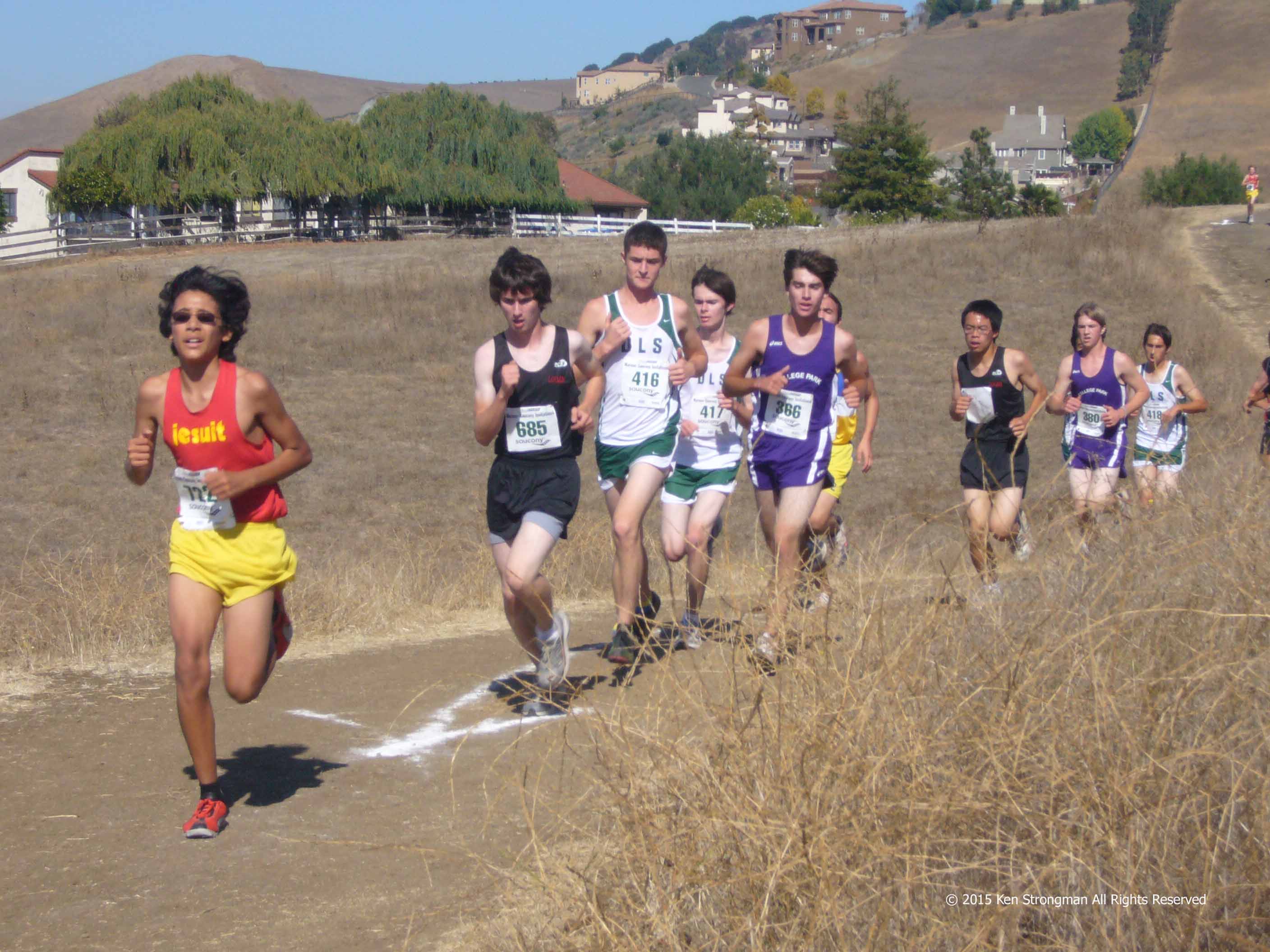
**Why the picture of Cross Country runners? It takes a lot of persuasion to get them to the finish line.
About the Author: Ken Strongman (www.kpstrongman.com) has years of experience and a growing national reputation as a mediator and arbitrator. He has successfully resolved more than a thousand disputes in the fields of construction defects, real estate, intellectual property, and employment. He is also a Mediator and Arbitrator for FINRA.
How to persuade others by orchestrating apologies?
How to you persuade others by orchestrating apologies? Persuasion is the process of changing minds. Persuasion is an everyday part of human discourse. It is used by salesmen, parents, teachers, and many others – basically all of us. Persuasion in mediation is a two-way street. Long before you try to influence another to moderate their demands or consider the other side’s point of view, chances are good that they will have tried to convince you to their position.
It’s my experience in order to be an effective mediator, I must engage in various forms of persuasion. I do not engage in coercive or manipulative persuasion practices by which pressure brought to bear on reluctant participants to get a settlement. I do use a range of potential mediator interventions to help the parties resolve deeply held or competitively bargained differences. *
Orchestrating Apologies
Since most of my mediations are with parties that have on going relationships such as construction, business, and technology, I spend considerable time orchestrating apologies. In a business relationship reconciliation is necessary. To contradict the theme of the Godfather , “it is always personal and not strictly business”.
The time to orchestrate apologies can take several hours of effort. It is negotiation in itself. We need to find out what the offence is exactly. What form will the apology take? Who will apologize to whom? This includes who will be in the room when the apology is given. How much time will be allowed to deliver the apology and any response? And more importantly will the apology be accepted?
Once the time and effort is expended to orchestrate and deliver an apology, solutions to the problem often quickly come into focus. Often the amount in controversy drops quickly and precipitously.
Effectiveness
Apologies are more effective for a single transgression than for a series of transgression over time. But, in the event of a damaged relationship, there is tremendous potential for reconciliation and resolution of the conflict.
The effect of mere expressions of sympathy was dependent on the context. I avoid allowing this to happen. The punitive transgressor needs to know that they did wrong, what they did wrong and why it was wrong. Otherwise the other party could be offended and then dig in to their position if not deepen their position.
Full elaborate apologies are more effective that less elaborate ones. I spend effort setting the stage for the apology. It encourages reconciliation if both parties know what is going to happen.
The more serious the transgression or the greater the harm, the more elaborate the apology must be. This should be self evident. Sometimes, it is necessary to put the apology in writing and include it in the settlement agreement. Since the settlement agreement is usually confidential, there is no loss of face even if it is in writing.
Partial apologies can be unproductive or even counterproductive in the effects on the recipient. I do not encourage or allow partial apologies to take place. I’ve had the misfortune to have very good settlement blow up before they were signed because of a off-handed apology.
In case of less serious injuries less clear culpability or both, any apology even if complete may be better than none. Putting it simply, apologize for what you know you did wrong. Do not under any circumstances apologize for something you are not convinced was wrong. It is not a matter of assuming liability but the other party will not be convinced of your sincerity.
Full settlement apologies push plaintiff’s lawyers in a generally opposite direction. An apology executed correctly has a tendency to low the demands from the other side. If a plaintiff is on a contingence fee agreement, that will lower their pay day.
Why they work
Apologies helping disputants separate past (regrettable) acts from essential (positive) selfhood may be a highly effective form of self-persuasion. Apologies help resolve cognitive dissonance- dissonance effects are strongest (and self persuasion greatest) when actions are inconsistent with self concept of being a good person.
Risks
A successful apology requires skill and expertise. This can’t be emphasized enough. I spend considerable time testing the feasibility of an apology. I will even review it with the opposition before it is delivered.
How they work
If party accepts responsibility for causing injury to the other party, then the offended party makes more positive character related attribution towards the offender. Also, because of the regret, it changes assumptions about future behavior and expectations for the future relationship.
Apologies decrease anger towards the offender and increase sympathy for offender’s perspective especially if offender accepted full responsibility.
Presence or absence of apology affects on offenders parties ‘bottom line’ in legal negotiations well as the parties aspirations and opinion about what constitutes a fair settlement.
Recipients of apology reported less need to punish the other and greater willingness to forgive that those who did not receive apology.
Insincere apologies may actually cause people to react negatively.
*Stark, James H. and Frenkel, Douglas N., Changing Minds: The Work of Mediators and Empirical Studies of Persuasion (2013). Ohio State Journal on Dispute Resolution, Vol. 28, No. 2, Pg. 263, 2013; U of Penn Law School, Public Law Research Paper No. 11-07
**Why the picture of Cross Country runners? It takes a lot of persuasion to get them to the finish line.
About the Author: Ken Strongman (www.kpstrongman.com) has years of experience and a growing national reputation as a mediator and arbitrator. He has successfully resolved more than a thousand disputes in the fields of construction defects, real estate, intellectual property, and employment. He is also a Mediator and Arbitrator for FINRA.
Perceptions are part of any conflict. All conflicts have similar ingredients. They may vary in degree but most are present in some way. The main ingredients are Needs, Perceptions, Power, Values, and Feelings and Emotions. Today, I am focusing on perceptions.
Perceptions – All humans interpret reality differently. They perceive differences in the severity, causes and consequences of problems. Misperceptions or differing perceptions may come from: self-perceptions, others’ perceptions, differing perceptions of situations and perceptions of threat. How something is framed will affect its perception. So in conflict resolution, reframing is an important task to get to a solution.
Just by observing the news of the world, we can easily see that different people perceive a situation totally differently. The perceptions are influenced by different histories, geographic locations, religious values, etc. They are what we all bring to the table.
**For the last decade I’ve been involved with leadership development of tomorrow’s leaders. Using my expertise, I am training the youth leaders in conflict resolution. This blog is adapted from my training materials.
About the Author: Ken Strongman (www.kpstrongman.com) has years of experience and a growing national reputation as a mediator and arbitrator. He has successfully resolved more than a thousand disputes in the fields of construction defects, real estate, intellectual property, and employment. He is also a Mediator and Arbitrator for FINRA.
Four characteristics a good mediator brings to the table.
This and many other topics will be revealed in: The “End Game” of Mediation and How to Succeed at It [A Comprehensive Road Map to the Mediation Process] on Tuesday, March 10, 4:30 pm – 8:30 pm @ the Contra Costa Bar Association.
Speakers Ken Strongman, Esq. and Malcolm Sher, Esq. will lead a program for Advocates designed to create a highly positive mediation experience and outcome for themselves and their clients. These two successful mediators will discuss some of the best practices for negotiation and to prepare the client, advocate, mediator and opposition for the mediation journey.
The Contra Costa County Bar Association certifies that this activity has been approved for 3 hours of General MCLE credit by the State Bar of California, Provider #393.
NOW FOR THE ANSWER: Four characteristics a good mediator brings to the table.
1. Able to quickly build trust and confidence
2. Excellent inter-personal skills: Patience and a sense of humor
3. Creativity in assisting parties and counsel in shaping a solution
4. Reputation in the legal and mediation community to do every thing they can to encourage and assist in settlement
For an experienced Mediator to help negotiate a resolution to your dispute contact Ken Strongman. Here.
About the Author: Ken Strongman (www.kpstrongman.com) has years of experience and a growing national reputation as a mediator and arbitrator. He has successfully resolved more than a thousand disputes in the fields of construction defects, real estate, intellectual property, and employment. He is also a Mediator and Arbitrator for FINRA.
The 7 advantages of a joint mediation session and many other topics will be revealed in: The “End Game” of Mediation and How to Succeed at It [A Comprehensive Road Map to the Mediation Process] on Tuesday, March 10, 4:30 pm – 8:30 pm @ the Contra Costa Bar Association.
Speakers Ken Strongman, Esq. and Malcolm Sher, Esq. will lead a program for Advocates designed to create a highly positive mediation experience and outcome for themselves and their clients. These two successful mediators will discuss some of the best practices for negotiation and to prepare the client, advocate, mediator and opposition for the mediation journey.
The Contra Costa County Bar Association certifies that this activity has been approved for 3 hours of General MCLE credit by the State Bar of California, Provider #393.
NOW FOR THE ANSWER: Seven advantages of a joint mediation session:
1. To see and hear the other side
2. To look at pictures and other evidence, both sides at once
3. It gives each side an opportunity to size up the other
4. Talk with each other as oppose to using agents
5. To evaluate the style of each attorney
6. To evaluate the preparedness of each side
7. To see the body language of each attorney and party (everyone)
About the Author: Ken Strongman (www.kpstrongman.com) has years of experience and a growing national reputation as a mediator and arbitrator. He has successfully resolved more than a thousand disputes in the fields of construction defects, real estate, intellectual property, and employment. He is also a Mediator and Arbitrator for FINRA.
This and many other topics will be revealed in: The “End Game” of Mediation and How to Succeed at It [A Comprehensive Road Map to the Mediation Process] on Tuesday, March 10, 4:30 pm – 8:30 pm @ the Contra Costa Bar Association.
Speakers Ken Strongman, Esq. and Malcolm Sher, Esq. will lead a program for Advocates designed to create a highly positive mediation experience and outcome for themselves and their clients. These two successful mediators will discuss some of the best practices for negotiation and to prepare the client, advocate, mediator and opposition for the mediation journey.
The Contra Costa County Bar Association certifies that this activity has been approved for 3 hours of General MCLE credit by the State Bar of California, Provider #393.
NOW FOR THE ANSWER: Seven reasons to avoid a joint mediation session
Stated another way: the advantages of a private session with the mediator
1. It is an opportunity to explain the case to a neutral person
2. The attorney and party get to evaluate their own case
3. The ability to use the mediator as a sounding board and coach
4. To be able to talk openly
5. Discuss solutions
6. Identify components of solutions from your stand point
7. Emote and vent in private about the case and the other side (person)
About the Author: Ken Strongman (www.kpstrongman.com) has years of experience and a growing national reputation as a mediator and arbitrator. He has successfully resolved more than a thousand disputes in the fields of construction defects, real estate, intellectual property, and employment. He is also a Mediator and Arbitrator for FINRA.
Eight ways to prepare the other side for the negotiation or mediation
Prepare for mediation and many other topics will be revealed in: The “End Game” of Mediation and How to Succeed at It [A Comprehensive Road Map to the Mediation Process] on Tuesday, March 10, 4:30 pm – 8:30 pm @ the Contra Costa Bar Association.
Speakers Ken Strongman, Esq. and Malcolm Sher, Esq. will lead a program for Advocates designed to create a highly positive mediation experience and outcome for themselves and their clients. These two successful mediators will discuss some of the best practices for negotiation and to prepare the client, advocate, mediator and opposition for the mediation journey.
The Contra Costa County Bar Association certifies that this activity has been approved for 3 hours of General MCLE credit by the State Bar of California, Provider #393.
How to prepare the other side for the negotiation or mediation
• Don’t burn bridges! Be polite and collaborative. Seek a “win-win” solution.
• Recognize that they are key players, have egos and have to justify any settlement.
• If plaintiff counsel, make it easy for them to give you what you want. Don’t hide the ball. If defense counsel, strategize the negotiations in advance, including contents of briefs.
• Provide all decision-makers with enough information well before the mediation session. Tell them what you want and why you want it.
• Have necessary corporate resolutions, powers of attorney and other written authority.
• Construct a day in the life of the client
• Reconstruction of accident or event
• Send copies of the mediation brief and other information with the request that it is sent to the adjustor and/or other stakeholders.
About the Author: Ken Strongman (www.kpstrongman.com) has years of experience and a growing national reputation as a mediator and arbitrator. He has successfully resolved more than a thousand disputes in the fields of construction defects, real estate, intellectual property, and employment. He is also a Mediator and Arbitrator for FINRA.
Eight reasons why money is not always the only solution to the dispute
Money and why it isn’t the answer and many other topics will be revealed in: The “End Game” of Mediation and How to Succeed at It [A Comprehensive Road Map to the Mediation Process] on Tuesday, March 10, 4:30 pm – 8:30 pm @ the Contra Costa Bar Association.
Speakers Ken Strongman, Esq. and Malcolm Sher, Esq. will lead a program for Advocates designed to create a highly positive mediation experience and outcome for themselves and their clients. These two successful mediators will discuss some of the best practices for negotiation and to prepare the client, advocate, mediator and opposition for the mediation journey.
The Contra Costa County Bar Association certifies that this activity has been approved for 3 hours of General MCLE credit by the State Bar of California, Provider #393.
Eight reasons why money is not always the only solution to the dispute:
1. There is always the possibility of a Global settlement
2. Non-monetary concessions
3. Letter of recommendation are helpful in some cases particulary employment and landlord tenant.
4. There are always tax and accounting issues. Different classifications will change the dynamic.
5. Payment plans
6. Structured Settlements
7. Bartering. They have something you could use instead of cash.
8. Confidentiality of the agreement and dispute
About the Author: Ken Strongman (www.kpstrongman.com) has years of experience and a growing national reputation as a mediator and arbitrator. He has successfully resolved more than a thousand disputes in the fields of construction defects, real estate, intellectual property, and employment. He is also a Mediator and Arbitrator for FINRA.
Three strategies for the money dance in a negotiation or mediation and many other topics will be revealed in: The “End Game” of Mediation and How to Succeed at It [A Comprehensive Road Map to the Mediation Process] on Tuesday, March 10, 4:30 pm – 8:30 pm @ the Contra Costa Bar Association.
Speakers Ken Strongman, Esq. and Malcolm Sher, Esq. will lead a program for Advocates designed to create a highly positive mediation experience and outcome for themselves and their clients. These two successful mediators will discuss some of the best practices for negotiation and to prepare the client, advocate, mediator and opposition for the mediation journey.
The Contra Costa County Bar Association certifies that this activity has been approved for 3 hours of General MCLE credit by the State Bar of California, Provider #393.
Three strategies for the money dance in a negotiation or mediation.
Always come to the negotiation or mediation with three reference points:
1. Reservation – bottom line or walk away price is the point at which it is determined that you are better off litigating than settling. It would be better to express the reservation point not only as a monetary amount but as a package that involves quantifiable and other elements.
2. Target Point should represent the optimistic goal for a settlement outcome. It should be a package of monetary and other elements and should be between the reservation point and opening offer.
3. Opening Offer is the number with which your side will begin the bargaining process. It should be more optimistic than your target point because of the give and take of negotiations.
About the Author: Ken Strongman (www.kpstrongman.com) has years of experience and a growing national reputation as a mediator and arbitrator. He has successfully resolved more than a thousand disputes in the fields of construction defects, real estate, intellectual property, and employment. He is also a Mediator and Arbitrator for FINRA.
Websites store cookies to enhance functionality and personalise your experience. You can manage your preferences, but blocking some cookies may impact site performance and services.
Essential cookies enable basic functions and are necessary for the proper function of the website.
Name
Description
Duration
Cookie Preferences
This cookie is used to store the user's cookie consent preferences.
 About the Author: Ken Strongman (www.kpstrongman.com) has years of experience and a growing national reputation as a mediator and arbitrator. He has successfully resolved more than a thousand disputes in the fields of construction defects, real estate, intellectual property, and employment. He is also a Mediator and Arbitrator for FINRA.