Tag: negociation

  • What do you truly disagree upon with your mediation opponents?

    What do you truly disagree upon with your mediation opponents?

    The resolution of a dispute does not just occur on the day of the mediation.   Each participant to mediation needs to prepare their own strategy for negotiation in the settlement.  Based on my experience as a mediator, these are a collection of tasks each participant needs to complete and to discuss with their council and the mediator before the mediation.

    These tasks and the discussion with the mediator are confidential.   They are confidential under both Attorney Client privilege and under mediation confidential provisions in court rules, statutes, and standards.

    What do you truly disagree upon with your mediation opponents?

    In a previous task, you were asked to search for some potential common ground you might have with your mediation opponents to help facilitate a voluntary agreement to settle this matter.   Now you need to flip the question around and come up with the significant issues that you disagree upon.

    Strangely enough this will help the mediator to focus the mediation session upon the real and lasting issues of the dispute.   Then everyone can focus on the task at hand to develop together a voluntary agreement to resolve the dispute.  For example, breach of contract might be agreed upon, but whether it is a major or minor breach is the true disagreement.  Likewise, there might not be a disagreement on liability but it is the measure of damages that is the true dispute.   Even then, there might be considerable agreement.

    Review these disagreements with your attorney and confidentially with the mediator.

    Ken StrongmanAbout the Author: Ken Strongman (www.kpstrongman.com) has years of experience and a growing national reputation as a mediator and arbitrator.  He has successfully resolved more than a thousand disputes in the fields of construction defects, real estate, intellectual property, and employment.  He is also a Mediator and Arbitrator for FINRA.

    © 2022 Ken Strongman. All Rights Reserved. Please do not copy or re-post without permission.

  • Do you really want to settle this dispute through mediation?

    The resolution of a dispute does not just occur on the day of the mediation.   Each participant to mediation needs to prepare their own strategy for negotiation in the settlement.  Based on my experience as a mediator, these are a collection of tasks each participant needs to complete and to discuss with their council and the mediator before the mediation.

    These tasks and the discussion with the mediator are confidential.   They are confidential under both Attorney Client privilege and under mediation confidential provisions in court rules, statutes, and standards.

    The purpose of mediation is to reach a voluntary agreement with the other parties.  It is not something imposed upon the parties by the mediator. It’s your choice to decide to reach a voluntary agreement rather than to continue to fight.

    Can you work towards a voluntary agreement if it would satisfy your interests and the interests of the other parties?

    You will need to discuss this issue with your attorney and the mediator.  If you are not willing to cooperate with the other parties to find a voluntary solution to the problem, then your attorney and the mediator need to decide if a mediation session at this time is appropriate.   It would not benefit you, if you were not willing to arrive at a solution the dispute.

    As the mediator, I would want to discuss with you and your attorney what the impediments to reaching a solution to the problem.   Once these impediments are identified, we can develop potential solutions.

    Ken Strongman, MediatorAbout the Author: Ken Strongman (www.kpstrongman.com) has years of experience and a growing national reputation as a mediator and arbitrator.  He has successfully resolved more than a thousand disputes in the fields of construction defects, real estate, intellectual property, and employment.  He is also a Mediator and Arbitrator for FINRA.

    © 2022 Ken Strongman. All Rights Reserved. Please do not copy or re-post without permission.
  • Visualize the future beyond the dispute.

    Visualize the future beyond the dispute.

    The resolution of a dispute does not just occur on the day of the mediation.   Each participant to mediation needs to prepare their own strategy for negotiation in the settlement.  Based on my experience as a mediator, these are a collection of tasks each participant needs to complete and to discuss with their council and the mediator before the mediation.

    These tasks and the discussion with the mediator are confidential.   They are confidential under both Attorney Client privilege and under mediation confidential provisions in court rules, statutes, and standards.

    Where do you want to be in five years after this mediation? 

    Develop a basic description or visualize what life and/or business would be like in five to ten years?  What does life and/or business look like after the resolution of this dispute?  How will you spend your time, money and talent?

    The purpose of this exercise is to get you to think what life might be like after the resolution of this dispute.  Right now you are in the middle of the dispute and its immediate aftermath.  You have spent time – a lot of time, money and energy on various aspects of the dispute.   If it is a commercial dispute, you will have gone through the disruption of preparing and doing the discovery process.  If it is personal injury, you will have endured lost work while being deposed in depositions.  You have spent considerable time wondering if you will win in court.  Have you spent time thinking about life after the dispute is resolved.  What does that look like?

    Discuss this with your attorney and confidentially with your mediator.

    Ken Strongman, MediatorAbout the Author: Ken Strongman (www.kpstrongman.com) has years of experience and a growing national reputation as a mediator and arbitrator.  He has successfully resolved more than a thousand disputes in the fields of construction defects, real estate, intellectual property, and employment.  He is also a Mediator and Arbitrator for FINRA.

    © 2022 Ken Strongman. All Rights Reserved. Please do not copy or re-post without permission.
  • What do they want out of the mediation?

    What do they want out of the mediation?

    The resolution of a dispute does not just occur on the day of the mediation.   Each participant to mediation needs to prepare their own strategy for negotiation in the settlement.  Based on my experience as a mediator, these are a collection of tasks each participant needs to complete and to discuss with their council and the mediator before the mediation.

    These tasks and the discussion with the mediator are confidential.   They are confidential under both Attorney Client privilege and under mediation confidential provisions in court rules, statutes, and standards.

    What do they want?

    You know that you have interests that need to be satisfied when you attend the mediation, the other side also has interests.  What are those interests?

    They have communicated their interests to you through a variety of means.  What do you think those interests are?  They can be money, time, minimize their risks, fairness, maintain a working relationship, etc.  List and rank them.

    It is important to realize that your legal opponents do want something out of the dispute and that they are willing to spend time, money and legal talent in order to get it.   This does not mean that they will succeed.  It just means that there are things you can use as bargaining chips.

    It is entirely possible that you might have some of the same interests.  This is also an opportunity to create a solution outside of the box.  Realizing this possibility will help reach a settlement easier at least on certain issues.

    Review the list you have created with your attorney and be prepared to discuss it in confidence with your mediator.

    Ken Strongman, MediatorAbout the Author: Ken Strongman (www.kpstrongman.com) has years of experience and a growing national reputation as a mediator and arbitrator.  He has successfully resolved more than a thousand disputes in the fields of construction defects, real estate, intellectual property, and employment.  He is also a Mediator and Arbitrator for FINRA.

    © 2022 Ken Strongman. All Rights Reserved. Please do not copy or re-post without permission.
  • The ingredients of any conflict – Power

    Power
    Power is an ingredient of conflict

    The ingredients of any conflict is power

    The ingredients of any conflict is power. All conflicts have similar ingredients. They may vary in degree but most are present in some way. The main ingredients are Needs, Perceptions, Power, Values, and Feelings and Emotions. Today, I am focusing on power.

    Power – How people define and use power is an important influence on the number and types of conflicts that occur. This also influences how conflict is managed. Conflicts can arise when people try to make others change their actions or to gain an unfair advantage.

    Power is a powerful human motivation. In difficult conflicts, there are only two real reasons we as humans act.

    One is for stimulation.

    The other and more important one is to establish the perception of control of the situation.

    We are all looking for control of our situation. Everyone wants to establish or reestablish the perception of control.
    For an experienced Mediator to help negotiate a resolution to your dispute contact Ken Strongman. Here.

    Ken StrongmanAbout the Author: Ken Strongman, is a private commercial mediator/arbitrator of complex, high risk litigated cases since 2004. Disputes addressed include business, securities, construction defects, real estate, intellectual property, employment, environment, energy, and trusts & estates. He is also a Mediator and Arbitrator for FINRA.

    **For the last decade I’ve been involved with leadership development of tomorrow’s leaders. Using my expertise, I am training the youth leaders in conflict resolution. This blog is adapted from my training materials.

    © 2022 Ken Strongman. All Rights Reserved. Please do not copy or repost without permission.

  • Don’t be afraid of anger – angry people can’t lie.

    don't be afraid
    Don’t be afraid.

    Don’t be afraid of anger – angry people can’t lie.

    The first step to resolve any conflict is to defuse anger.  But do not be afraid of anger.  An angry person can’t lie because anger is a primitive emotional response.  To lie, you must control your emotions and turn on your intellect.  So when someone is angry, whatever they are telling you contains some truth.  Beware that this does not stop good actors.  A good actor merely appears to be angry as they try to control the situation

    There are several reasons for anger:

    To vent. An angry person needs to let off steam and release the anger that may have been brewing for a long time.  To resolve the conflict you need to allow this to happen, but try to control it by reframing their issues. 

    To get the listener’s attention. An angry person wants to know that you are paying attention.  Use good listening skills to demonstrate that you are paying attention.

    To be heard. An angry person wants someone to listen to their point of view.  To resolve the conflict, you need to acknowledge the feelings you hear so that the speaker knows you appreciate how angry they are.

    To be understood. An angry person wants someone to appreciate how they feel.  Therefore try to empathize with their experience so that they feel you understand the situation, and acknowledge their ‘right’ to feel the way they do.  This does not mean that you should agree with their justification.  You do want to remain neutral in the conflict and not pick sides.

    For an experienced Mediator to help negotiate a resolution to your dispute contact Ken Strongman. Here.


    Ken StrongmanAbout the Author: Ken Strongman, is a private commercial mediator/arbitrator of complex, high risk litigated cases since 2004. Disputes addressed include business, securities, construction defects, real estate, intellectual property, employment, environment, energy, and trusts & estates. He is also a Mediator and Arbitrator for FINRA.

    **For the last decade I’ve been involved with leadership development of tomorrow’s leaders.  Using my expertise, I am training the youth leaders in conflict resolution.  This blog is adapted from my training materials. 

    © 2022 Ken Strongman. All Rights Reserved. Please do not copy or re-post without permission.

  • Values – One of The ingredients of any conflict

    Values
    Values are important in conflicts

    The ingredients of any conflict – Values

    Values are important within any conflict.

    All conflicts have similar ingredients. They may vary in degree but most are present in some way. The main ingredients are Needs, Perceptions, Power, Values, and Feelings and Emotions. Today, I am focusing on values.

    Values are beliefs or principles we consider to be very important. Serious conflicts arise when people hold incompatible values or when values are not clear. Conflicts also arise when one party refuses to accept the fact that the other party holds something as a value rather than a preference. To resolve the conflict, clarify each party’s values.

    Values influence perceptions and at times it is hard to distinguish the two concepts. In resolving conflicts, it is easier to equate the two in order to bring resolution. Just be aware that values influence perceptions.

    Just looking at a common definition of the word will help: the regard that something is held to deserve; the importance, worth, or usefulness of something. Likewise – a person’s principles or standards of behavior; one’s judgment of what is important in life. Useful synonyms: principles, ethics, moral code, morals, standards, code of behavior.

    For an experienced Mediator to help negotiate a resolution to your dispute contact Ken Strongman. Here.

    Ken StrongmanAbout the Author: Ken Strongman, is a private commercial mediator/arbitrator of complex, high risk litigated cases since 2004. Disputes addressed include business, securities, construction defects, real estate, intellectual property, employment, environment, energy, and trusts & estates. He is also a Mediator and Arbitrator for FINRA.

    **For the last decade I’ve been involved with leadership development of tomorrow’s leaders. Using my expertise, I am training the youth leaders in conflict resolution. This blog is adapted from my training materials.

    © 2021 Ken Strongman. All Rights Reserved. Please do not copy or re-post without permission.

  • Listening is the best way to resolve conflicts.

    The better the information you have, the greater your chances of finding a workable solution.  Listen carefully to what others are saying, not judging until you hear everyone’s story.  Be aware of tone of voice, body language, and other clues.  Understand what each person is expressing – what he wants and what he is willing to do to get there.  Then clarify that the solution lies with all parties. 

    Listen carefully to what others are saying without judgment until you have everyone’s side of the story.  Clarify what you have heard and then re-frame it back to each party.  Remember the solution lays with both parties not you.

    For an experienced Mediator to help negotiate a resolution to your dispute contact Ken Strongman. Here.  

    Ken StrongmanAbout the Author: Ken Strongman, is a private commercial mediator/arbitrator of complex, high risk litigated cases since 2004. Disputes addressed include business, securities, construction defects, real estate, intellectual property, employment, environment, energy, and trusts & estates. He is also a Mediator and Arbitrator for FINRA.

    **For the last decade I’ve been involved with leadership development of tomorrow’s leaders.  Using my expertise, I am training the youth leaders in conflict resolution.  This blog is adapted from my training materials. 

    © 2021 Ken Strongman. All Rights Reserved. Please do not copy or re-post without permission.

  • Ingredients of conflict – Perceptions

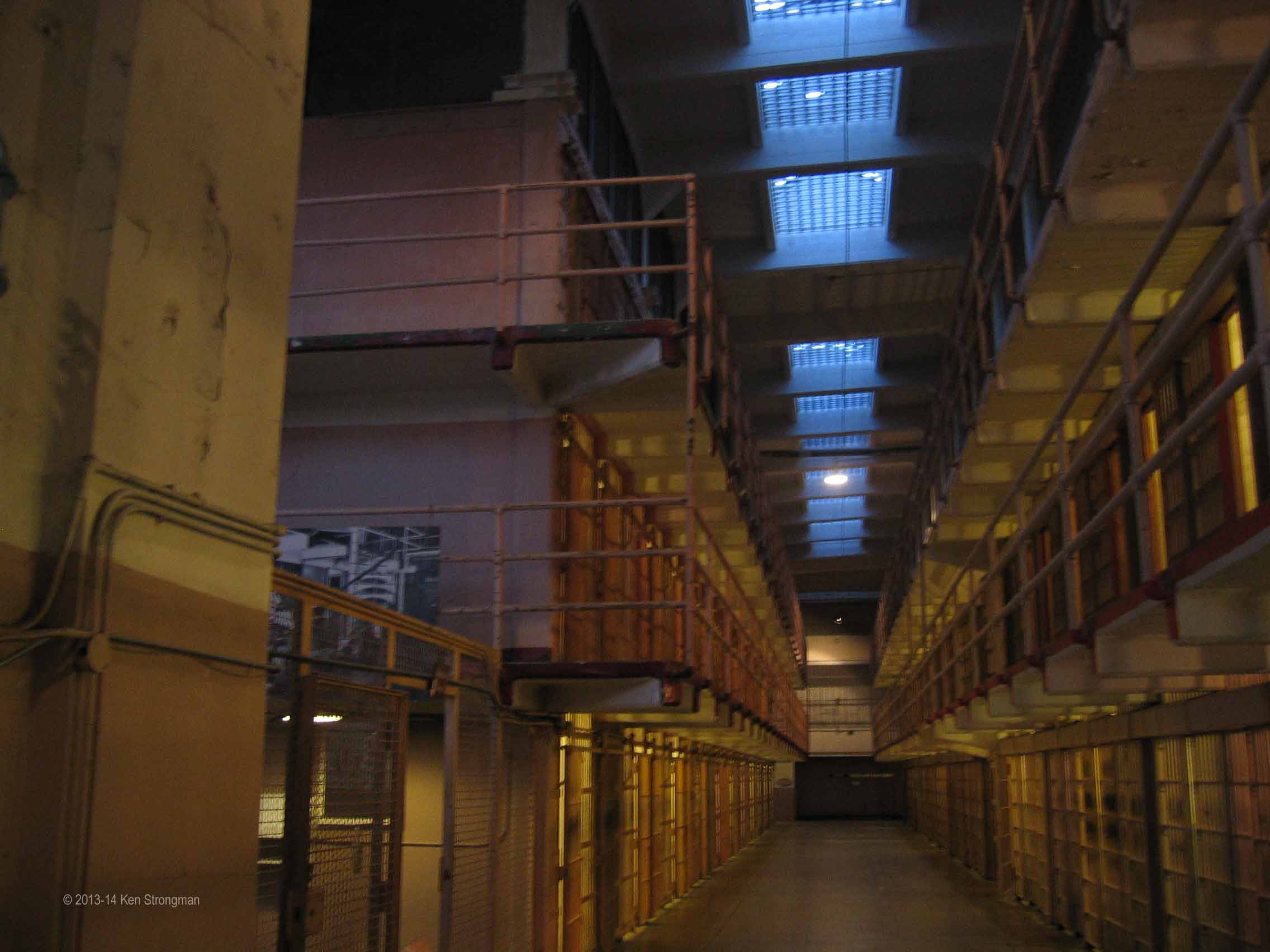
    Perceptions out the window of alcatraz.
    Perceptions are important

    The ingredients of any conflict – Perceptions

    Perceptions are part of any conflict. All conflicts have similar ingredients. They may vary in degree but most are present in some way. The main ingredients are Needs, Perceptions, Power, Values, and Feelings and Emotions. Today, I am focusing on perceptions.

    Perceptions – All humans interpret reality differently. They perceive differences in the severity, causes and consequences of problems. Misperceptions or differing perceptions may come from: self-perceptions, others’ perceptions, differing perceptions of situations and perceptions of threat. How something is framed will affect its perception. So in conflict resolution, reframing is an important task to get to a solution.

    Just by observing the news of the world, we can easily see that different people perceive a situation totally differently. The perceptions are influenced by different histories, geographic locations, religious values, etc. They are what we all bring to the table.

    For an experienced Mediator to help negotiate a resolution to your dispute contact Ken Strongman. Here.

    Ken StrongmanAbout the Author: Ken Strongman, is a private commercial mediator/arbitrator of complex, high risk litigated cases since 2004. Disputes addressed include business, securities, construction defects, real estate, intellectual property, employment, environment, energy, and trusts & estates. He is also a Mediator and Arbitrator for FINRA.

    © 2021 Ken Strongman. All Rights Reserved. Please do not copy or re-post without permission.

    **For the last decade I’ve been involved with leadership development of tomorrow’s leaders. Using my expertise, I am training the youth leaders in conflict resolution. This blog is adapted from my training materials.

  • Conflicts @Thanksgiving – How to Avoid

    Rockwell Thanksgiving
    Idealized Thanksgiving

    Thanksgiving conflicts reduces anyone’s ability to be thankful. Thanksgiving is sometimes referred to as forced family time. It is ripe for all kinds of potential conflicts.  Here are some things to minimize or avoid conflicts on the big day without lowering your expectations of being truly thankful.    

    ·     Realize that Norman Rockwell was a fraud.  His famous Thanksgiving painting is a total fantasy.   I’ve been told that when he painted it, each of the models posed separately.  So naturally they appear happy.  They were not in the same room with the others and they obviously didn’t have to eat the food.  They couldn’t because it had to remain for the next model.

    ·     Speaking of food… for all of those that have recently converted to a vegan diet or just discovered the South Beach, North Beach or West Beach diet, or have any dietary restrictions based on health: the only statement on the subject you can make is (with a smile) – “No, Thank you” while you are passing the plates.   

    ·     Thanksgiving is not the time to proselytize anyone to a life free of all of the cholesterol choking cancer causing food on the table.   Yes, stress causes heart attacks.  But stress doesn’t come from always eating the wrong foods, it also comes from people reminding (nagging) you not to eat certain foods. 

    ·     For those of you on a diet at Thanksgiving and can’t see anything on the table the diet will allow you to eat, and you still want to be true to your diet.  Just remember you do want to loose weight so not eating anything would still be a good thing. 

    ·     Speaking of proselytizing…Thanksgiving should be a time to be thankful that we are blessed in this country with the privilege to not have to talk politics 365-days a year.  Thanksgiving is the time to eat the turkey and to stop talking about the turkeys running the country. 

    ·     Realize that everyone does not have to do the same thing all the time.  For some (or a whole lot of people) cheering on their favorite football team with family and friends is just as much a bonding experience as other activities.  Let them watch the game.  At least half the population will be truly thankful their team won.   Being thankful is what it is all about. 

    ·     Some may want to watch football, others might want to play a game of football, other still may want to go out and change the water pump on a car.  That is OK!  Chill out!  Be thankful they are all here and having fun. 

    ·     Thanksgiving is not a time to be thankful for your holiday cruise to the Caribbean, new car, house, job, or any other material thing.   Be thankful for the little things: breathing, the sunrise, food on the table, and laughter.  We are all social people and never truly get along with each other.  If there was no conflict we wouldn’t be human and we need to be thankful that we are human.   

    Ken StrongmanAbout the Author: Ken Strongman, is a private commercial mediator/arbitrator of complex, high risk litigated cases since 2004. Disputes addressed include business, securities, construction defects, real estate, intellectual property, employment, environment, energy, and trusts & estates. He is also a Mediator and Arbitrator for FINRA.

    © 2021 Ken Strongman. All Rights Reserved. Please do not copy or re-post without permission.