Tag: mediation

  • What’s it like working with women prisoners serving life sentences?

    Alcatraz Industrial Building - Camping Trip working
    Working with prisoners

    What’s it like working with women prisoners serving life sentences?

    This is part two of my interview with Doug Noll detailing his work with Prison of Peace and his work with female murderers serving in California prisons. 

    Doug Noll and Laurel Kaufer have worked with such women teaching them conflict resolution skills and teaching them how to teach the same skills to other prisoners. 

    What was the first session like?

    Laurel and I were both very experienced mediation trainers. Both of us had worked both nationally and internationally in a variety of contexts. However, neither one of us had ever worked in a maximum security prison. In fact, our first visit to Valley State Prison for Women was the first time either of us had been in a prison. Both of us had been civil trial lawyers before turning to mediation, with little experience in the criminal system.

    Our first group of women, 17 in all, included a variety of ethnic, religious, socioeconomic, educational, and geographical backgrounds. Their ages ranged from late 20s to late 60s. They were all serving life sentences or very long-term sentences. Every one of them had killed another human being.

    Being a second degree black belt in a northern Chinese kung fu martial arts style, I was not particularly fearful of my physical safety. I was mostly concerned about whether or not these women were willing to do the hard work it would take to transform into effective peacemakers and mediators. I was not sure it would work. The women were shut down, skeptical, and seemingly distant. They proved me to be very, very wrong. They turned out to be some of the most amazing human beings I have ever worked with.

    What did you learn about your self?

    I finally learned how to be deeply humble. These women, and all of the subsequent inmates we have trained, have done horrible things. But they have also had horrible things done to them. As a large, dominant, white, Anglo-Saxon, Protestant, lawyer male, I was evil incarnate to these women. I had to learn deep humility to gain their trust and respect. It was and has been one of the most transformative experiences of my life.

    How is Prison of Peace set up to replicate itself?

    We decided as we designed the curriculum that the project had to be built to become self-sustaining. Thus, we chose to work with lifers, because we knew they would be imprisoned for a long time. The model we have developed takes life inmates, trains them as peacemakers, then as mediators, and then as trainers. To become a trainer requires over 300 hours of classroom training, and countless hours of homework, reading, and clinical practice. Our trainers train the general population in peacemaking skills. Once we have established a training cadre in a prison, we turn the project over to them. We support them with advanced skills training, problem-solving, and support.

    It generally takes two years to embed Prison of Peace into a prison. In terms of billable hours, if we were billing at $300 per hour, the cost would be in excess of $750,000 per prison. We pay for all the costs out of our own pockets, including gas, lodging, meals, photocopying, and the like.

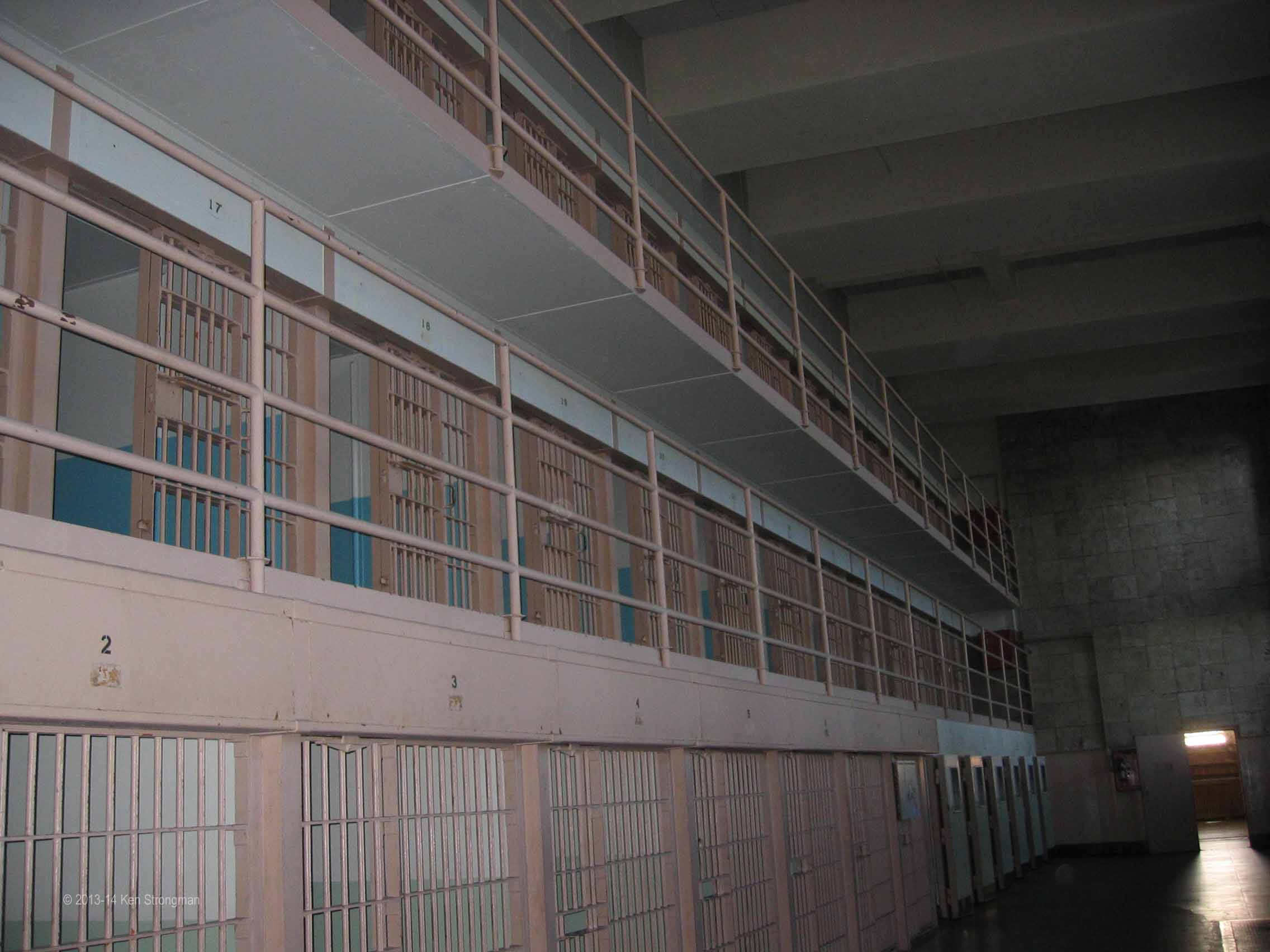
    Alcatraz Camp Site - Cell Block D.
    Alcatraz Camp Site – Cell Block D.

    Ken Strongman, MediatorAbout the Author: Ken Strongman (www.kpstrongman.com) has years of experience and a growing national reputation as a mediator and arbitrator.  He has successfully resolved more than a thousand disputes in the fields of construction defects, real estate, intellectual property, and employment.  He is also a Mediator and Arbitrator for FINRA.

    © 2020 Ken Strongman. All Rights Reserved. Please do not copy or repost without permission.

  • Can Female Murderers Find Peace?

    Alcatraz Camping Trip murderers
    Can Murderers Find Peace?

    Can Female Murderers Find Peace?

    Recently I was asked to write an article for a law journal about Doug Noll and Prison of Peace detailing his and Laurel Kaufer’s work with female murderers serving in California prisons.  My interview with Doug was quite enlightening.  Over the next few weeks I will be sharing highlights from our interview.  Here is part one.

    What is Prison of Peace?

    Prison of Peace is a pro bono project that teaches life inmates in California prisons to be peacemakers and mediators within their prison communities. It is currently operating in three California prisons, including the Central California Women’s Facility, Valley State Prison, and the California Institute for Women. In addition, the project is expanding in 2014 into Los Angeles County juvenile facilities.

    How did it start?

    The project started with a letter from an inmate at the old Valley State Prison for Women. She wrote 50 letters to mediators across California asking for someone to teach her Networking Group basic mediation skills. The Networking Group comprised 100 women serving life sentences. They were interested in reducing the violence and conflict in their prison community. At the time, Valley State Prison for Women was regarded as the largest, most dangerous women’s prison in the world. The problem was that young women coming in from the gangs were disrupting daily lives. Most of the time, the guards could not prevent violence. The lifers realized that if they wanted peace, they had to create it themselves.

    How did you get involved? 

    As far as we can tell, 49 of the requests were rejected. The 50th letter landed in Laurel Kaufer’s mail box. Laurel opened the curious-looking envelope from the state prison, read the letter, and without even leaving her mailbox, called me on her cell phone. She read the letter to me and asked me what I thought. Without hesitation, I said, “if this is for real, I think we should do it.”

    Why did you say, yes?

    There was something about this request that resonated deeply within me. At a practical level, I knew that there would be a lot of sacrifice as this was to be a purely pro bono project. But at a deeper level, I saw this as an opportunity to prove the true power of peacemaking. Ever since leaving the practice of law, I had faced ridicule, skepticism, and outright hostility towards the idea of a lawyer turned peacemaker. It was too soft. It was too Kumbayah.. It was completely impractical. It would never work. It might work for those other folks, but it will never work in my conflict. Objection after objection and scorn heaped upon scorn was my fate for deciding to turn away from litigation and become a peacemaker. Mind you, I am a secular human being. My concept of peacemaking is nothing like what religious people think peacemaking is about. I also recognize that the term peacemaking carries a lot of baggage. However, it truly does describe the work of transforming conflict. I thought that this project might be the perfect opportunity to demonstrate to all the naysayers that practical peacemaking was powerful. If I could teach murderers to be peacemakers, who could rationally deny the power of the process and the techniques?

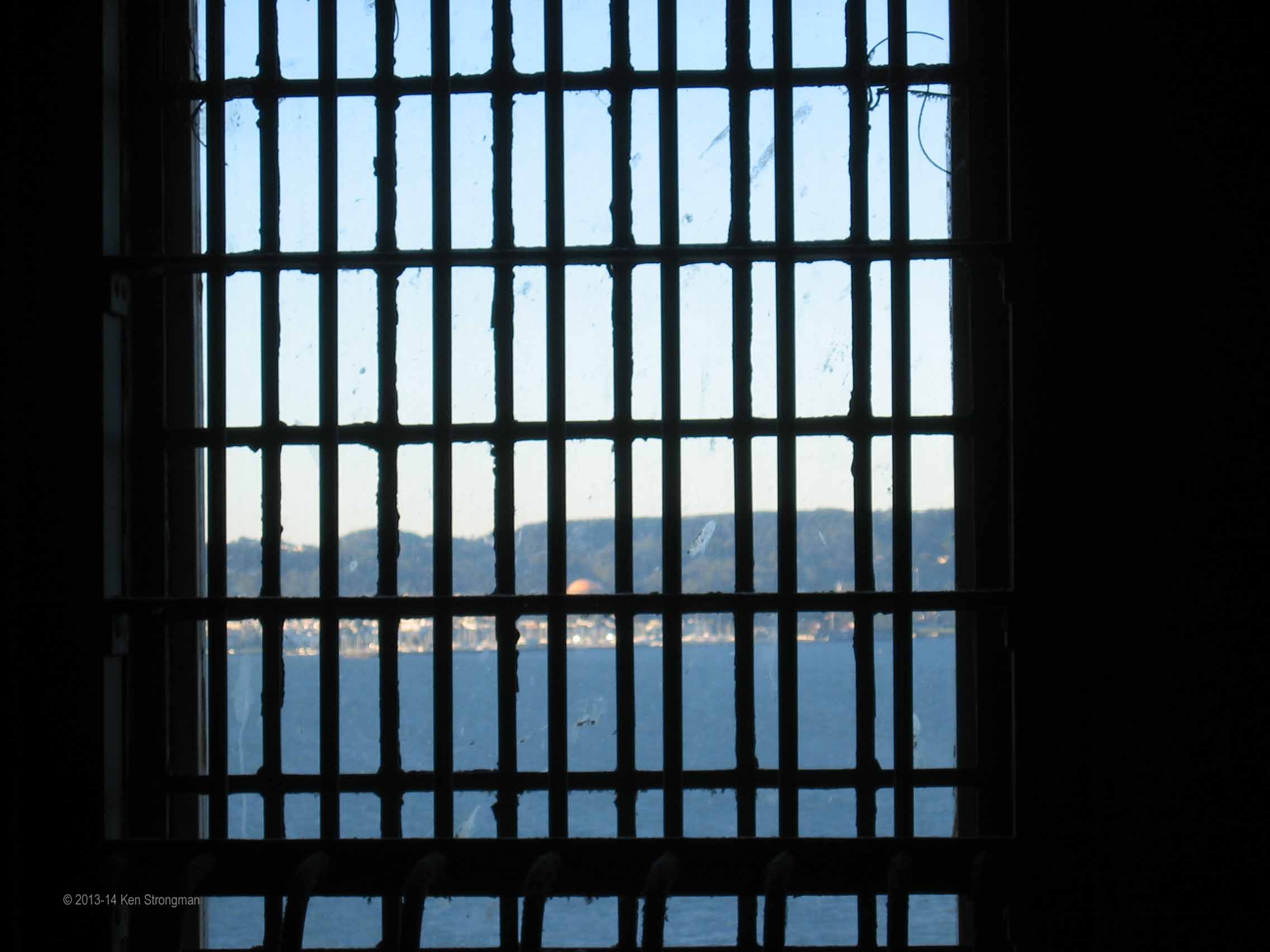
    Alcatraz Camping Trip - Side Yard
    Alcatraz

    Ken Strongman, MediatorAbout the Author: Ken Strongman (www.kpstrongman.com) has years of experience and a growing national reputation as a mediator and arbitrator.  He has successfully resolved more than a thousand disputes in the fields of construction defects, real estate, intellectual property, and employment.  He is also a Mediator and Arbitrator for FINRA.

    © 2020 Ken Strongman. All Rights Reserved. Please do not copy or repost without permission.
  • FAQ: What is Mediation?

    FAQ_Mediation Mendocino 02
    What is Mediation?

    Mediation is a form of alternative dispute resolution (ADR), which can be used as a way of resolving a dispute between two or more parties with the assistance of a mediator who acts as a neutral third party and facilitates the process with a view to the parties voluntarily negotiating a settlement of their dispute.  In all of the mediations in which I served as a mediator, I have never dictated the solution to the dispute to the parties.  I have offered suggestions and ideas that they may not have considered. 

    Mediation usually has a structure, timetable and process established and agreed by the parties with the mediator which can help it to be a more effective dispute resolution process than a traditional settlement meeting. The process is private, confidential, without prejudice and non-binding, although the objective is to reach a resolution of the dispute by agreeing to binding settlement agreement.

    It cannot be stressed enough that mediation is a completely voluntary process where the parties with the assistance and guidance of the mediator reach a solution to a dispute that is satisfactory to all parties.  The parties are in complete control of the solution. 

    Ken Strongman, MediatorAbout the Author: Ken Strongman (www.kpstrongman.com) has years of experience and a growing national reputation as a mediator and arbitrator.  He has successfully resolved more than a thousand disputes in the fields of construction defects, real estate, intellectual property, and employment.  He is also a Mediator and Arbitrator for FINRA.

    © 2020 Ken Strongman. All Rights Reserved. Please do not copy or repost without permission.

  • Steps to Resolve Conflict.

    NYLT_Ken Strongman 08
    Steps to resolve conflicts.

    There are basic steps to resolve conflicts. All leaders are bound to encounter difficulties between two people or groups.  This will happen when the team is in the ‘storming’ stage of team development.  In this stage the conflict may not be completely obvious.  It’s quite true that some will act out their issues.  Others can become extra quiet and withdrawn.

    The simple steps to resolve any conflict are:

    ·     Be aware of yourself.

    ·     Be aware of others.

    ·     Listen.

    ·     Use your EAR.  [Express, Address, Resolve.]

    **For the last decade I’ve been involved with leadership development of tomorrow’s leaders.  Using my expertise, I am training the youth leaders in conflict resolution.  This blog is adapted from my training materials. 

     Ken StrongmanAbout the Author: Ken Strongman (www.kpstrongman.com) has years of experience and a growing national reputation as a mediator and arbitrator.  He has successfully resolved more than a thousand disputes in the fields of construction defects, real estate, intellectual property, and employment.  He is also a Mediator and Arbitrator for FINRA.

    © 2020 Ken Strongman. All Rights Reserved. Please do not copy or repost without permission.

  • Thanksgiving Conflicts – How to avoid

    Rockwell Thanksgiving
    Idealized Thanksgiving

    Thanksgiving conflicts reduces anyone’s ability to be thankful. Thanksgiving is sometimes referred to as forced family time. It is ripe for all kinds of potential conflicts.  Here are some things to minimize or avoid conflicts on the big day without lowering your expectations of being truly thankful.    

    ·     Realize that Norman Rockwell was a fraud.  His famous Thanksgiving painting is a total fantasy.   I’ve been told that when he painted it, each of the models posed separately.  So naturally they appear happy.  They were not in the same room with the others and they obviously didn’t have to eat the food.  They couldn’t because it had to remain for the next model.

    ·     Speaking of food… for all of those that have recently converted to a vegan diet or just discovered the South Beach, North Beach or West Beach diet, or have any dietary restrictions based on health: the only statement on the subject you can make is (with a smile) – “No, Thank you” while you are passing the plates.   

    ·     Thanksgiving is not the time to proselytize anyone to a life free of all of the cholesterol choking cancer causing food on the table.   Yes, stress causes heart attacks.  But stress doesn’t come from always eating the wrong foods, it also comes from people reminding (nagging) you not to eat certain foods. 

    ·     For those of you on a diet at Thanksgiving and can’t see anything on the table the diet will allow you to eat, and you still want to be true to your diet.  Just remember you do want to loose weight so not eating anything would still be a good thing. 

    ·     Speaking of proselytizing…Thanksgiving should be a time to be thankful that we are blessed in this country with the privilege to not have to talk politics 365-days a year.  Thanksgiving is the time to eat the turkey and to stop talking about the turkeys running the country. 

    ·     Realize that everyone does not have to do the same thing all the time.  For some (or a whole lot of people) cheering on their favorite football team with family and friends is just as much a bonding experience as other activities.  Let them watch the game.  At least half the population will be truly thankful their team won.   Being thankful is what it is all about. 

    ·     Some may want to watch football, others might want to play a game of football, other still may want to go out and change the water pump on a car.  That is OK!  Chill out!  Be thankful they are all here and having fun. 

    ·     Thanksgiving is not a time to be thankful for your holiday cruise to the Caribbean, new car, house, job, or any other material thing.   Be thankful for the little things: breathing, the sunrise, food on the table, and laughter.  We are all social people and never truly get along with each other.  If there was no conflict we wouldn’t be human and we need to be thankful that we are human.   

    Ken StrongmanAbout the Author: Ken Strongman, is a private commercial mediator/arbitrator of complex, high risk litigated cases since 2004. Disputes addressed include business, securities, construction defects, real estate, intellectual property, employment, environment, energy, and trusts & estates. He is also a Mediator and Arbitrator for FINRA.

    © 2021 Ken Strongman. All Rights Reserved. Please do not copy or re-post without permission.

  • FAQ: Do I have to have a lawyer at my mediation?

    FAQ_Mediation Mendocino 03 lawyer
    Lawyer at mediation?

    Do I have to have a lawyer at my mediation?

    No, it is not necessary to have a lawyer representing you at mediation. If you have a lawyer already representing your interests in the dispute you would need to discuss this with him or her.  If you feel you need legal advice or that you are unqualified or uncomfortable dealing with the issues on your own, then you should consult a lawyer and perhaps hire someone on an hourly basis solely for the purpose of representing you at the mediation.

    If, on the other hand, you are involved in a dispute that you feel comfortable resolving without a lawyer, keeping in mind that your mediator will not give you legal advice or advocate on your behalf, by all means, make an attempt to resolve it on your own first.

    Do remember that the other party has a right to hire an attorney and to bring them to the mediation to help represent them.  If that scenario occurs, there will be no one to advocate your interests. You will not have a right to delay the mediation to hire your own attorney.

    Mediation is a voluntary process that centers on discussions and decision-making, rather than judgment. It is focused on resolving disputes based on the factual circumstances, the needs of the parties and practicality, and not solely on the legal rights of the parties (sometimes, despite those rights). Often, the mere presence of an attorney creates an antagonistic and adversarial atmosphere that impedes resolution rather than assisting it.

    It has been my experience that when the parties have attorneys and those attorneys are actively helping to resolve the issues, the mediation is more successful.  This does not mean that representing yourself in mediation is a no-win situation.  I have conducted many mediations where one or more parties were self represented.

    Ken_Strongman_003smAbout the Author: Ken Strongman (www.kpstrongman.com) has years of experience and a growing national reputation as a mediator and arbitrator.  He has successfully resolved more than a thousand disputes in the fields of construction defects, real estate, intellectual property, and employment.  He is also a Mediator and Arbitrator for FINRA.

    © 2020 Ken Strongman. All Rights Reserved. Please do not copy or repost without permission.

  • How to respond to an angry person.

    NYLT_Ken Strongman 07
    Responding to angry persons.

    One of the key steps to resolve any conflict is knowing how to respond to an angry person.  You just have to listen to them. 

    When you’re listening to an angry person:

    Be attentive and patient: Keep in mind that they will become less angry as you let them express themselves.  

    Be sincere: Empathy and validation must be both honest and genuine.  Don’t react any other way.

    Be calm: Try to remove your own emotions from the discussion. Remember that an angry person may say inflammatory things in the heat of the moment, but you do not have to react angrily.  They may be trying to push your buttons and make you angry.  By so doing, they believe that they will gain the upper hand in the conflict.

    **For the last decade I’ve been involved with leadership development of tomorrow’s leaders.  Using my expertise, I am training the youth leaders in conflict resolution.  This blog is adapted from my training materials. 


    Ken StrongmanAbout the Author: Ken Strongman (www.kpstrongman.com) has years of experience and a growing national reputation as a mediator and arbitrator.  He has successfully resolved more than a thousand disputes in the fields of construction defects, real estate, intellectual property, and employment.  He is also a Mediator and Arbitrator for FINRA.

    © 2020 Ken Strongman. All Rights Reserved. Please do not copy or repost without permission.
  • Is a Retired Judge a Better Mediator?

    retired judge
    Does a retired judge make a better mediator?

    It is assumed that a retired judge makes a better mediator than someone that has not been a judge.  This couldn’t be further from the truth. 

    Rendering judgment requires an entirely different skill set than helping the parties resolve their case through mediation.  The day to day activities of a judge do not lend themselves to facilitating the resolution of conflicts.  The basic skill that is useful to a judge but not a mediator is the ability to make quick and final decisions on any particular issue. Therefore when they approach mediation they want to make the decision and not let the parties control their own solution to the problem.

    It is assumed that 20-years on the bench translates to 20-years experience working with civil attorneys and parties and the issues of civil litigation.  In most courts today, very few judges are presiding over civil trials.  Most of their days as spent presiding over criminal trials.  Even the remaining time of their tenure on the bench is divided between family law, juvenile, probate, and traffic.

    The law practice of most judges before being appointed to the bench is not as a civil attorney.  Many were deputy district attorneys or public defenders before becoming judges.  Therefore they have no experience with any civil issues before becoming judges.

    Mediation is a voluntary process that centers on discussions and decision-making, rather than judgment by a judge or retired judge. It is focused on resolving disputes based on the factual circumstances, the needs of the parties and practicality, and not solely on the legal rights of the parties. Often, the mere presence of a retired judge creates an antagonistic and adversarial atmosphere that impedes resolution rather than assisting it.

     In reality you want a mediator such as me that is trained in helping the parties resolve their problems.

    Ken Strongman, MediatorAbout the Author: Ken Strongman (www.kpstrongman.com) has years of experience and a growing national reputation as a mediator and arbitrator.  He has successfully resolved more than a thousand disputes in the fields of construction defects, real estate, intellectual property, and employment.  He is also a Mediator and Arbitrator for FINRA.

    © 2020 Ken Strongman. All Rights Reserved. Please do not copy or repost without permission.

  • Don’t be afraid of anger – angry people can’t lie.

    NYLT_Ken Strongman 06Don’t be afraid of anger – angry people can’t lie.

    The first step to resolve any conflict is to defuse anger.  But do not be afraid of anger.  An angry person can’t lie because anger is a primitive emotional response.  To lie, you must control your emotions and turn on your intellect.  So when someone is angry, whatever they are telling you contains some truth.  Beware that this does not stop good actors.  A good actor merely appears to be angry as they try to control the situation

    There are several reasons for anger:

    To vent. An angry person needs to let off steam and release the anger that may have been brewing for a long time.  To resolve the conflict you need to allow this to happen, but try to control it by reframing their issues. 

    To get the listener’s attention. An angry person wants to know that you are paying attention.  Use good listening skills to demonstrate that you are paying attention.

    To be heard. An angry person wants someone to listen to their point of view.  To resolve the conflict, you need to acknowledge the feelings you hear so that the speaker knows you appreciate how angry they are.

    To be understood. An angry person wants someone to appreciate how they feel.  Therefore try to empathize with their experience so that they feel you understand the situation, and acknowledge their ‘right’ to feel the way they do.  This does not mean that you should agree with their justification.  You do want to remain neutral in the conflict and not pick sides.

    **For the last decade I’ve been involved with leadership development of tomorrow’s leaders.  Using my expertise, I am training the youth leaders in conflict resolution.  This blog is adapted from my training materials. 


    Ken StrongmanAbout the Author: Ken Strongman (www.kpstrongman.com) has years of experience and a growing national reputation as a mediator and arbitrator.  He has successfully resolved more than a thousand disputes in the fields of construction defects, real estate, intellectual property, and employment.  He is also a Mediator and Arbitrator for FINRA.

    © 2020 Ken Strongman. All Rights Reserved. Please do not copy or repost without permission.

  • Task #21: If something happens in the mediation that irritates you, what will you do to get back on task?

    Ken Strongman Mediation Tasks 06If something happens in the mediation that irritates you, what will you do to get back on task?

    The resolution of a dispute does not just occur on the day of the mediation.   Each participant to mediation needs to prepare their own strategy for negotiation in the settlement.  Based on my experience as a mediator, these are a collection of tasks each participant needs to complete and to discuss with their council and the mediator before the mediation.

    How will you help get things back on task if that happens?  Things happen in mediation.  Sometimes it is the realization that the person that caused the dispute is sitting across the table from you.  You have just been confronted with the fact that you still have to deal with them whether now or in court.  You need to develop a game plan for getting back on task and settling the dispute.  It might be a private caucus or just a break.  It might be a continuance of the mediation itself to another day.  Communicating your needs to the mediator will help get things back on task and help settle the dispute.

    Will you risk your future financial interests to avoid uncomfortable discussions now?   This is the question you must keep in mind.   Mediation can be quite uncomfortable.  Mediation is conflict at its best.  But settlements do happen and are worth the discomfort.

    Will you accept a satisfactory offer to settle, even if you are very resentful about how you’ve been treated?  At some point you must make the decision that you want to settle the dispute and move on to better days.  It is important to make this decision before you come to the mediation.  If you do not want to settle, and want to continue expending the emotional energy, not counting the expense of litigation, then mediation will not be effective.

    Ken StrongmanAbout the Author: Ken Strongman (www.kpstrongman.com) has years of experience and a growing national reputation as a mediator and arbitrator.  He has successfully resolved more than a thousand disputes in the fields of construction defects, real estate, intellectual property, and employment.  He is also a Mediator and Arbitrator for FINRA.

    © 2020 Ken Strongman. All Rights Reserved. Please do not copy or repost without permission.