Tag: mediation

  • Persuade by orchestrating apologies

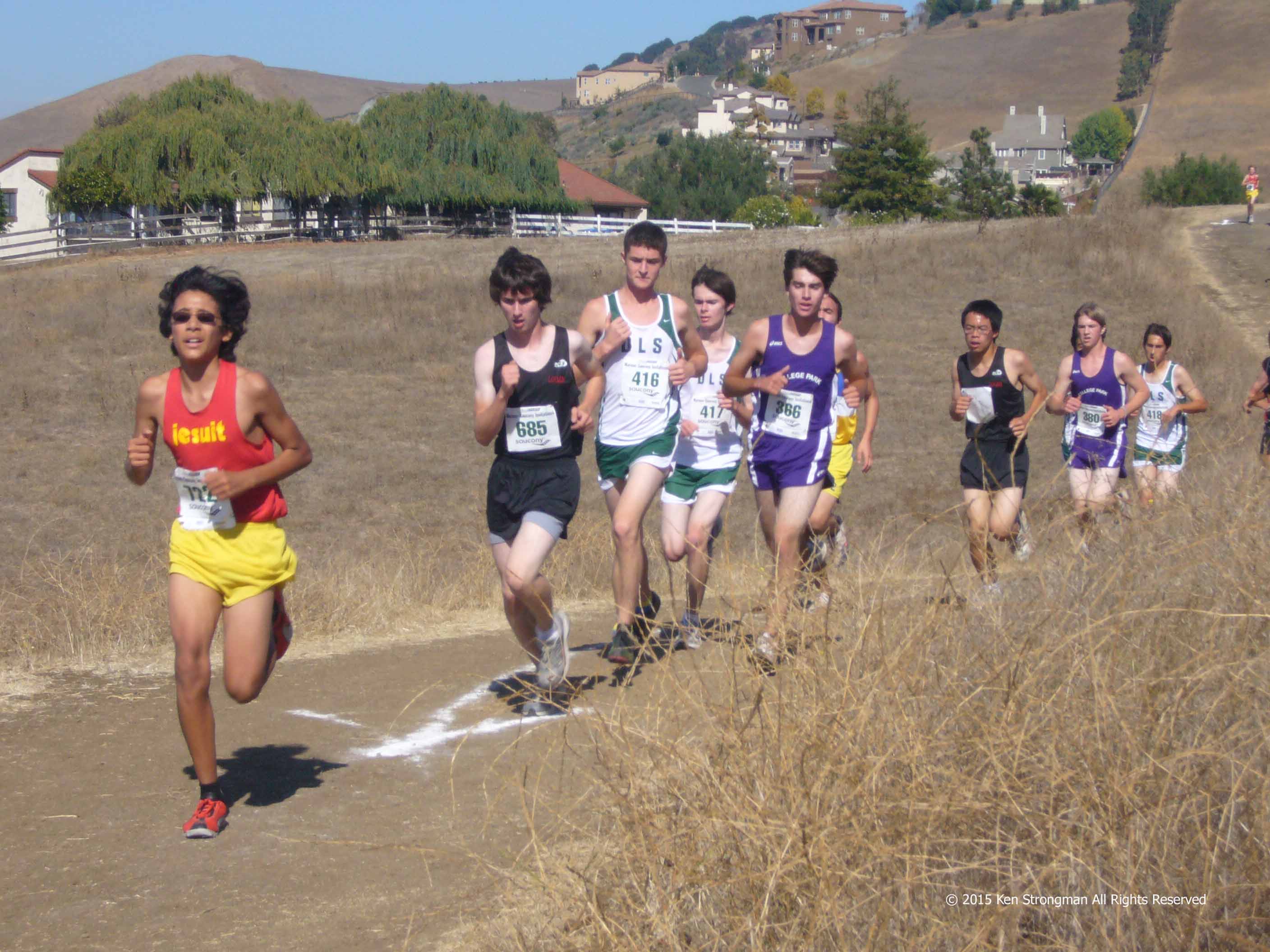
    Mariner InvitationalGarin ParkHayward CA - apologies
    Orchestrating apologies

    How to persuade others by orchestrating apologies?

    How to you persuade others by orchestrating apologies? Persuasion is the process of changing minds. Persuasion is an everyday part of human discourse. It is used by salesmen, parents, teachers, and many others – basically all of us. Persuasion in mediation is a two-way street. Long before you try to influence another to moderate their demands or consider the other side’s point of view, chances are good that they will have tried to convince you to their position.

    It’s my experience in order to be an effective mediator, I must engage in various forms of persuasion. I do not engage in coercive or manipulative persuasion practices by which pressure brought to bear on reluctant participants to get a settlement. I do use a range of potential mediator interventions to help the parties resolve deeply held or competitively bargained differences. *

    Orchestrating Apologies

    Since most of my mediations are with parties that have on going relationships such as construction, business, and technology, I spend considerable time orchestrating apologies. In a business relationship reconciliation is necessary. To contradict the theme of the Godfather , “it is always personal and not strictly business”.

    The time to orchestrate apologies can take several hours of effort. It is negotiation in itself. We need to find out what the offence is exactly. What form will the apology take? Who will apologize to whom? This includes who will be in the room when the apology is given. How much time will be allowed to deliver the apology and any response? And more importantly will the apology be accepted?

    Once the time and effort is expended to orchestrate and deliver an apology, solutions to the problem often quickly come into focus. Often the amount in controversy drops quickly and precipitously.

    Effectiveness

    Apologies are more effective for a single transgression than for a series of transgression over time. But, in the event of a damaged relationship, there is tremendous potential for reconciliation and resolution of the conflict.

    The effect of mere expressions of sympathy was dependent on the context. I avoid allowing this to happen. The punitive transgressor needs to know that they did wrong, what they did wrong and why it was wrong. Otherwise the other party could be offended and then dig in to their position if not deepen their position.

    Full elaborate apologies are more effective that less elaborate ones. I spend effort setting the stage for the apology. It encourages reconciliation if both parties know what is going to happen.

    The more serious the transgression or the greater the harm, the more elaborate the apology must be. This should be self evident. Sometimes, it is necessary to put the apology in writing and include it in the settlement agreement. Since the settlement agreement is usually confidential, there is no loss of face even if it is in writing.

    Partial apologies can be unproductive or even counterproductive in the effects on the recipient. I do not encourage or allow partial apologies to take place. I’ve had the misfortune to have very good settlement blow up before they were signed because of a off-handed apology.

    In case of less serious injuries less clear culpability or both, any apology even if complete may be better than none. Putting it simply, apologize for what you know you did wrong. Do not under any circumstances apologize for something you are not convinced was wrong. It is not a matter of assuming liability but the other party will not be convinced of your sincerity.

    Full settlement apologies push plaintiff’s lawyers in a generally opposite direction. An apology executed correctly has a tendency to low the demands from the other side. If a plaintiff is on a contingence fee agreement, that will lower their pay day.

    Why they work

    Apologies helping disputants separate past (regrettable) acts from essential (positive) selfhood may be a highly effective form of self-persuasion. Apologies help resolve cognitive dissonance- dissonance effects are strongest (and self persuasion greatest) when actions are inconsistent with self concept of being a good person.

    Risks

    A successful apology requires skill and expertise. This can’t be emphasized enough. I spend considerable time testing the feasibility of an apology. I will even review it with the opposition before it is delivered.

    How they work

    If party accepts responsibility for causing injury to the other party, then the offended party makes more positive character related attribution towards the offender. Also, because of the regret, it changes assumptions about future behavior and expectations for the future relationship.

    Apologies decrease anger towards the offender and increase sympathy for offender’s perspective especially if offender accepted full responsibility.

    Presence or absence of apology affects on offenders parties ‘bottom line’ in legal negotiations well as the parties aspirations and opinion about what constitutes a fair settlement.

    Recipients of apology reported less need to punish the other and greater willingness to forgive that those who did not receive apology.

    Insincere apologies may actually cause people to react negatively.

    *Stark, James H. and Frenkel, Douglas N., Changing Minds: The Work of Mediators and Empirical Studies of Persuasion (2013). Ohio State Journal on Dispute Resolution, Vol. 28, No. 2, Pg. 263, 2013; U of Penn Law School, Public Law Research Paper No. 11-07

    **Why the picture of Cross Country runners?  It takes a lot of persuasion to get them to the finish line. 

     Ken Strongman, MediatorAbout the Author: Ken Strongman (www.kpstrongman.com) has years of experience and a growing national reputation as a mediator and arbitrator.  He has successfully resolved more than a thousand disputes in the fields of construction defects, real estate, intellectual property, and employment.  He is also a Mediator and Arbitrator for FINRA.

    © 2020 Ken Strongman. All Rights Reserved. Please do not copy or repost without permission.
  • Ingredients of conflict – Perceptions

    Perceptions out the window of alcatraz.
    Perceptions are important

    The ingredients of any conflict – Perceptions

    Perceptions are part of any conflict. All conflicts have similar ingredients. They may vary in degree but most are present in some way. The main ingredients are Needs, Perceptions, Power, Values, and Feelings and Emotions. Today, I am focusing on perceptions.

    Perceptions – All humans interpret reality differently. They perceive differences in the severity, causes and consequences of problems. Misperceptions or differing perceptions may come from: self-perceptions, others’ perceptions, differing perceptions of situations and perceptions of threat. How something is framed will affect its perception. So in conflict resolution, reframing is an important task to get to a solution.

    Just by observing the news of the world, we can easily see that different people perceive a situation totally differently. The perceptions are influenced by different histories, geographic locations, religious values, etc. They are what we all bring to the table.

    **For the last decade I’ve been involved with leadership development of tomorrow’s leaders. Using my expertise, I am training the youth leaders in conflict resolution. This blog is adapted from my training materials.

    Ken StrongmanAbout the Author: Ken Strongman (www.kpstrongman.com) has years of experience and a growing national reputation as a mediator and arbitrator.  He has successfully resolved more than a thousand disputes in the fields of construction defects, real estate, intellectual property, and employment.  He is also a Mediator and Arbitrator for FINRA.

    © 2020 Ken Strongman. All Rights Reserved. Please do not copy or repost without permission.

  • Four characteristics a good mediator brings to the table.

    Santa Barbara Presido
    Characteristics of Good Mediators

    Four characteristics a good mediator brings to the table.

    This and many other topics will be revealed in: The “End Game” of Mediation and How to Succeed at It [A Comprehensive Road Map to the Mediation Process] on Tuesday, March 10, 4:30 pm – 8:30 pm @ the Contra Costa Bar Association.

    Speakers Ken Strongman, Esq. and Malcolm Sher, Esq. will lead a program for Advocates designed to create a highly positive mediation experience and outcome for themselves and their clients. These two successful mediators will discuss some of the best practices for negotiation and to prepare the client, advocate, mediator and opposition for the mediation journey.

    The Contra Costa County Bar Association certifies that this activity has been approved for 3 hours of General MCLE credit by the State Bar of California, Provider #393.

    To register for the event: Register Here

    NOW FOR THE ANSWER: Four characteristics a good mediator brings to the table.

    1. Able to quickly build trust and confidence
    2. Excellent inter-personal skills: Patience and a sense of humor
    3. Creativity in assisting parties and counsel in shaping a solution
    4. Reputation in the legal and mediation community to do every thing they can to encourage and assist in settlement

    For an experienced Mediator to help negotiate a resolution to your dispute contact Ken Strongman. Here.

    Ken Strongman, MediatorAbout the Author: Ken Strongman (www.kpstrongman.com) has years of experience and a growing national reputation as a mediator and arbitrator.  He has successfully resolved more than a thousand disputes in the fields of construction defects, real estate, intellectual property, and employment.  He is also a Mediator and Arbitrator for FINRA.

    © 2020 Ken Strongman. All Rights Reserved. Please do not copy or repost without permission.

  • Seven advantages of a joint mediation session

    joint mediation sessions are a flowing process

    Seven advantages of a joint mediation session

    The 7 advantages of a joint mediation session and many other topics will be revealed in: The “End Game” of Mediation and How to Succeed at It [A Comprehensive Road Map to the Mediation Process] on Tuesday, March 10, 4:30 pm – 8:30 pm @ the Contra Costa Bar Association.

    Speakers Ken Strongman, Esq. and Malcolm Sher, Esq. will lead a program for Advocates designed to create a highly positive mediation experience and outcome for themselves and their clients. These two successful mediators will discuss some of the best practices for negotiation and to prepare the client, advocate, mediator and opposition for the mediation journey.

    The Contra Costa County Bar Association certifies that this activity has been approved for 3 hours of General MCLE credit by the State Bar of California, Provider #393.

    To register for the event: Register Here

    NOW FOR THE ANSWER: Seven advantages of a joint mediation session:

    1. To see and hear the other side
    2. To look at pictures and other evidence, both sides at once
    3. It gives each side an opportunity to size up the other
    4. Talk with each other as oppose to using agents
    5. To evaluate the style of each attorney
    6. To evaluate the preparedness of each side
    7. To see the body language of each attorney and party (everyone)

    Ken Strongman, MediatorAbout the Author: Ken Strongman (www.kpstrongman.com) has years of experience and a growing national reputation as a mediator and arbitrator.  He has successfully resolved more than a thousand disputes in the fields of construction defects, real estate, intellectual property, and employment.  He is also a Mediator and Arbitrator for FINRA.

    © 2020 Ken Strongman. All Rights Reserved. Please do not copy or repost without permission.

  • Seven reasons to avoid a joint mediation session

    Devil's Postpile National Monument - Rainbow Falls
    Joint sessions

    Seven reasons to avoid a joint mediation session

    This and many other topics will be revealed in: The “End Game” of Mediation and How to Succeed at It [A Comprehensive Road Map to the Mediation Process] on Tuesday, March 10, 4:30 pm – 8:30 pm @ the Contra Costa Bar Association.

    Speakers Ken Strongman, Esq. and Malcolm Sher, Esq. will lead a program for Advocates designed to create a highly positive mediation experience and outcome for themselves and their clients. These two successful mediators will discuss some of the best practices for negotiation and to prepare the client, advocate, mediator and opposition for the mediation journey.

    The Contra Costa County Bar Association certifies that this activity has been approved for 3 hours of General MCLE credit by the State Bar of California, Provider #393.

    To register for the event: Register Here

    NOW FOR THE ANSWER: Seven reasons to avoid a joint mediation session

    Stated another way: the advantages of a private session with the mediator

    1. It is an opportunity to explain the case to a neutral person
    2. The attorney and party get to evaluate their own case
    3. The ability to use the mediator as a sounding board and coach
    4. To be able to talk openly
    5. Discuss solutions
    6. Identify components of solutions from your stand point
    7. Emote and vent in private about the case and the other side (person)

    Ken StrongmanAbout the Author: Ken Strongman (www.kpstrongman.com) has years of experience and a growing national reputation as a mediator and arbitrator.  He has successfully resolved more than a thousand disputes in the fields of construction defects, real estate, intellectual property, and employment.  He is also a Mediator and Arbitrator for FINRA.

    © 2020 Ken Strongman. All Rights Reserved. Please do not copy or repost without permission.

  • Eight ways to prepare the other side for the negotiation or mediation

    Yosemite Falls - prepare
    Prepare for Mediation

    Eight ways to prepare the other side for the negotiation or mediation

    Prepare for mediation and many other topics will be revealed in: The “End Game” of Mediation and How to Succeed at It [A Comprehensive Road Map to the Mediation Process] on Tuesday, March 10, 4:30 pm – 8:30 pm @ the Contra Costa Bar Association.

    Speakers Ken Strongman, Esq. and Malcolm Sher, Esq. will lead a program for Advocates designed to create a highly positive mediation experience and outcome for themselves and their clients. These two successful mediators will discuss some of the best practices for negotiation and to prepare the client, advocate, mediator and opposition for the mediation journey.

    The Contra Costa County Bar Association certifies that this activity has been approved for 3 hours of General MCLE credit by the State Bar of California, Provider #393.

    To register for the event: Register Here

    NOW FOR THE ANSWER:

    How to prepare the other side for the negotiation or mediation
    • Don’t burn bridges! Be polite and collaborative. Seek a “win-win” solution.
    • Recognize that they are key players, have egos and have to justify any settlement.
    • If plaintiff counsel, make it easy for them to give you what you want. Don’t hide the ball. If defense counsel, strategize the negotiations in advance, including contents of briefs.
    • Provide all decision-makers with enough information well before the mediation session. Tell them what you want and why you want it.
    • Have necessary corporate resolutions, powers of attorney and other written authority.
    • Construct a day in the life of the client
    • Reconstruction of accident or event
    • Send copies of the mediation brief and other information with the request that it is sent to the adjustor and/or other stakeholders.

    Ken_Strongman_003smAbout the Author: Ken Strongman (www.kpstrongman.com) has years of experience and a growing national reputation as a mediator and arbitrator.  He has successfully resolved more than a thousand disputes in the fields of construction defects, real estate, intellectual property, and employment.  He is also a Mediator and Arbitrator for FINRA.

    © 2020 Ken Strongman. All Rights Reserved. Please do not copy or repost without permission.

  • 8 Reasons Why Money is not the only solution

    Money is not always the soluntion to the dispute
    Money is not always the solution

    Eight reasons why money is not always the only solution to the dispute

    Money and why it isn’t the answer and many other topics will be revealed in: The “End Game” of Mediation and How to Succeed at It [A Comprehensive Road Map to the Mediation Process] on Tuesday, March 10, 4:30 pm – 8:30 pm @ the Contra Costa Bar Association.

    Speakers Ken Strongman, Esq. and Malcolm Sher, Esq. will lead a program for Advocates designed to create a highly positive mediation experience and outcome for themselves and their clients. These two successful mediators will discuss some of the best practices for negotiation and to prepare the client, advocate, mediator and opposition for the mediation journey.

    The Contra Costa County Bar Association certifies that this activity has been approved for 3 hours of General MCLE credit by the State Bar of California, Provider #393.

    To register for the event: Register Here

    NOW FOR THE ANSWER:

    Eight reasons why money is not always the only solution to the dispute:
    1. There is always the possibility of a Global settlement
    2. Non-monetary concessions
    3. Letter of recommendation are helpful in some cases particulary employment and landlord tenant.
    4. There are always tax and accounting issues. Different classifications will change the dynamic.
    5. Payment plans
    6. Structured Settlements
    7. Bartering. They have something you could use instead of cash.
    8. Confidentiality of the agreement and dispute

    Ken Strongman, MediatorAbout the Author: Ken Strongman (www.kpstrongman.com) has years of experience and a growing national reputation as a mediator and arbitrator.  He has successfully resolved more than a thousand disputes in the fields of construction defects, real estate, intellectual property, and employment.  He is also a Mediator and Arbitrator for FINRA.

    © 2020 Ken Strongman. All Rights Reserved. Please do not copy or repost without permission.

  • 3 Strategies for the Money Dance

    021_ken_Strongman_money dance
    The Money Dance

    Three strategies for the money dance

    Three strategies for the money dance in a negotiation or mediation and many other topics will be revealed in: The “End Game” of Mediation and How to Succeed at It [A Comprehensive Road Map to the Mediation Process] on Tuesday, March 10, 4:30 pm – 8:30 pm @ the Contra Costa Bar Association.

    Speakers Ken Strongman, Esq. and Malcolm Sher, Esq. will lead a program for Advocates designed to create a highly positive mediation experience and outcome for themselves and their clients. These two successful mediators will discuss some of the best practices for negotiation and to prepare the client, advocate, mediator and opposition for the mediation journey.

    The Contra Costa County Bar Association certifies that this activity has been approved for 3 hours of General MCLE credit by the State Bar of California, Provider #393.

    To register for the event: Register Here

    NOW FOR THE ANSWER TO:

    Three strategies for the money dance in a negotiation or mediation.

    Always come to the negotiation or mediation with three reference points:
    1. Reservation – bottom line or walk away price is the point at which it is determined that you are better off litigating than settling. It would be better to express the reservation point not only as a monetary amount but as a package that involves quantifiable and other elements.
    2. Target Point should represent the optimistic goal for a settlement outcome. It should be a package of monetary and other elements and should be between the reservation point and opening offer.
    3. Opening Offer is the number with which your side will begin the bargaining process. It should be more optimistic than your target point because of the give and take of negotiations.

    Ken Strongman, MediatorAbout the Author: Ken Strongman (www.kpstrongman.com) has years of experience and a growing national reputation as a mediator and arbitrator.  He has successfully resolved more than a thousand disputes in the fields of construction defects, real estate, intellectual property, and employment.  He is also a Mediator and Arbitrator for FINRA.

    © 2020 Ken Strongman. All Rights Reserved. Please do not copy or repost without permission.

  • Don’t make the opening bid

    Why you shouldn’t make the opening bid in negotiation or mediation

    Why you shouldn’t make the opening bid in negotiation or mediation and many other topics will be revealed in: The “End Game” of Mediation and How to Succeed at It [A Comprehensive Road Map to the Mediation Process] on Tuesday, March 10, 4:30 pm – 8:30 pm @ the Contra Costa Bar Association.

    Speakers Ken Strongman, Esq. and Malcolm Sher, Esq. will lead a program for Advocates designed to create a highly positive mediation experience and outcome for themselves and their clients. These two successful mediators will discuss some of the best practices for negotiation and to prepare the client, advocate, mediator and opposition for the mediation journey.

    The Contra Costa County Bar Association certifies that this activity has been approved for 3 hours of General MCLE credit by the State Bar of California, Provider #393.

    024_ken_Strongman_twitter bid
    Opening Bid

    To register for the event: Register Here

    NOW FOR THE ANSWER TO: Why you shouldn’t make the opening bid in negotiation or mediation.

    You may undervalue your case because of missing information.

    The other side may have undervalued its own case. You may underestimate what the other side is willing to pay or accept.

    About the Author: Ken Strongman (www.kpstrongman.com) has years of experience and a growing national reputation as a mediator and arbitrator.  He has successfully resolved more than a thousand disputes in the fields of construction defects, real estate, intellectual property, and employment.  He is also a Mediator and Arbitrator for FINRA.

    © 2020 Ken Strongman. All Rights Reserved. Please do not copy or repost without permission.

  • Persuade using two-sided refutational messages

    persuade others using two-sided refutational messages
    persuade others using two-sided refutational messages

    Persuade Others Using Two-sided Refutational Messages

    Refutational messages: what are they and how to persuade others using two-sided refutational messages? Persuasion is the process of changing minds. Persuasion is an everyday part of human discourse. It is used by salesmen, parents, teachers, and many others – basically all of us. Persuasion in mediation is a two-way street. Long before you try to influence another to moderate their demands or consider the other side’s point of view, chances are good that they will have tried to convince you to their position.

    It’s my experience in order to be an effective mediator, I must engage in various forms of persuasion. I do not engage in coercive or manipulative persuasion practices by which pressure brought to bear on reluctant participants to get a settlement. I do use a range of potential mediator interventions to help the parties resolve deeply held or competitively bargained differences. *

    Two-side Refutational Messages

    The basic concept is to present two sides and reasons one side is more persuasive.
    This is reality testing. I do it later in the day or mediation session.

    It is a road map for evaluating the case. It is also where I earn my mediator’s fee.
    It incorporates both sides with lots of detail. What would happen if you went to court?
    What would the court do in the end?

    It is by its very nature evaluative. At some point during the mediation session, I am always asked what I think the valuation of the conflict. Putting it another way, who do I think will win in court. I do not do this early in the session because I want the parties to see both sides of the issue and hopefully persuade them as to the just outcome.

    While doing it later in the session, it shows both sides that I have listened all day and that I know what each side thinks and what their real needs are to settle the case. Many times, both sides have worked hard to come to an agreement and I do not have to lead them through this process. In the end it is persuasion by reviewing the pros and cons of both sides of the issue

    How Does This Work

    It is a form of direct persuasion with cogent detailed analysis of both perspectives, and conclusion as to which perspective is stronger. My conclusions do have an impact. As a disinterested third party this is what I think of your case. Naturally, I do couch it in terms of my experience and expertise and that a jury might look at it slightly differently. Faced with a conclusion by some one else is a mind altering event.

    Effectiveness

    1. Messages with explicit overall conclusions are significantly more persuasive than messages without conclusions.
    2. Messages with more conclusions and reasoning are significantly more persuasive than messages with generalized conclusions.
    3. Two sided messages are more persuasive that one-sided messages

    Why they work

    Arguments that reveal their sources and are specific are significantly more credible persuasive than their less explicit counterparts.

    *Stark, James H. and Frenkel, Douglas N., Changing Minds: The Work of Mediators and Empirical Studies of Persuasion (2013). Ohio State Journal on Dispute Resolution, Vol. 28, No. 2, Pg. 263, 2013; U of Penn Law School, Public Law Research Paper No. 11-07

    **Why the picture of Cross Country runners?  It takes a lot of persuasion to get them to the finish line. 

    Ken_Strongman_003sm About the Author: Ken Strongman (www.kpstrongman.com) has years of experience and a growing national reputation as a mediator and arbitrator.  He has successfully resolved more than a thousand disputes in the fields of construction defects, real estate, intellectual property, and employment.  He is also a Mediator and Arbitrator for FINRA.

    © 2020 Ken Strongman. All Rights Reserved. Please do not copy or repost without permission.