
Tag: FINRA

Financial Industry Regulatory Authority. FINRA touches virtually every aspect of the securities business—from registering and educating industry participants to examining securities firms; writing rules; enforcing those rules and the federal securities laws; informing and educating the investing public; providing trade reporting and other industry utilities; and administering the largest dispute resolution forum for investors and registered firms. FINRA also performs market regulation under contract for the major U.S. stock markets, including the New York Stock Exchange, NYSE Arca, NYSE Amex, The NASDAQ Stock Market and the International Securities Exchange.

  • Social Media Marketing & the Legal Professional

    FAQ_Mediation Golden Gate

    Project Social Media

    Project Social Media presents my thoughts regarding the impact of social media marketing on the practice of law. When I first started my mediation practice, out of necessity I was forced to research and learn how to use social media to market my practice.
    My learning process has been pretty much trial and error, and from time to time, I blog about what I have learned. Often I present information I could have used myself when I started my own practice.

    Marketing is a necessary evil of a law practice

    Marketing is a necessary evil of a law practice. Unfortunately because marketing is not done to benefit any particular client, these efforts are not billable hours. Thus, it behooves the law firm to minimize marketing costs. Social media are the logical choice to start with because their time requirements and costs tend to be at the lower end of the spectrum while providing maximum exposure.

    Return on Investment (ROI)

    It is difficult to accurately quantify a Return on Investment (ROI) for social media marketing. This rings true for not only major non-legal corporations but for a law practice. Obviously, simple metrics such as number of “unique hits” or number of clients who say they came to you through your on-line presence are a good start.
    My first passion is for helping others resolve their conflicts. A close second is for using social media to promote my work in this area. Both are the outgrowth and intersection of an amalgam of my professional career activities, as follows:

    • The substantive areas of many of my mediations have involved intellectual property and social media. Others have either involved eDiscovery issues or the major aspects of the intellectual property of the social media itself and technology.
    • Besides speaking on mediation and conflict resolution I’ve spoken on the following topics: numerous speaking engagements on social media and the law;
      • Twitter: Impact on the Legal Community—the #Good, #Bad and #Ethical in Less than 140 Characters.
      • EDiscovery: An MCLE presentation.
      • Social Media—Friend and Foe! A four-hour MCLE workshop on how the legal industry’s landscape will never be the same.
      • If You Post It, They Will See It—The Legal and Ethical Duties of the Legal Professional in Social Networking. A three-hour MCLE seminar on legal ethics responsibilities in light of the ever-changing world of social networking
    • While teaching legal ethnics at John F. Kennedy University as an Adjunct Professor, how to ethical use social media as a legal professional was always a serious topic of interest by my students. This included the unauthorized practice of law, eDiscovery, privacy and confidentially, attorney solicitation and marketing.
    • Before starting a law practice, I had a fifteen plus year career in information systems.
    • And finally, there is my own need to develop and implement my own social media marketing plan for my Mediation practice and finding few resources useful to the legal professional.

    Ken_Strongman_003smAbout the Author: Ken Strongman (www.kpstrongman.com) has years of experience and a growing national reputation as a mediator and arbitrator.  He has successfully resolved more than a thousand disputes in the fields of construction defects, real estate, intellectual property, and employment.  He is also a Mediator and Arbitrator for FINRA.

    © 2020 Ken Strongman. All Rights Reserved. Please do not copy or repost without permission.
  • FAQ: Can you settle a case after a jury has decided a case?

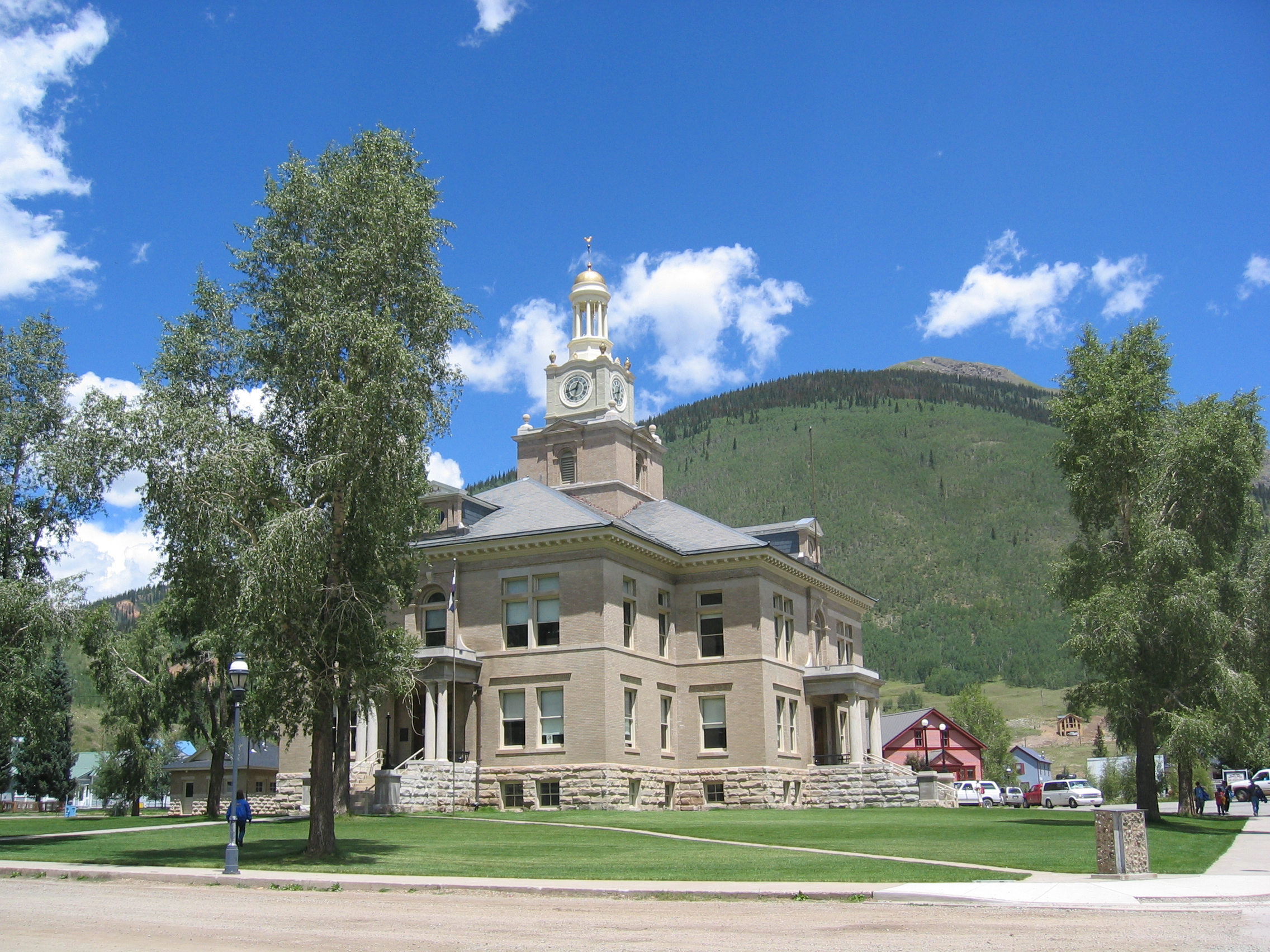
    Silverton, post jury settlements
    Post Jury settlements

    Can you settle a case after a jury has decided a case? As part of my full spectrum of dispute resolution services, I offer Appellate Mediation. My considerable experience in this area started in 2007.  I currently serve on the mediation panels for the First and Third Districts of the California Court of Appeal.  In addition to these panels, I now provide appellate mediation privately as well.

    What is Appellate Mediation and When Does it Occur?

    Appellate mediation focuses on cases that are on appeal or that are ready to go to appeal. Mediating a case that has gone all the way to appeal is not easy. The fact that a case has gone that far indicates that it was not one that was very amenable to settlement or mediation in the first place. Furthermore, an imbalance in power comes into play when the prevailing party in the trial court has the trial court’s decision on its side. By the time the case reaches appeal, there may be hard feelings coming from the trial, and the prospects of reaching a mediated resolution may seem daunting, but they are not impossible. Despite these difficulties I enjoy a success rate is high.
    Sometimes the parties have tried mediation at the lower court level.  In one of my cases, the parties had gone to mediation twice, attended four mandatory settlement conferences with the judge, and completed a trial by jury. Both parties appealed the decision under different grounds. The case resolved in appellate mediation.
    It is best that the mediation occur shortly after the appeal is lodged in order to save time, money, and effort.

    Benefits of Appellate Mediation after court or jury decision

    By using me as your Appellant Mediator you can speed case resolution and reduce litigation costs. Furthermore, you avoid the prospect of presenting your appeal to a sitting appellate judge as part of a settlement conference. I am able to provide the best possible assistance in resolving complex disputes without further litigation. I have the critical skills for handling the most intractable and contentious conflicts, regardless of subject matter.

    Why Is Appellate Mediation Effective?

    Joey Naylor: “Dad, why is the American government the best government?”
    Nick Naylor: “Because of our endless appeals process.”
    ~Thank You For Smoking, 2005. [Emphasis added]
    “It ain’t over ’til it’s over.”
    ~Yogi Berra, 1973
    These quotes sum up the need for Appellate Mediation. Even though a party may have a judgment from a court that does not mean that litigation is over. If a party appeals, then the litigation continues. It is costly in time, money, and opportunity costs to all parties.
    Appellate Courts generally can make several types of rulings. But none these rulings occur until after all parties spend considerable time and money preparing for the appeal. The court can affirm the judgment in which case the losing party can appeal to a higher court continuing the appeal process. The court can send the matter back down to a lower court with instructions. Then you are back litigating in the lower court. The court can order a new trial. In this case you get to start from the beginning and litigate the issues all over again.
    There are also lost opportunity costs. For example in a business dispute, you may eventually win, but by then the industry has evolved making the dispute meaningless. This is especially true in emerging industries such as high tech.

    Ken_Strongman_003smAbout the Author: Ken Strongman (www.kpstrongman.com) has years of experience and a growing national reputation as a mediator and arbitrator.  He has successfully resolved more than a thousand disputes in the fields of construction defects, real estate, intellectual property, and employment.  He is also a Mediator and Arbitrator for FINRA.

    © 2020 Ken Strongman. All Rights Reserved. Please do not copy or repost without permission.

  • FAQ: How to propose mediation?

    FAQ_Mediation Mendocino 01 propose
    When to propose mediation?

    A Judge may recommend that the parties consider mediation or, more commonly, one party may simply propose, through their legal representatives to the other party and their legal representative, that the dispute be mediated. A proposal to mediate should not be seen as a weakness but merely as a willingness to explore the possibility of a resolution outside the procedural confines of litigation.

    Many contracts contain mediation clauses.  The purpose of the mediation clause is to require a good faith attempt at resolving any contractual disputes before litigation is initiated.  If there is no mediation clause, the parties can still attempt to resolve their contractual dispute before commencing litigation.

    If no contract exists or it is as dispute arising out of a tort such as a personal injury, there is no reason not to suggest mediation.

    Ken_Strongman_003smAbout the Author: Ken Strongman (www.kpstrongman.com) has years of experience and a growing national reputation as a mediator and arbitrator.  He has successfully resolved more than a thousand disputes in the fields of construction defects, real estate, intellectual property, and employment.  He is also a Mediator and Arbitrator for FINRA.

    © 2020 Ken Strongman. All Rights Reserved. Please do not copy or repost without permission.

  • FAQ: How to propose mediation?

    Philmont Scout Ranch propose
    How to propose mediation.

    How to Propose Mediation – Options

    A Judge may recommend that the parties consider mediation or, more commonly, one party may simply propose, through their legal representatives to the other party and their legal representative, that the dispute be mediated. A proposal to mediate should not be seen as a weakness but merely as a willingness to explore the possibility of a resolution outside the procedural confines of litigation.

    Many contracts contain mediation clauses.  The purpose of the mediation clause is to require a good faith attempt at resolving any contractual disputes before litigation is initiated.  If there is no mediation clause, the parties can still attempt to resolve their contractual dispute before commencing litigation.

    If no contract exists or it is as dispute arising out of a tort such as a personal injury, there is no reason not to suggest mediation.

    Ken_Strongman_003smAbout the Author: Ken Strongman (www.kpstrongman.com) has years of experience and a growing national reputation as a mediator and arbitrator.  He has successfully resolved more than a thousand disputes in the fields of construction defects, real estate, intellectual property, and employment.  He is also a Mediator and Arbitrator for FINRA.

    © 2020 Ken Strongman. All Rights Reserved. Please do not copy or repost without permission.

  • FAQ: Why you might not mediate?

    Golden Gate Bridge, Marin Headlands. not mediate
    Why you might not mediate?

    To Mediate or Not?

    The key issue is whether a party is ready to seriously attempt a negotiated settlement. If a party is insisting on pre-conditions to a mediation or sees the mediation as an opportunity to “send a message” rather than an opportunity to resolve, then there may be little prospect that a successful resolution can be reached. However, once the parties are engaged in the process, even an apparently unwilling or reluctant participant may see the benefit of reaching a resolution.

    There are very few types of disputes that cannot be mediated. An often cited example is judicial review where the issue is whether a public body or authority exceeded its powers. However, that does not mean that all judicial reviews are incapable of being resolved through mediation.

    If one party or the Court proposes mediation, the other party is entitled to refuse to mediate or at least to state that they are not ready to mediate yet. Once mediation is proposed, there is no obligation to agree. However, a party who refuses to mediate should not take this decision lightly as this may have cost implications.

    Ken_Strongman_003smAbout the Author: Ken Strongman (www.kpstrongman.com) has years of experience and a growing national reputation as a mediator and arbitrator.  He has successfully resolved more than a thousand disputes in the fields of construction defects, real estate, intellectual property, and employment.  He is also a Mediator and Arbitrator for FINRA.

    © 2020 Ken Strongman. All Rights Reserved. Please do not copy or repost without permission.

  • FAQ: When is mediation appropriate?

    FAQ_Mediation Golden Gate

    FAQ: When is mediation appropriate?

    Mediation can take place at any stage from before legal proceedings are issued up until trial and even after trial. Obviously, the earlier mediation takes place, the better chance of saving costs, avoiding publicity and possibly preserving future relations between the parties. However, at a later stage in proceedings mediation may have a better chance of success as the issues in dispute are more clearly defined, the parties are clearer on their strengths and weaknesses and the parties are more focused on the possible benefits and risks in terms of outcomes and costs.

    I have successfully mediated disputes before legal proceeding were initiated.  Often times these are business disputes or intellectual property/high technology disputes.  The parties were quite aware that if they took their disputes to court, it would be years before there was a resolution.  By that time, new technology innovations would make their dispute seem old and tired though legally valid.

    I have also successfully mediated disputes after trial.  In these cases, one party does have a judgment from a court, but both parties want to completely end the litigation and stop any appeals that might negate the judgment.  

    Naturally, mediation is appropriate and anytime.  Often a party has to file the lawsuit to preserve their legal rights and to put on notice to the other parties that there really is a dispute. 

    Ken_Strongman_003smAbout the Author: Ken Strongman (www.kpstrongman.com) has years of experience and a growing national reputation as a mediator and arbitrator.  He has successfully resolved more than a thousand disputes in the fields of construction defects, real estate, intellectual property, and employment.  He is also a Mediator and Arbitrator for FINRA.

    © 2020 Ken Strongman. All Rights Reserved. Please do not copy or repost without permission.

  • FAQ: What is the role of the mediator?

    FAQ_Mediation Mendocino 02 Role
    Mediator’s Role

    Role of the Mediator

    The role of the mediator is not set in stone. Typically the mediator acts as a neutral third party and facilitates rather than directs the process. At all times, the parties and not the mediator control the outcome of the process.

    Establish a Process

    A good mediator is somebody who is able to establish a process, keep that process moving and build on any momentum that may develop during the course of the mediation. A good mediator will quickly identify and understand the key issues and may challenge the parties to consider their respective strengths and their weaknesses as well as the future implications if the parties fail to reach a negotiated settlement.

    In the mediations I conduct, I work hard to keep the parties working towards solutions.  I firmly believe that we are not done until we have a solution or solutions to all disputes between the parties.  The key skill I use is to keep listening to the parties concerns, hopes and desires for a good outcome.

    Ken Strongman, MediatorAbout the Author: Ken Strongman (www.kpstrongman.com) has years of experience and a growing national reputation as a mediator and arbitrator.  He has successfully resolved more than a thousand disputes in the fields of construction defects, real estate, intellectual property, and employment.  He is also a Mediator and Arbitrator for FINRA.

    © 2020 Ken Strongman. All Rights Reserved. Please do not copy or repost without permission.

  • FAQ: What are the potential benefits of mediation?

    Angel Island State Park. Benefits
    Mediation Benefits

    FAQ: What are the potential benefits of mediation?

    It is:

    • A voluntary and confidential process where participants determine the outcome for themselves rather than it being determined by a Judge, jury or an Arbitrator.
    • Offers a wider range of possible outcomes than can ever be determined by a Court.
      Provides an opportunity for the parties to fully participate in the process and therefore, to feel very much part of a successful outcome.
    • Avoids the potential risk of the significant costs in litigation.
    • The mediator can act as an impartial facilitator to a resolution.
    • Ideally suited to multi-party litigation or otherwise complex disputes.
    • Mediation is also appropriate as a method of resolving interpersonal disputes such as those that arise in the workplace, in clubs, in an educational context, etc.
    • Even an unsuccessful mediation can educate the parties on the strengths and weaknesses of their case and the risks involved which may facilitate resolution in due course.
    • Can allow disputes to be resolved in circumstances where a necessary on-going relationship between the parties can be maintained.
    • It provides a timely resolution where as going to trial can take several years.

    Ken_Strongman_003smAbout the Author: Ken Strongman (www.kpstrongman.com) has years of experience and a growing national reputation as a mediator and arbitrator.  He has successfully resolved more than a thousand disputes in the fields of construction defects, real estate, intellectual property, and employment.  He is also a Mediator and Arbitrator for FINRA.

    © 2020 Ken Strongman. All Rights Reserved. Please do not copy or repost without permission.

  • FAQ: What is Mediation?

    FAQ_Mediation Mendocino 02
    What is Mediation?

    Mediation is a form of alternative dispute resolution (ADR), which can be used as a way of resolving a dispute between two or more parties with the assistance of a mediator who acts as a neutral third party and facilitates the process with a view to the parties voluntarily negotiating a settlement of their dispute.  In all of the mediations in which I served as a mediator, I have never dictated the solution to the dispute to the parties.  I have offered suggestions and ideas that they may not have considered. 

    Mediation usually has a structure, timetable and process established and agreed by the parties with the mediator which can help it to be a more effective dispute resolution process than a traditional settlement meeting. The process is private, confidential, without prejudice and non-binding, although the objective is to reach a resolution of the dispute by agreeing to binding settlement agreement.

    It cannot be stressed enough that mediation is a completely voluntary process where the parties with the assistance and guidance of the mediator reach a solution to a dispute that is satisfactory to all parties.  The parties are in complete control of the solution. 

    Ken Strongman, MediatorAbout the Author: Ken Strongman (www.kpstrongman.com) has years of experience and a growing national reputation as a mediator and arbitrator.  He has successfully resolved more than a thousand disputes in the fields of construction defects, real estate, intellectual property, and employment.  He is also a Mediator and Arbitrator for FINRA.

    © 2020 Ken Strongman. All Rights Reserved. Please do not copy or repost without permission.

  • FAQ: Do I have to have a lawyer at my mediation?

    FAQ_Mediation Mendocino 03 lawyer
    Lawyer at mediation?

    Do I have to have a lawyer at my mediation?

    No, it is not necessary to have a lawyer representing you at mediation. If you have a lawyer already representing your interests in the dispute you would need to discuss this with him or her.  If you feel you need legal advice or that you are unqualified or uncomfortable dealing with the issues on your own, then you should consult a lawyer and perhaps hire someone on an hourly basis solely for the purpose of representing you at the mediation.

    If, on the other hand, you are involved in a dispute that you feel comfortable resolving without a lawyer, keeping in mind that your mediator will not give you legal advice or advocate on your behalf, by all means, make an attempt to resolve it on your own first.

    Do remember that the other party has a right to hire an attorney and to bring them to the mediation to help represent them.  If that scenario occurs, there will be no one to advocate your interests. You will not have a right to delay the mediation to hire your own attorney.

    Mediation is a voluntary process that centers on discussions and decision-making, rather than judgment. It is focused on resolving disputes based on the factual circumstances, the needs of the parties and practicality, and not solely on the legal rights of the parties (sometimes, despite those rights). Often, the mere presence of an attorney creates an antagonistic and adversarial atmosphere that impedes resolution rather than assisting it.

    It has been my experience that when the parties have attorneys and those attorneys are actively helping to resolve the issues, the mediation is more successful.  This does not mean that representing yourself in mediation is a no-win situation.  I have conducted many mediations where one or more parties were self represented.

    Ken_Strongman_003smAbout the Author: Ken Strongman (www.kpstrongman.com) has years of experience and a growing national reputation as a mediator and arbitrator.  He has successfully resolved more than a thousand disputes in the fields of construction defects, real estate, intellectual property, and employment.  He is also a Mediator and Arbitrator for FINRA.

    © 2020 Ken Strongman. All Rights Reserved. Please do not copy or repost without permission.