Category: Preliminary Tasks for a Mediation

What mediation participants can do to prepare for a successful mediation.

  • Visualize the future beyond the dispute.
    Visualize the future beyond the dispute.

    The resolution of a dispute does not just occur on the day of the mediation.   Each participant to mediation needs to prepare their own strategy for negotiation in the settlement.  Based on my experience as a mediator, these are a collection of tasks each participant needs to complete and to discuss with their council and the mediator before the mediation.

    These tasks and the discussion with the mediator are confidential.   They are confidential under both Attorney Client privilege and under mediation confidential provisions in court rules, statutes, and standards.

    Where do you want to be in five years after this mediation? 

    Develop a basic description or visualize what life and/or business would be like in five to ten years?  What does life and/or business look like after the resolution of this dispute?  How will you spend your time, money and talent?

    The purpose of this exercise is to get you to think what life might be like after the resolution of this dispute.  Right now you are in the middle of the dispute and its immediate aftermath.  You have spent time – a lot of time, money and energy on various aspects of the dispute.   If it is a commercial dispute, you will have gone through the disruption of preparing and doing the discovery process.  If it is personal injury, you will have endured lost work while being deposed in depositions.  You have spent considerable time wondering if you will win in court.  Have you spent time thinking about life after the dispute is resolved.  What does that look like?

    Discuss this with your attorney and confidentially with your mediator.

    Ken Strongman, MediatorAbout the Author: Ken Strongman (www.kpstrongman.com) has years of experience and a growing national reputation as a mediator and arbitrator.  He has successfully resolved more than a thousand disputes in the fields of construction defects, real estate, intellectual property, and employment.  He is also a Mediator and Arbitrator for FINRA.

    © 2022 Ken Strongman. All Rights Reserved. Please do not copy or re-post without permission.
  • What do they want out of the mediation?

    What do they want out of the mediation?

    The resolution of a dispute does not just occur on the day of the mediation.   Each participant to mediation needs to prepare their own strategy for negotiation in the settlement.  Based on my experience as a mediator, these are a collection of tasks each participant needs to complete and to discuss with their council and the mediator before the mediation.

    These tasks and the discussion with the mediator are confidential.   They are confidential under both Attorney Client privilege and under mediation confidential provisions in court rules, statutes, and standards.

    What do they want?

    You know that you have interests that need to be satisfied when you attend the mediation, the other side also has interests.  What are those interests?

    They have communicated their interests to you through a variety of means.  What do you think those interests are?  They can be money, time, minimize their risks, fairness, maintain a working relationship, etc.  List and rank them.

    It is important to realize that your legal opponents do want something out of the dispute and that they are willing to spend time, money and legal talent in order to get it.   This does not mean that they will succeed.  It just means that there are things you can use as bargaining chips.

    It is entirely possible that you might have some of the same interests.  This is also an opportunity to create a solution outside of the box.  Realizing this possibility will help reach a settlement easier at least on certain issues.

    Review the list you have created with your attorney and be prepared to discuss it in confidence with your mediator.

    Ken Strongman, MediatorAbout the Author: Ken Strongman (www.kpstrongman.com) has years of experience and a growing national reputation as a mediator and arbitrator.  He has successfully resolved more than a thousand disputes in the fields of construction defects, real estate, intellectual property, and employment.  He is also a Mediator and Arbitrator for FINRA.

    © 2022 Ken Strongman. All Rights Reserved. Please do not copy or re-post without permission.

  • How are you going to deal with them after the dispute?

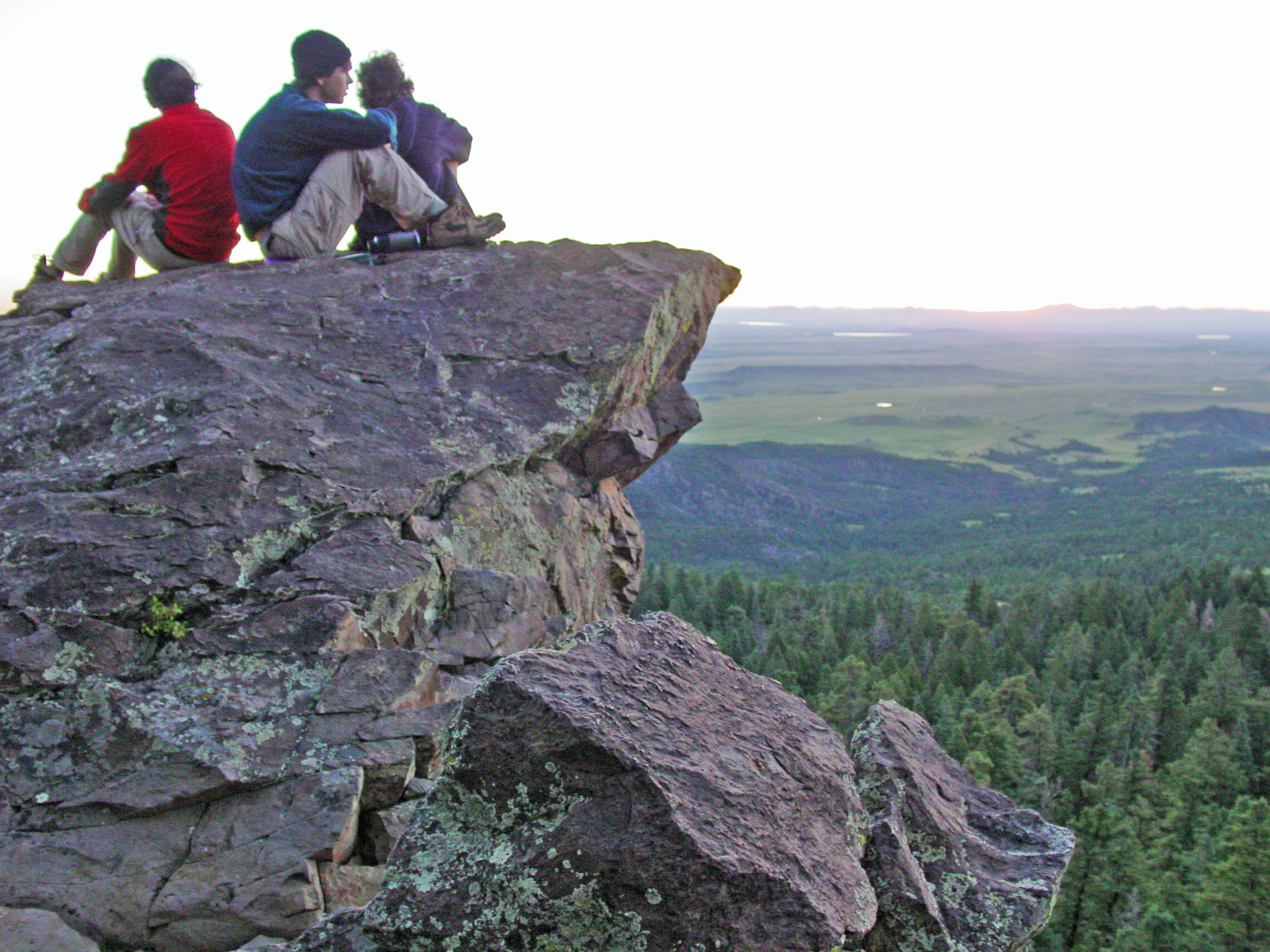
    Philmont Scout Ranch Deal
    Deal with the future

    The resolution of a dispute does not just occur on the day of the mediation.   Each participant to mediation needs to prepare their own strategy for negotiation in the settlement.  Based on my experience as a mediator, these are a collection of tasks each participant needs to complete and to discuss with their council and the mediator before the mediation.

    These tasks and the discussion with the mediator are confidential.   They are confidential under both Attorney Client privilege and under mediation confidential provisions in court rules, statutes, and standards.

    Task #4: How are you going to deal with them after the dispute?

    In the previous task, you were asked to describe what you wanted life and/or business to look like five years after the dispute has been resolved.   This task is more focused on how you are going to deal with your opponents five to ten years after the dispute is resolved.

    The easy answer to this question is that ‘I never want anything to do with them again.’  If the dispute is an automobile accident then that might work as an answer.  But if your opponents are commercial suppliers, customers, fellow businesses in a limited market, employees or employers, neighbors, and even family, the question becomes a lot more challenging.

    I have mediated boundary line and other disputes between neighbors.  It becomes a lot more difficult to resolve when both neighbors realize that they will still be living next door to each other for possibly decades.  I have also mediated disputes with family owned business.  They had to take into account the likelihood of having to sit down for Thanksgiving dinner with each other.  There were also the unintended impacts on other family relationships that were not in dispute.  Commercial enterprises need to evaluate the publicity of the dispute and the possible need for an on going business relationship now and in the future.

    Carefully list and count the costs regarding different solutions to the dispute.  Might there be a better settlement that reduces future conflict.  Also evaluate the costs of litigating the dispute to its conclusion on the future relationship to your opponents.

    For an experienced Mediator to help negotiate a resolution to your dispute contact Ken Strongman. Here.

    Ken Strongman, MediatorAbout the Author: Ken Strongman, is a private commercial mediator/arbitrator of complex, high risk litigated cases since 2004. Disputes addressed include business, securities, construction defects, real estate, intellectual property, employment, environment, energy, and trusts & estates. He is also a Mediator and Arbitrator for FINRA.

    © 2022 Ken Strongman. All Rights Reserved. Please do not copy or repost without permission.

  • How are you going to deal with them after the dispute?

    Philmont Scout Ranch Deal
    Deal with the future

    The resolution of a dispute does not just occur on the day of the mediation.   Each participant to mediation needs to prepare their own strategy for negotiation in the settlement.  Based on my experience as a mediator, these are a collection of tasks each participant needs to complete and to discuss with their council and the mediator before the mediation.

    These tasks and the discussion with the mediator are confidential.   They are confidential under both Attorney Client privilege and under mediation confidential provisions in court rules, statutes, and standards.

    Task #4: How are you going to deal with them after the dispute?

    In the previous task, you were asked to describe what you wanted life and/or business to look like five years after the dispute has been resolved.   This task is more focused on how you are going to deal with your opponents five to ten years after the dispute is resolved.

    The easy answer to this question is that ‘I never want anything to do with them again.’  If the dispute is an automobile accident then that might work as an answer.  But if your opponents are commercial suppliers, customers, fellow businesses in a limited market, employees or employers, neighbors, and even family, the question becomes a lot more challenging.

    I have mediated boundary line and other disputes between neighbors.  It becomes a lot more difficult to resolve when both neighbors realize that they will still be living next door to each other for possibly decades.  I have also mediated disputes with family owned business.  They had to take into account the likelihood of having to sit down for Thanksgiving dinner with each other.  There were also the unintended impacts on other family relationships that were not in dispute.  Commercial enterprises need to evaluate the publicity of the dispute and the possible need for an on going business relationship now and in the future.

    Carefully list and count the costs regarding different solutions to the dispute.  Might there be a better settlement that reduces future conflict.  Also evaluate the costs of litigating the dispute to its conclusion on the future relationship to your opponents.

    Ken Strongman, MediatorAbout the Author: Ken Strongman (www.kpstrongman.com) has years of experience and a growing national reputation as a mediator and arbitrator.  He has successfully resolved more than a thousand disputes in the fields of construction defects, real estate, intellectual property, and employment.  He is also a Mediator and Arbitrator for FINRA.

    © 2020 Ken Strongman. All Rights Reserved. Please do not copy or repost without permission.

  • What if you truly disagree upon with your opponents?

    What Points Do You Disagree
    What Points Do You Disagree?

    Tasks for reaching a mediated settlement to a dispute

    The resolution of a dispute does not just occur on the day of the mediation.   Each participant to mediation needs to prepare their own strategy for negotiation in the settlement.  Based on my experience as a mediator, these are a collection of tasks each participant needs to complete and to discuss with their council and the mediator before the mediation.

    These tasks and the discussion with the mediator are confidential.   They are confidential under both Attorney Client privilege and under mediation confidential provisions in court rules, statutes, and standards.

    Task #7: What If you truly disagree upon with your mediation opponents?

    In Task #6, you were asked to search for some potential common ground you might have with your mediation opponents to help facilitate a voluntary agreement to settle this matter.   Now you need to flip the question around and come up with the significant issues that you disagree upon.

    Strangely enough this will help the mediator to focus the mediation session upon the real and lasting issues of the dispute.   Then everyone can focus on the task at hand to develop together a voluntary agreement to resolve the dispute.  For example, breach of contract might be agreed upon, but whether it is a major or minor breach is the true disagreement.  Likewise, there might not be a disagreement on liability but it is the measure of damages that is the true dispute.   Even then, there might be considerable agreement.

    Review these disagreements with your attorney and confidentially with the mediator.

    Ken StrongmanAbout the Author: Ken Strongman (www.kpstrongman.com) has years of experience and a growing national reputation as a mediator and arbitrator.  He has successfully resolved more than a thousand disputes in the fields of construction defects, real estate, intellectual property, and employment.  He is also a Mediator and Arbitrator for FINRA.

    © 2020 Ken Strongman. All Rights Reserved. Please do not copy or repost without permission.

  • Task #21: If something happens in the mediation that irritates you, what will you do to get back on task?

    Ken Strongman Mediation Tasks 06If something happens in the mediation that irritates you, what will you do to get back on task?

    The resolution of a dispute does not just occur on the day of the mediation.   Each participant to mediation needs to prepare their own strategy for negotiation in the settlement.  Based on my experience as a mediator, these are a collection of tasks each participant needs to complete and to discuss with their council and the mediator before the mediation.

    How will you help get things back on task if that happens?  Things happen in mediation.  Sometimes it is the realization that the person that caused the dispute is sitting across the table from you.  You have just been confronted with the fact that you still have to deal with them whether now or in court.  You need to develop a game plan for getting back on task and settling the dispute.  It might be a private caucus or just a break.  It might be a continuance of the mediation itself to another day.  Communicating your needs to the mediator will help get things back on task and help settle the dispute.

    Will you risk your future financial interests to avoid uncomfortable discussions now?   This is the question you must keep in mind.   Mediation can be quite uncomfortable.  Mediation is conflict at its best.  But settlements do happen and are worth the discomfort.

    Will you accept a satisfactory offer to settle, even if you are very resentful about how you’ve been treated?  At some point you must make the decision that you want to settle the dispute and move on to better days.  It is important to make this decision before you come to the mediation.  If you do not want to settle, and want to continue expending the emotional energy, not counting the expense of litigation, then mediation will not be effective.

    Ken StrongmanAbout the Author: Ken Strongman (www.kpstrongman.com) has years of experience and a growing national reputation as a mediator and arbitrator.  He has successfully resolved more than a thousand disputes in the fields of construction defects, real estate, intellectual property, and employment.  He is also a Mediator and Arbitrator for FINRA.

    © 2020 Ken Strongman. All Rights Reserved. Please do not copy or repost without permission.

  • Task #20: We all have buttons. When pushed they have irritated you. If not, we would not be here at mediation. Therefore, what could they say or do in the mediation that would really tick you off all over again?

    Ken Strongman Mediation Tasks buttons
    What are your buttons?

    Task #20: We all have buttons.

    We all have buttons. When pushed they have irritated you. If not, we would not be here at mediation. Therefore, what could they say or do in the mediation that would really tick you off all over again?

    The resolution of a dispute does not just occur on the day of the mediation.   Each participant to mediation needs to prepare their own strategy for negotiation in the settlement.  Based on my experience as a mediator, these are a collection of tasks each participant needs to complete and to discuss with their council and the mediator before the mediation.

    We all have buttons that might be pushed by the opposition.  They can be anything.  Once it was the attorneys that were the problem.  They did not like each other nor respect each other.  They got into a shouting match yelling four letter words at each other. Their clients didn’t know what to do.  Naturally, we went quickly in to private caucus and tempers went down.

    You need to understand what your personal buttons are and you need to communicate them to the mediator.  With that knowledge the mediator can skillfully avoid the potential of those buttons being pushed by the other party.

    Ken Strongman, MediatorAbout the Author: Ken Strongman (www.kpstrongman.com) has years of experience and a growing national reputation as a mediator and arbitrator.  He has successfully resolved more than a thousand disputes in the fields of construction defects, real estate, intellectual property, and employment.  He is also a Mediator and Arbitrator for FINRA.

    © 2020 Ken Strongman. All Rights Reserved. Please do not copy or repost without permission.

  • Task #19: What evidence can you bring to the mediation that will be credible to them and will help them see your point of view?

    Ken Strongman Mediation Tasks 09
    credible evidence

    Task #19: Credible evidence?

    What evidence can you bring to the mediation that will be credible to them and will help them see your point of view? The resolution of a dispute does not just occur on the day of the mediation.   Each participant to mediation needs to prepare their own strategy for negotiation in the settlement.  Based on my experience as a mediator, these are a collection of tasks each participant needs to complete and to discuss with their council and the mediator before the mediation.

    It is useful to bring evidence to the mediation that will be credible to your opposition and will help them see your point of view.   This is at the very least your smoking gun.  But though it might be a smoking gun to you, it is important that they see it as such.  If this evidence would be admissible in court, then it would be best to send it to them way before the mediation.  By so doing, you might eliminate the need for the mediation itself.

    It is not necessary, despite the objections of the lawyers, that the evidence be admissible in court.  The beauty of mediation is that the parties can look at all of the evidence and then reach a decision.  The mediator and attorneys would help evaluate the evidence and its admissibility to determine possible settlement.

    They will also be bringing their own evidence to help you see their point of view, too.

    Ken Strongman, MediatorAbout the Author: Ken Strongman (www.kpstrongman.com) has years of experience and a growing national reputation as a mediator and arbitrator.  He has successfully resolved more than a thousand disputes in the fields of construction defects, real estate, intellectual property, and employment.  He is also a Mediator and Arbitrator for FINRA.

    © 2020 Ken Strongman. All Rights Reserved. Please do not copy or repost without permission

  • Task #18: Do you believe that they might owe you something specifically to restore or compensate for the betrayal, bad faith, or loss of confidence?

    Ken Strongman Mediation tasks 02
    specifically owed?

    Task #18: Do you believe that they might owe you something specifically?

    Do you believe that they might owe you something specifically to restore or compensate for the betrayal, bad faith, or loss of confidence? The resolution of a dispute does not just occur on the day of the mediation.   Each participant to mediation needs to prepare their own strategy for negotiation in the settlement.  Based on my experience as a mediator, these are a collection of tasks each participant needs to complete and to discuss with their council and the mediator before the mediation.

    While many mediations come down to a money dance between the disputants, there are other things could be said or happen that would go a long way to resolving the dispute.   This is one of the great advantages to using mediation to resolve a dispute.  In the Courts, it is only money that can be used to make the parties whole.

    Often the one thing that could be done to restore or compensate for the betrayal and bad faith is an apology by one of the parties.  I have spent many hours in mediations working on apologies by one of the parties.  We will work on the wording to make sure it is sincere enough and can be said with enough feeling that the receivers of the apology believe and can accept the apology.  Some times both sides have apologized to each other.

    Though hours are spent on the apology, few are repeated outside of the mediation.  Occasionally, they might be embedding into the final settlement agreement.  Even then there might be a confidentiality clause included in that agreement.

    It is not only apologies that are done within mediation.  Recently, one party just wanted to speak their mind and just wanted the other party to listen.   In this mediation, we again spent time working on what would be said, how it would be said, the expected responses of the other party.  We even set a time limit on the speaking and any potential response.  Both sides did not want anything said that would inflame the situation.  It was quite successful.  No one used their entire time allotment and we proceeded to a complete settlement of the dispute.

    As always, sometimes it is just a fixed amount of money that will restore some good faith and remove the feeling of betrayal.  Though I have found that if this is coupled with an apology, the amount of money required is greatly reduced.

    Ken_Strongman_003smAbout the Author: Ken Strongman (www.kpstrongman.com) has years of experience and a growing national reputation as a mediator and arbitrator.  He has successfully resolved more than a thousand disputes in the fields of construction defects, real estate, intellectual property, and employment.  He is also a Mediator and Arbitrator for FINRA.

    © 2020 Ken Strongman. All Rights Reserved. Please do not copy or repost without permission.

  • Task #17: How do you evaluate the betrayal, bad faith or loss of confidence?

    Ken Strongman Mediation Tasks 07
    betrayal, bad faith or loss of confidence

    Task #17: How do you evaluate the betrayal, bad faith or loss of confidence?

    The resolution of a dispute does not just occur on the day of the mediation.   Each participant to mediation needs to prepare their own strategy for negotiation in the settlement.  Based on my experience as a mediator, these are a collection of tasks each participant needs to complete and to discuss with their council and the mediator before the mediation.

    Previously, you were asked to pin point the exact time and place for your sense of betrayal, bad faith or loss of confidence in the agreement and other party.  That is important because there is usually a time and place when you realize the agreement that you had developed with the other party is not work according to your hopes and dreams.

    Now you need to determine how you evaluated the betrayal, bad faith or loss of confidence.  It is often the same evaluation process you used to develop the trust and good will of the original agreement.  Knowing how you evaluated both the original good will and now the betrayal will lead to possible solutions to the dispute.  Was it because they stopped looking you in the eye?  Was it a failure to return a phone call in a timely matter?  Was it a failure to respect you and your time, expertise or property?  With this knowledge you can then determine possible solutions to the dispute.

    Ken StrongmanAbout the Author: Ken Strongman (www.kpstrongman.com) has years of experience and a growing national reputation as a mediator and arbitrator.  He has successfully resolved more than a thousand disputes in the fields of construction defects, real estate, intellectual property, and employment.  He is also a Mediator and Arbitrator for FINRA.

    © 2020 Ken Strongman. All Rights Reserved. Please do not copy or repost without permission.