Tag: mediation

  • Conflicts @Thanksgiving – How to Avoid

    Rockwell Thanksgiving
    Idealized Thanksgiving

    Thanksgiving conflicts reduces anyone’s ability to be thankful. Thanksgiving is sometimes referred to as forced family time. It is ripe for all kinds of potential conflicts.  Here are some things to minimize or avoid conflicts on the big day without lowering your expectations of being truly thankful.    

    ·     Realize that Norman Rockwell was a fraud.  His famous Thanksgiving painting is a total fantasy.   I’ve been told that when he painted it, each of the models posed separately.  So naturally they appear happy.  They were not in the same room with the others and they obviously didn’t have to eat the food.  They couldn’t because it had to remain for the next model.

    ·     Speaking of food… for all of those that have recently converted to a vegan diet or just discovered the South Beach, North Beach or West Beach diet, or have any dietary restrictions based on health: the only statement on the subject you can make is (with a smile) – “No, Thank you” while you are passing the plates.   

    ·     Thanksgiving is not the time to proselytize anyone to a life free of all of the cholesterol choking cancer causing food on the table.   Yes, stress causes heart attacks.  But stress doesn’t come from always eating the wrong foods, it also comes from people reminding (nagging) you not to eat certain foods. 

    ·     For those of you on a diet at Thanksgiving and can’t see anything on the table the diet will allow you to eat, and you still want to be true to your diet.  Just remember you do want to loose weight so not eating anything would still be a good thing. 

    ·     Speaking of proselytizing…Thanksgiving should be a time to be thankful that we are blessed in this country with the privilege to not have to talk politics 365-days a year.  Thanksgiving is the time to eat the turkey and to stop talking about the turkeys running the country. 

    ·     Realize that everyone does not have to do the same thing all the time.  For some (or a whole lot of people) cheering on their favorite football team with family and friends is just as much a bonding experience as other activities.  Let them watch the game.  At least half the population will be truly thankful their team won.   Being thankful is what it is all about. 

    ·     Some may want to watch football, others might want to play a game of football, other still may want to go out and change the water pump on a car.  That is OK!  Chill out!  Be thankful they are all here and having fun. 

    ·     Thanksgiving is not a time to be thankful for your holiday cruise to the Caribbean, new car, house, job, or any other material thing.   Be thankful for the little things: breathing, the sunrise, food on the table, and laughter.  We are all social people and never truly get along with each other.  If there was no conflict we wouldn’t be human and we need to be thankful that we are human.   

    Ken StrongmanAbout the Author: Ken Strongman, is a private commercial mediator/arbitrator of complex, high risk litigated cases since 2004. Disputes addressed include business, securities, construction defects, real estate, intellectual property, employment, environment, energy, and trusts & estates. He is also a Mediator and Arbitrator for FINRA.

    © 2021 Ken Strongman. All Rights Reserved. Please do not copy or re-post without permission.

  • Mediators Playing the Devil’s Advocate

    Devil's Advocate
    Devil’s Advocate

    Mediators Playing the Devil ’s Advocate

    Devil’s Advocate is one of the roles of a mediator. A good mediator such as myself, does not forfeit his personal opinions simply because he serves as a neutral facilitator. These opinions and preconceptions can help inform certain beliefs. However, a strong mediator knows how to view a case from multiple angles. This is an important quality to possess as it helps provide a counter point to a party or attorney’s one-sided approach.

    A Strong Mediator

    A strong mediator gives consideration to the strengths and weaknesses of both sides. When in a private caucus with one side, the mediator may mention a potential weakness in this side’s argument. He may even ask the party what his or her argument would be if he or she was on the other side. He or she may get the attorney to contemplate the same scenario and ask for facts and legal theories that would support the other side.
    By recognizing the strengths of the other side and the weaknesses of their own side, parties can start to contemplate the potential of what would happen if they lose. This can often inspire them to fully participate in negotiations so that they can avoid the possibility of losing the case or facing other adverse effects.

    Sounding Board

    Mediator is a “sounding board” for your arguments, and for offers/counter offers. I can deal with the hypotheticals and be a “coach”, to deliver bad news and explain opponents’ responses to offers. I, as a strong mediator give you an opportunity to explain the case to a neutral person help you and your attorney evaluate your case. Finally, a good mediator helps identify components of solutions from your stand point and delivers bad news to both sides.

    For an experienced Mediator to help negotiate a resolution to your dispute contact Ken Strongman. Here.

    Ken StrongmanAbout the Author: Ken Strongman, is a private commercial mediator/arbitrator of complex, high risk litigated cases since 2004. Disputes addressed include business, securities, construction defects, real estate, intellectual property, employment, environment, energy, and trusts & estates. He is also a Mediator and Arbitrator for FINRA.

    © 2021 Ken Strongman. All Rights Reserved. Please do not copy or repost without permission.

  • Needs: an ingredient of any conflict

    Alcatraz Camping Trip needs
    Ingredients of any conflict – Needs

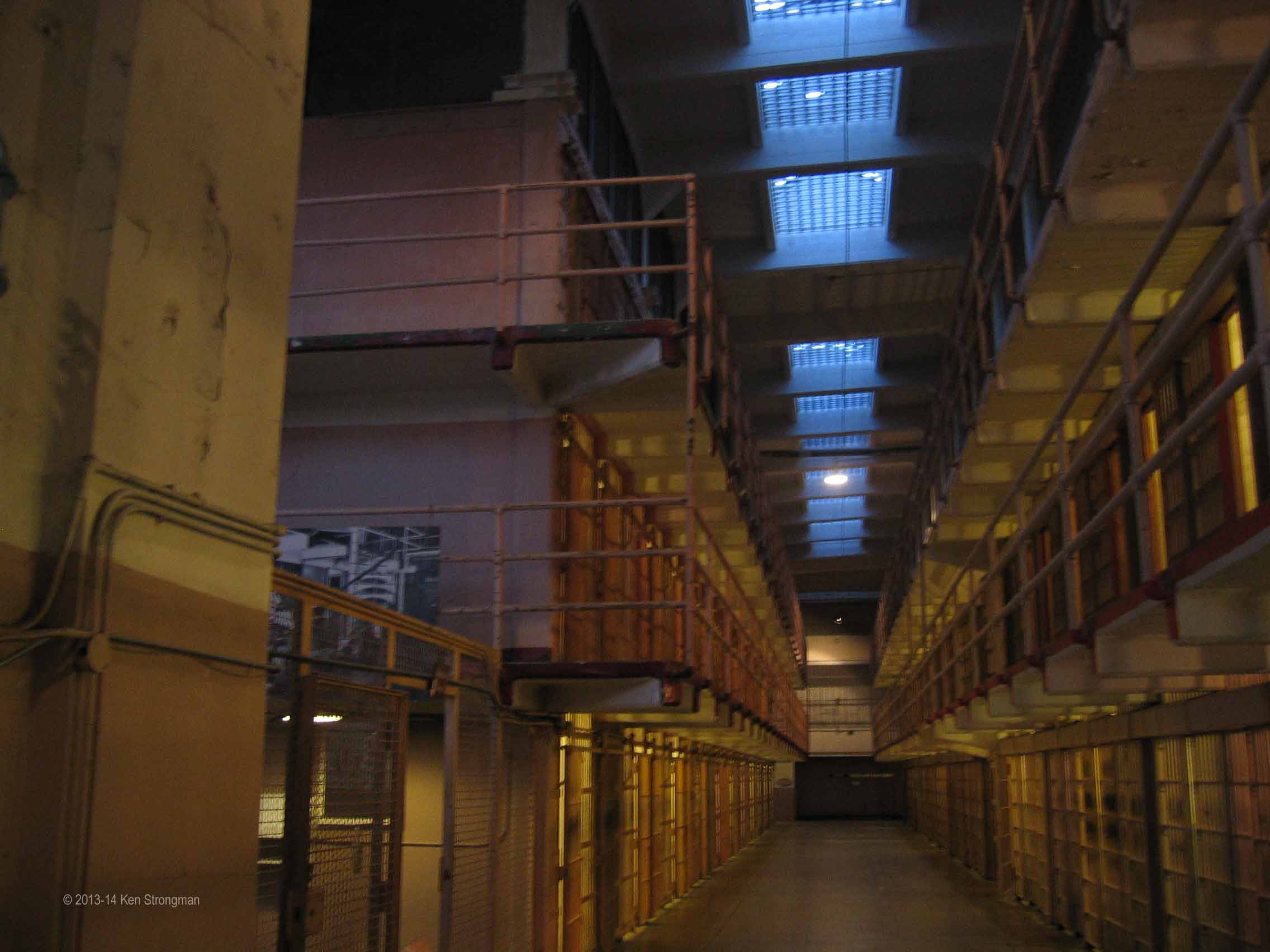
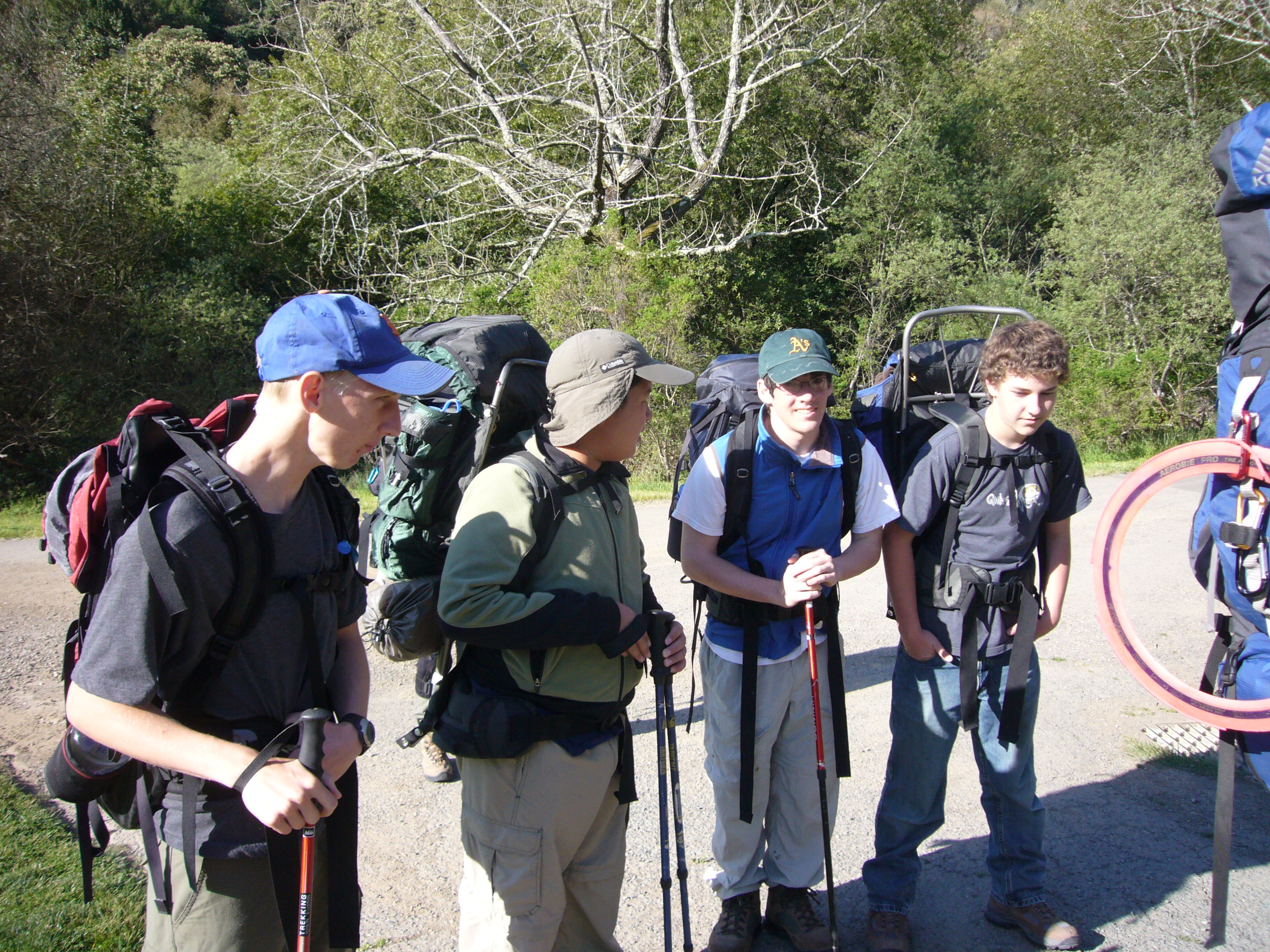
    Needs are ingredients of any conflict. All conflicts have similar ingredients. They may vary in degree but most are present in some way. The main ingredients are needs, perceptions, power, values, and feelings and emotions. Today, I am focusing on needs.

    Needs – Needs are physical requirements essential to our well-being. Conflicts arise when we ignore others’ needs, our own needs or the group’s needs. It is important to not confuse needs with desires. Desires are the things we would like to have but are not essential to our survival.

    By the time it is necessary to resolve a conflict; usually the needs are lost or hidden by the other ingredients of the conflict. Therefore it is important to spend time ascertaining those needs.

    For an experienced Mediator to help negotiate a resolution to your dispute contact Ken Strongman. Here.

    Ken StrongmanAbout the Author: Ken Strongman, is a private commercial mediator/arbitrator of complex, high risk litigated cases since 2004. Disputes addressed include business, securities, construction defects, real estate, intellectual property, employment, environment, energy, and trusts & estates. He is also a Mediator and Arbitrator for FINRA.

    © 2021 Ken Strongman. All Rights Reserved. Please do not copy or repost without permission.

    **For the last decade I’ve been involved with leadership development of tomorrow’s leaders. Using my expertise, I am training the youth leaders in conflict resolution. This blog is adapted from my training materials.

  • Resolving conflicts through negotiation

    Negotiation

    Resolving conflicts through negotiation.

    Resolving Conflict through negotiation is a part of life. Negotiation is how conflicts are resolved. Hopefully, they can be resolved peacefully and to the satisfaction of both parties to the conflict. Leaders’ skill set must include negotiation. Therefore, some of these blog postings will deal with ways a leader can help resolve conflicts.

    I hope to provide useful information on:

    • Know and articulate several ways that good leadership can minimize conflict.
    • Understand how the acronym E.A.R. can be used as a tool for resolving conflicts (Express, Address, Resolve).
    • Use several communications skills important for resolving conflicts
    • Know negotiating skills to resolve conflicts for the benefit of all parties to the conflict.

    All conflict resolution involves negotiation. Let’s look at the definition and characteristics of negotiation.

    What is Negotiation

    Negotiation is a voluntary, non-binding bargaining process, in which the parties to a dispute attempt resolution among themselves.  Often, agents of the disputing parties (their lawyers, real estate agents, accountants, and so forth), who are in actual communication with each other, are the negotiators.  The actual disputing persons sometimes do not meet or participate in direct discussions until most, or all, of the dispute has been resolved.

    Characteristics of Negotiation

    The chief characteristics of negotiation are:

    • Mutual Consent. Negotiation is voluntary.  The parties cannot be compelled to negotiate or even negotiate in good faith.  Negotiations cease when one party declines to continue.
    • Successful Result is Enforceable. A negotiated settlement, usually memorialized in a written agreement, is as valid and enforceable as any common law contract.
    • The parties and/or their agents are in personal contact with each other.  A third party neutral is involved in negotiations.
    • No statute or case law governs the process of negotiation.  Some prefer to negotiate in person.  Others use letters, e-mail, or telephone calls.  Still others negotiate through agents or intermediaries.
    • Negotiation is a process, taking place over time, as opposed to a single meeting or a brief exchange of correspondence.
    • Negotiators share facts and arguments often in a disorganized manner.  Negotiators posture and obfuscate, misstate the law, rail and threat and bluff, implore and cajole, and mix fact with fiction, exaggeration, and lies, during a series of back-and-forth communications.
    • Negotiations are usually conducted in private.  Publicity is anathema to a frank exchange of opinions, offers, and demands negotiations.

    For an experienced Mediator to help negotiate a resolution to your dispute contact Ken Strongman. Here.

    Ken StrongmanAbout the Author: Ken Strongman (www.kpstrongman.com) has years of experience and a growing national reputation as a mediator and arbitrator.  He has successfully resolved more than a thousand disputes in the fields of construction defects, real estate, intellectual property, and employment.  He is also a Mediator and Arbitrator for FINRA.

    © 2021 Ken Strongman. All Rights Reserved. Please do not copy or repost without permission.

  • Seven reasons to avoid a joint mediation session

    Devil's Postpile National Monument - Rainbow Falls
    Joint sessions

    Seven reasons to avoid a joint mediation session

    This and many other topics will be revealed in: The “End Game” of Mediation and How to Succeed at It [A Comprehensive Road Map to the Mediation Process] on Tuesday, March 10, 4:30 pm – 8:30 pm @ the Contra Costa Bar Association.

    Speakers Ken Strongman, Esq. and Malcolm Sher, Esq. will lead a program for Advocates designed to create a highly positive mediation experience and outcome for themselves and their clients. These two successful mediators will discuss some of the best practices for negotiation and to prepare the client, advocate, mediator and opposition for the mediation journey.

    The Contra Costa County Bar Association certifies that this activity has been approved for 3 hours of General MCLE credit by the State Bar of California, Provider #393.

    To register for the event: Register Here

    NOW FOR THE ANSWER: Seven reasons to avoid a joint mediation session

    Stated another way: the advantages of a private session with the mediator

    1. It is an opportunity to explain the case to a neutral person
    2. The attorney and party get to evaluate their own case
    3. The ability to use the mediator as a sounding board and coach
    4. To be able to talk openly
    5. Discuss solutions
    6. Identify components of solutions from your stand point
    7. Emote and vent in private about the case and the other side (person)

    Ken StrongmanAbout the Author: Ken Strongman (www.kpstrongman.com) has years of experience and a growing national reputation as a mediator and arbitrator.  He has successfully resolved more than a thousand disputes in the fields of construction defects, real estate, intellectual property, and employment.  He is also a Mediator and Arbitrator for FINRA.

    © 2020 Ken Strongman. All Rights Reserved. Please do not copy or repost without permission.

  • Resolving conflicts through negotiation

    negociationResolving conflicts through negotiation.

    Resolving Conflict is a part of life. Negotiation is how conflicts are resolved. Hopefully, they can be resolved peacefully and to the satisfaction of both parties to the conflict. It is also part of any leaders skill set. Therefore, some of these blog postings will deal with ways a leader can help resolve conflicts.

    I hope to provide useful information on:

    • Know and articulate several ways that good leadership can minimize conflict.
    • Understand how the acronym E.A.R. can be used as a tool for resolving conflicts (Express, Address, Resolve).
    • Use several communications skills important for resolving conflicts
    • Know negotiating skills to resolve conflicts for the benefit of all parties to the conflict.

    All conflict resolution involves negotiation. Therefore as a starting point, let’s look at the definition and characteristics of negotiation.

    What is Negotiation

    Negotiation is a voluntary, non-binding bargaining process, in which the parties to a dispute attempt resolution among themselves.  Often, agents of the disputing parties (their lawyers, real estate agents, accountants, and so forth), who are in actual communication with each other, are the negotiators.  The actual disputing persons sometimes do not meet or participate in direct discussions until most, or all, of the dispute has been resolved.

    Characteristics of Negotiation

    The chief characteristics of negotiation are:

    • Mutual Consent. Negotiation is voluntary.  The parties cannot be compelled to negotiate or even negotiate in good faith.  Negotiations cease when one party declines to continue.
    • Successful Result is Enforceable. A negotiated settlement, usually memorialized in a written agreement, is as valid and enforceable as any common law contract.
    • The parties and/or their agents are in personal contact with each other.  A third party neutral is involved in negotiations.
    • No statute or case law governs the process of negotiation.  Some prefer to negotiate in person.  Others use letters, e-mail, or telephone calls.  Still others negotiate through agents or intermediaries.
    • Negotiation is a process, taking place over time, as opposed to a single meeting or a brief exchange of correspondence.
    • Negotiators share facts and arguments often in a disorganized manner.  Negotiators posture and obfuscate, misstate the law, rail and threat and bluff, implore and cajole, and mix fact with fiction, exaggeration, and lies, during a series of back-and-forth communications.
    • Negotiations are usually conducted in private.  Publicity is anathema to a frank exchange of opinions, offers, and demands negotiations.

    For an experienced Mediator to help negotiate a resolution to your dispute contact Ken Strongman. Here.

    Ken StrongmanAbout the Author: Ken Strongman (www.kpstrongman.com) has years of experience and a growing national reputation as a mediator and arbitrator.  He has successfully resolved more than a thousand disputes in the fields of construction defects, real estate, intellectual property, and employment.  He is also a Mediator and Arbitrator for FINRA.

    © 2021 Ken Strongman. All Rights Reserved. Please do not copy or repost without permission.

  • Resolving the Turkey Conflict

    Turkey Conflict
    The Turkey Conflict

    This is the time of the year for the turkey conflict. Thanksgiving is the day we Americans set aside to give thanks. It is most likely the only day when everyone makes an effort to enjoy a meal with their family. The day can be painful for anyone that does not have immediate family around or because of past family conflicts, being around is not practical.

    For some reason, it is assumed that the meal will be turkey in some form or another. This is not the turkeys that wandered the woods near Pilgrims’ settlement. It is not even the turkeys that are infesting my neighborhood. One has taken up residence at the gas station that I frequent. While everyone is pumping gas, it is admiring itself in the reflections of the cars and trucks. No the turkeys we insist on eating are bred to be the high point of this one meal a year. That they are bred reduces them to the lowest common denominator of blandness.

    Long ago, I developed a total dislike of this type of turkey. If I was to be psychoanalyzed, a connection to the corresponding family discord might be discovered. But being thankful that I am an American, I exercise my God given choice not to eat turkey without being psychoanalyzed.

    My dislike started out in my youth. Only turkey was served for both Thanksgiving and Christmas dinners. Those dinners were rotated between my aunts in San Francisco and our house. There was intense competition between my mother and my aunts to find the most economical bird. In other words, they would look for the cheapest per pound bird and would go to great lengths to secure it. At one point the record was 29 cents per pound. Even in olden times that was extremely cheap. The taste matched the price – cheap.

    One year, my mother, after considerable nagging by the family, invested in a Butterball turkey. That is the kind with the little read button that pops out when it is perfectly done. As was her habit, she put it in the oven before dawn. After the requisite number of hours, the little red button popped out right on queue. Unfortunately, the family was not due to arrive until 1 p.m. and it had reached perfection far faster that previous cheaper birds. Therefore she left it in the oven until noon. There is the dinner scene in National Lampoon’s Christmas Vacation where everyone watches the dead bird shrivel and is still force to eat it – I’ve lived that.

    After marriage, the “discussion” as to having or not having turkey resolved itself. My wonderful wife one year decided to have a big turkey feast with all of the fixings. She purchased a quality frozen 25 plus pound turkey. While readying it for defrosting, it fell out of its perch in the freeze and aimed for her big toe. The ‘pope’s nose’, followed by the other 24 pounds, hit its target with dead accuracy. We spend the entire evening in the emergency room. The toe was broken. Unable to barely stand let alone cook, the job of cooking the dead bird fell to me. Convinced, that was the last time we served Meleagris gallopavo aka dead bird.

    I am thankful for a multitude of blessings. One is the privilege not to eat turkey if you don’t want to eat it. May you be thankful for all of your blessings this season and may you avoid the turkey conflict.


    Ken StrongmanAbout the Author: Ken Strongman (www.kpstrongman.com) has years of experience and a growing national reputation as a mediator and arbitrator.  He has successfully resolved more than a thousand disputes in the fields of construction defects, real estate, intellectual property, and employment.  He is also a Mediator and Arbitrator for FINRA.

    © 2020 Ken Strongman. All Rights Reserved. Please do not copy or repost without permission.

  • A handy tool for resolving conflicts.

    conflict tool
    Tool for resolving conflicts

    A very handy tool for approaching any conflict situation that needs to be resolved is E.A.R. 

    Ask the people involved to:

    Express – What you want and what are you doing to get it.

    Address – Why it is working or not working.

    Resolve – What ways there are to solve the situation.

    **For the last decade I’ve been involved with leadership development of tomorrow’s leaders.  Using my expertise, I am training the youth leaders in conflict resolution.  This blog is adapted from my training materials. 


    Ken StrongmanAbout the Author: Ken Strongman (www.kpstrongman.com) has years of experience and a growing national reputation as a mediator and arbitrator.  He has successfully resolved more than a thousand disputes in the fields of construction defects, real estate, intellectual property, and employment.  He is also a Mediator and Arbitrator for FINRA.

    © 2020 Ken Strongman. All Rights Reserved. Please do not copy or repost without permission.

  • Mediators Playing the Devil’s Advocate

    Devil's Advocate
    Devil’s Advocate

    Mediators Playing the Devil ’s Advocate

    Devil’s Advocate is one of the roles of a mediator. A good mediator such as myself, does not forfeit his personal opinions simply because he serves as a neutral facilitator. These opinions and preconceptions can help inform certain beliefs. However, a strong mediator knows how to view a case from multiple angles. This is an important quality to possess as it helps provide a counter point to a party or attorney’s one-sided approach.

    A Strong Mediator

    A strong mediator gives consideration to the strengths and weaknesses of both sides. When in a private caucus with one side, the mediator may mention a potential weakness in this side’s argument. He may even ask the party what his or her argument would be if he or she was on the other side. He or she may get the attorney to contemplate the same scenario and ask for facts and legal theories that would support the other side.
    By recognizing the strengths of the other side and the weaknesses of their own side, parties can start to contemplate the potential of what would happen if they lose. This can often inspire them to fully participate in negotiations so that they can avoid the possibility of losing the case or facing other adverse effects.

    Sounding Board

    Mediator is a “sounding board” for your arguments, and for offers/counter offers. I can deal with the hypotheticals and be a “coach”, to deliver bad news and explain opponents’ responses to offers. I, as a strong mediator give you an opportunity to explain the case to a neutral person help you and your attorney evaluate your case. Finally, a good mediator helps identify components of solutions from your stand point and delivers bad news to both sides.

    For an experienced Mediator to help negotiate a resolution to your dispute contact Ken Strongman. Here.

    Ken StrongmanAbout the Author: Ken Strongman, is a private commercial mediator/arbitrator of complex, high risk litigated cases since 2004. Disputes addressed include business, securities, construction defects, real estate, intellectual property, employment, environment, energy, and trusts & estates. He is also a Mediator and Arbitrator for FINRA.

    © 2021 Ken Strongman. All Rights Reserved. Please do not copy or repost without permission.

  • To a Lawyer, what is a tweet? i.e. a definition for an attorney.

    definition of a tweet
    definition of a tweet

    Lawyers need to understand the basic definition of a tweet. Twitter is only one aspect of Social Media that Legal Professionals need to master. My Project Social Media presents my thoughts regarding the impact of social media marketing on the practice of law. See my page to for more information.

    What is a Tweet?

    A tweet is 140 characters long. This is the bane of the legal community and any one that appreciates proper English, although a tweet can be in any language. We in the legal community have a tendency to be verbose. We want to add a lot of wherefore’s and whereas’ to clarify what we are trying to communicate. You can’t do that in 140 characters. About the only thing you can communicate is a headline. Good grammar goes down the drain. If you start to think in headlines you will start to get the hang of Twitter.

    Here’s the real limit. A space is a character. A period is a character. So a period and two spaces between two sentences is a total of three characters. A special character is also a character. So that quote marks and apostrophes count towards the 140 limit.

    This be comes problematic when you want, and you do want, to link to a website. Website addresses are long by their very nature. They, without difficulty will push you over the 140 limit. Services have developed to help circumvent this problem by shortening a URL. The added advantage is that they will also track how many times the link on your tweet is accessed.

    You also do not want to use all 140 characters for your tweet because it will limit the ability of someone to retweet your tweet. We will deal with retweeting later.

    **Why the picture of flowing water?  Twitter is a constant flow of information and communications. 


    Ken StrongmanAbout the Author: Ken Strongman (www.kpstrongman.com) has years of experience and a growing national reputation as a mediator and arbitrator.  He has successfully resolved more than a thousand disputes in the fields of construction defects, real estate, intellectual property, and employment.  He is also a Mediator and Arbitrator for FINRA.

    © 2020 Ken Strongman. All Rights Reserved. Please do not copy or repost without permission.